Interest in the future spa grew in 1604 with the discovery of a new hot spring. Treatises on the waters of La Bourboule were published in 1670 and again in 1734. The baths seemed to acquire a local reputation : ‘La Borbola’ was renamed ‘Bains de Murat-Le-Quaire’ in the 17th century.
Urbanization of the future spa began in the early 19th century, in 1821. The town stretched out on either side of its central axis : the Dordogne River.
Here are a few of La Bourboule’s most emblematic spa-related monuments :
> The Choussy establishment
The establishment was built in 1821 by Jacques-Guillaume Lacoste, on the site of La Bourboule’s first bathhouse. The baths and their springs were bought by Guillaume-Gabriel Choussy in 1828. The Choussy family gave the establishment its importance, and its name.
The material used is tuff, known as pierre de La Bugette.
> Les Grands Thermes
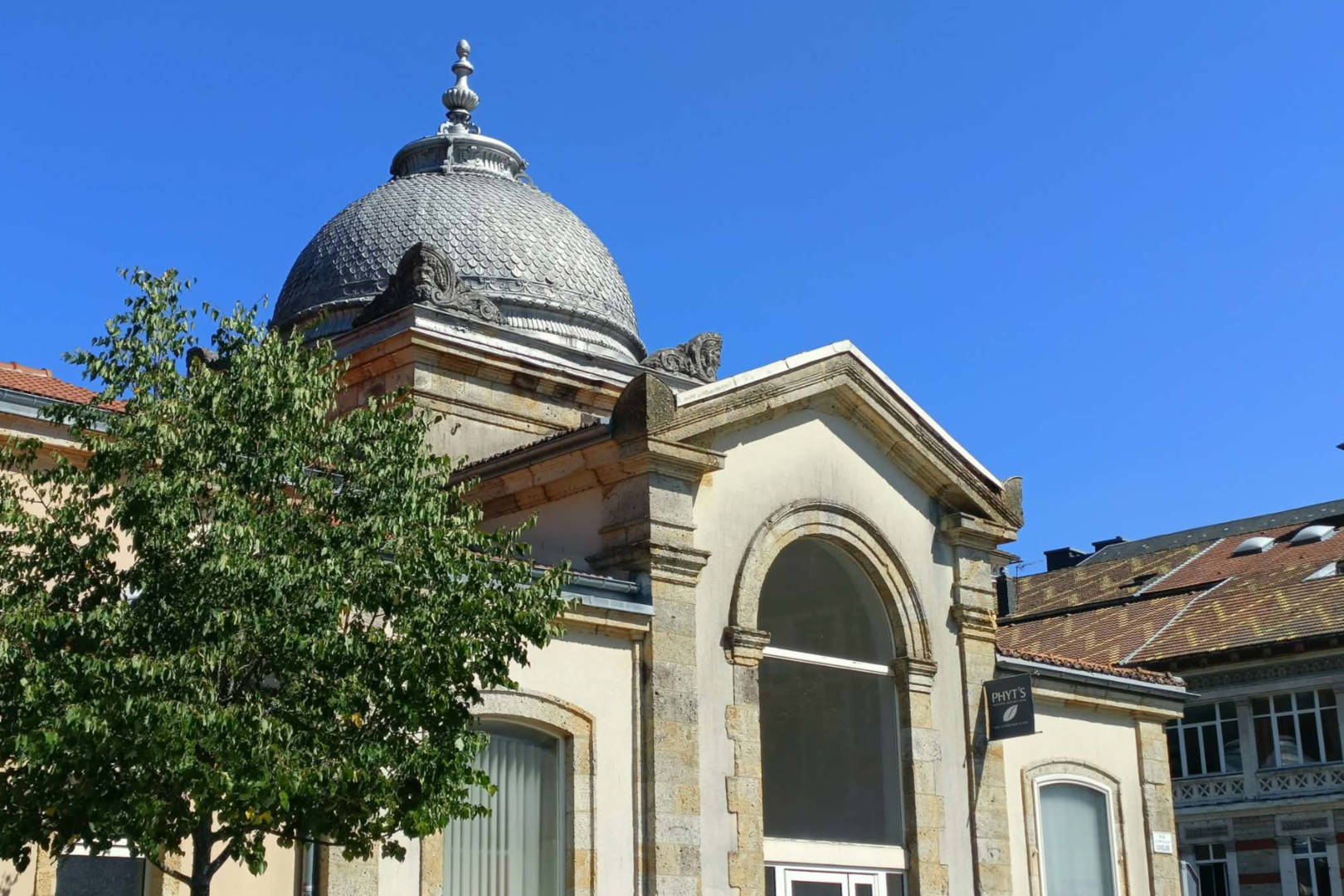
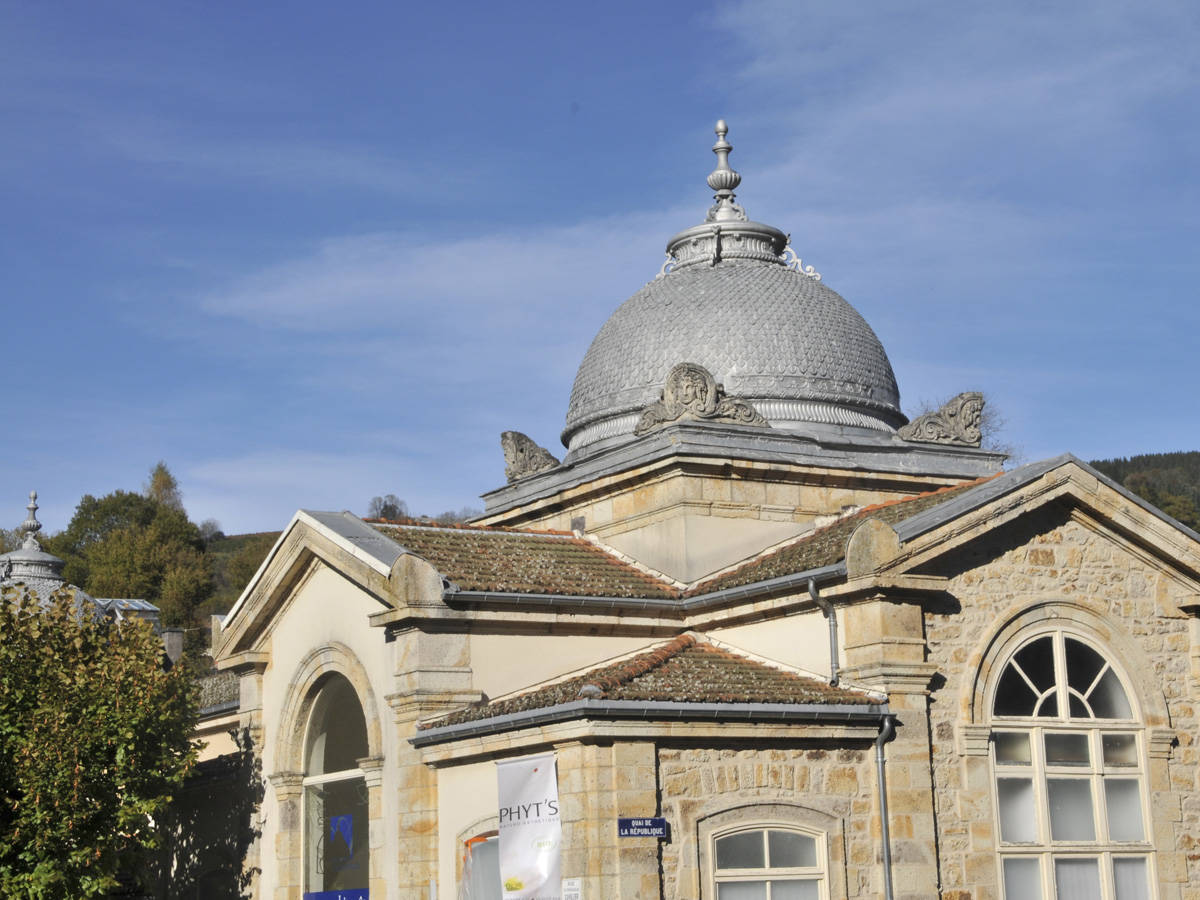
In 1875, the Compagnie des Eaux Minérales de La Bourboule undertook to build a spa on the same scale as the one at Le Mont-Dore. The project was entrusted to Agis Ledru, an architect from Clermont-Ferrand. It opened to the public in 1879.
The materials used were tuff, known as La Bugette stone, trachyte and andesite. The building is topped by four small domes at the corners and a larger one at the north entrance.
> Casino Chardon
This majestic edifice is the result of several construction campaigns. The left wing (the oldest part) dates from 1892.
Expansion work began in 1928 : symmetry was maintained, a balcony supported by columns was added along the entire length, and the elevations were decorated with gold-trimmed mosaics featuring floral motifs.
The former slot-machine room is the best-preserved original room : stuccoed decorations, column capitals, pilasters… representing 17th-century-inspired motifs (closed, undergoing renovation). The games section is located in the right wing of the building, a space entirely renovated in a neutral, uncluttered style.
In the main hall, two pendentive domes cover the large volume of the entrance and mezzanine. The art deco geometric decor is reminiscent of oriental calligraphy in places. Listed as a Monument Historique in 2016.
> Hôtel de Ville
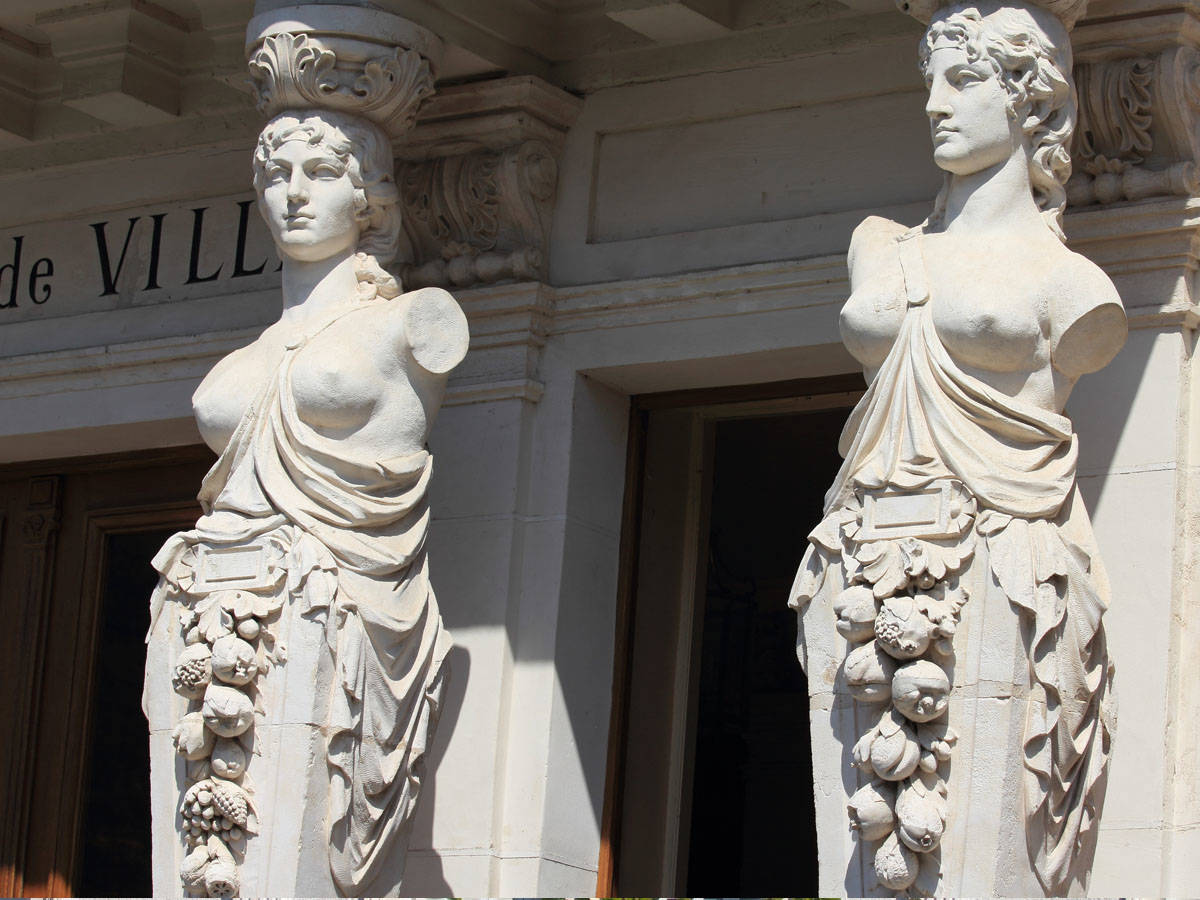
This former Casino des Thermes (1891), known as the Cariatides, in reference to the Greek goddesses on the balcony and façade, houses the town hall, tourist office, post office and theater. It features Italianate towers and a two-tone tile roof.
Inside, the cast-iron grand staircase rests on a complex interplay of trachy-andesite pillars and basket-handle arches. The ornate pediments of the first-floor landing doors are topped by a set of door tops painted on canvas in 1893.
> The bandstand in Square Joffre
Originally installed in the Parc Fenestre at the end of the 19th century. In the 20th century, the bandstand was dismantled and reassembled in May 1920 under the direction of architect Louis Jarrier. Renovated around 1990.
> Résidence Métropole
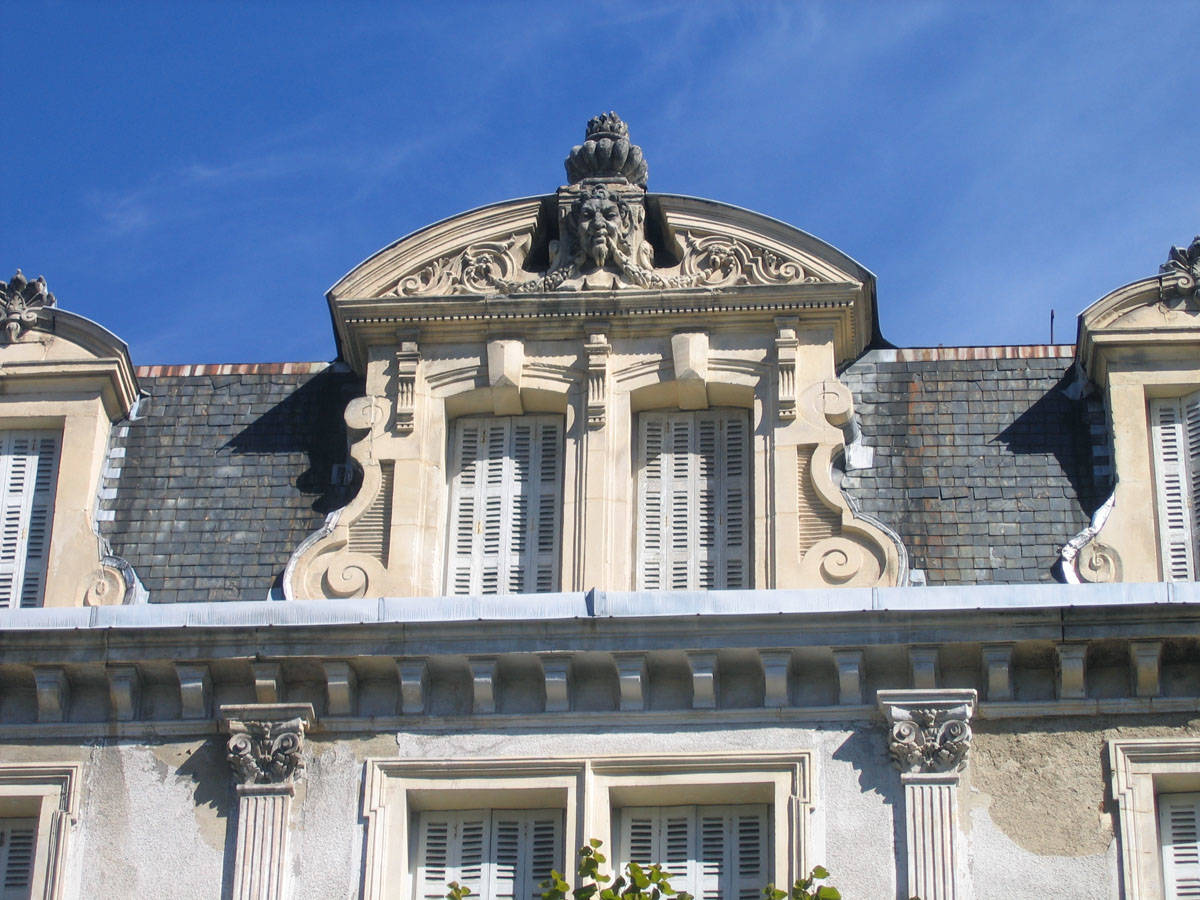
Built from 1891 to 1895 by Clermont-Ferrand architect Jean-Joseph Teillard. From the outset, it was considered a luxury hotel, catering to a wealthy clientele. Facade of tuff, Bugette stone, trachyte, andesite, speckled rendering and imitation plaster. The facade is enlivened by a play of projections, different shapes of openings and a play of polychromes and materials.
> Maison Rozier
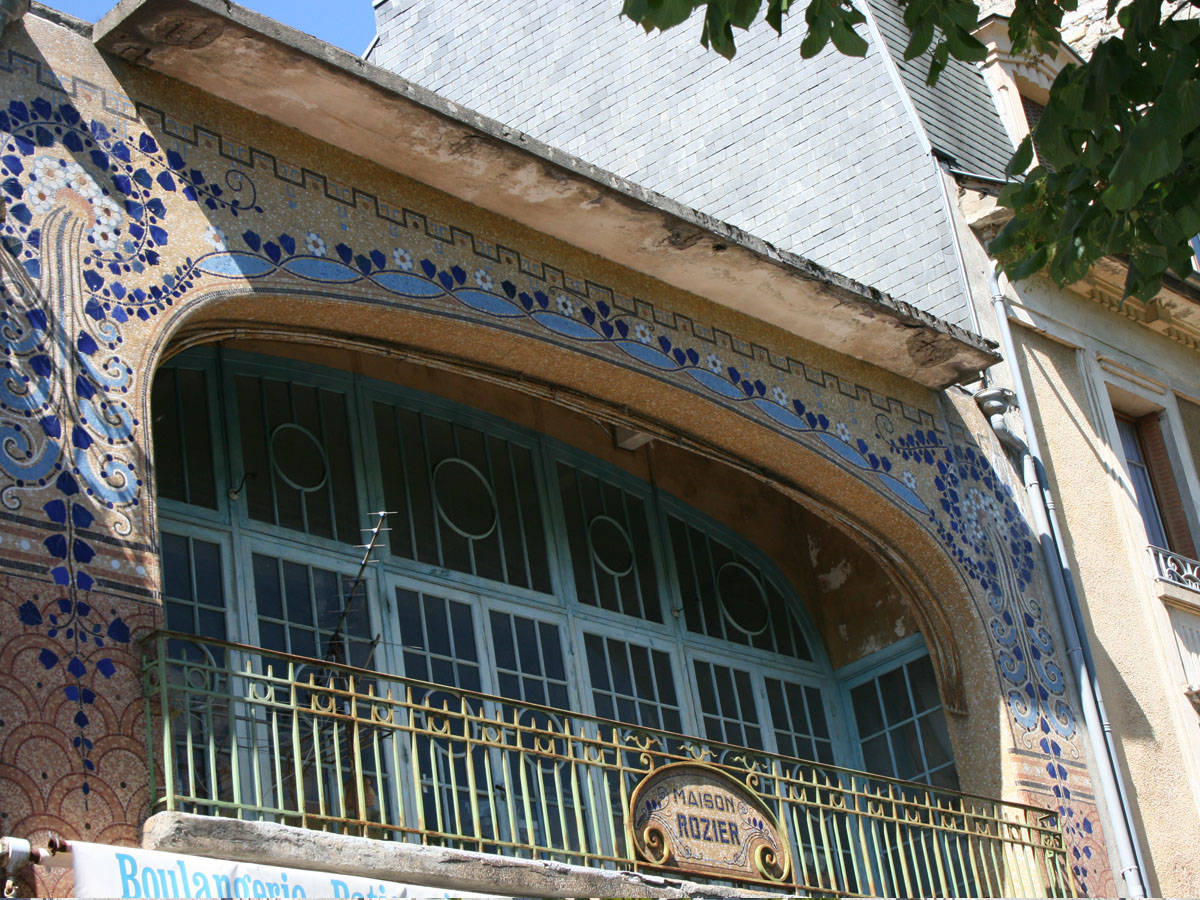
Built in 1920 by Clermont-Ferrand architect Louis Jarrier. The first floor housed a pastry shop and tea room ; upstairs, a dance hall with orchestra stand, opening onto a loggia. Wide variety of materials. Art Deco façade. Listed as a historic monument since 2001.
Practical information
A free discovery trail of La Bourboule is available on the back of the town map, available from the Tourist Office.

 Dogs allowed
 Updated on 28 September 2026 by Office de Tourisme du Massif du Sancy