But it wasn’t until the 19th century and the “Belle Époque”, that the spa town emerged with a rather heterogeneous architecture, dictated by the wishes and demands of a very demanding and relatively well-off clientele. In those days, there was no such thing as social security !
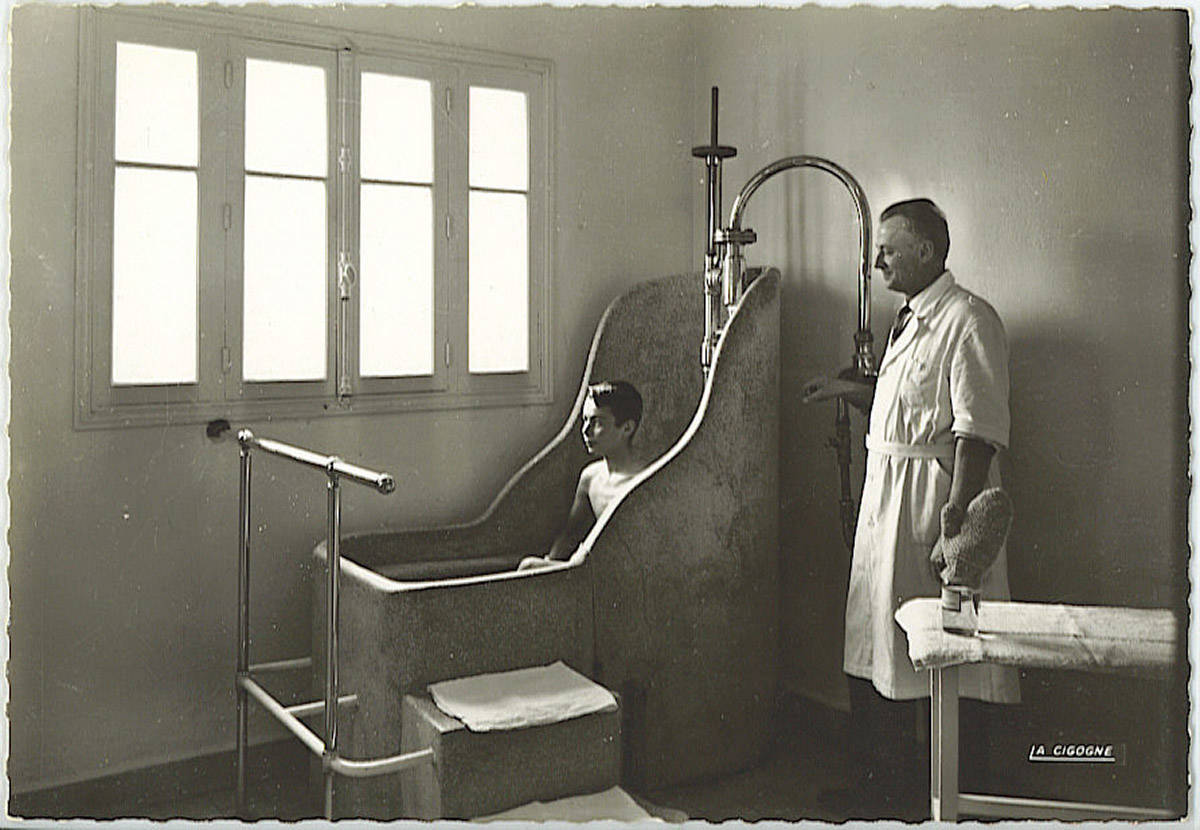
Customers came to be cured, but also to have fun. “Taking the waters” was certainly a way to heal, but it was also, and above all, a way to have fun, which explains why spa towns have everything you need for a holiday : parks, a casino, a bandstand…
It was Jean Giraudon, a daring entrepreneur, who in less than ten years created a veritable spa town.
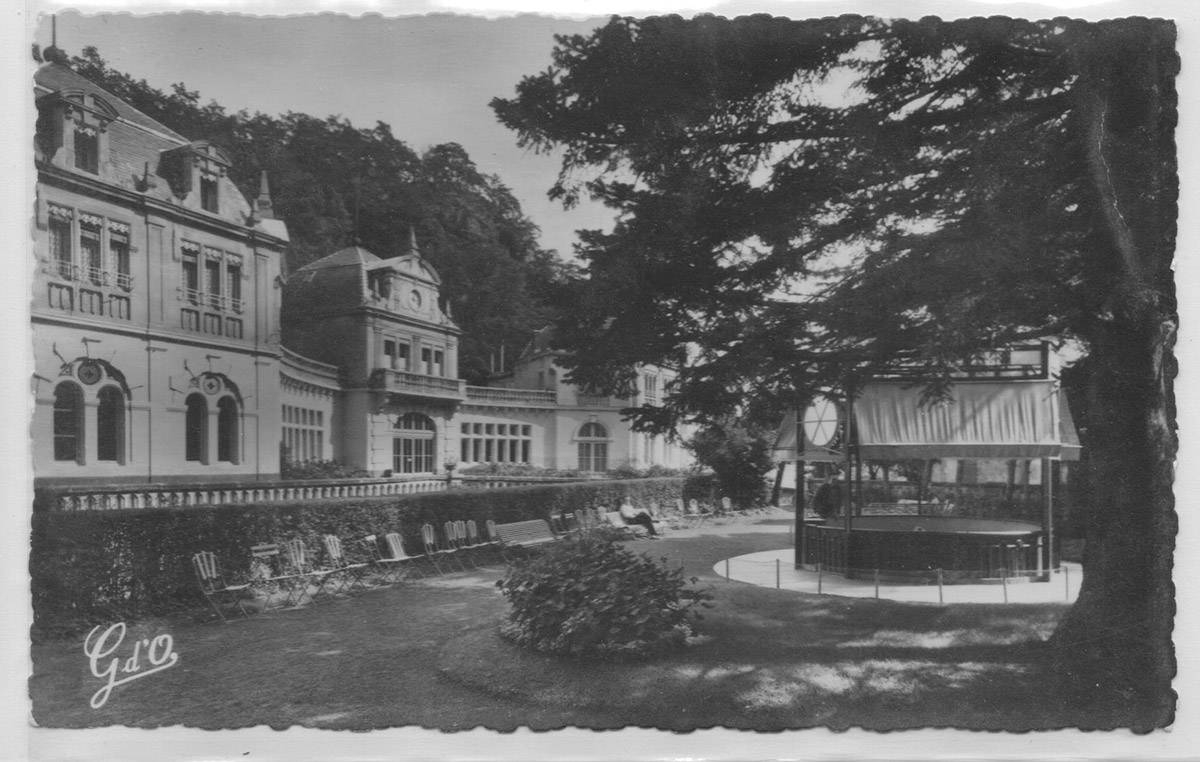
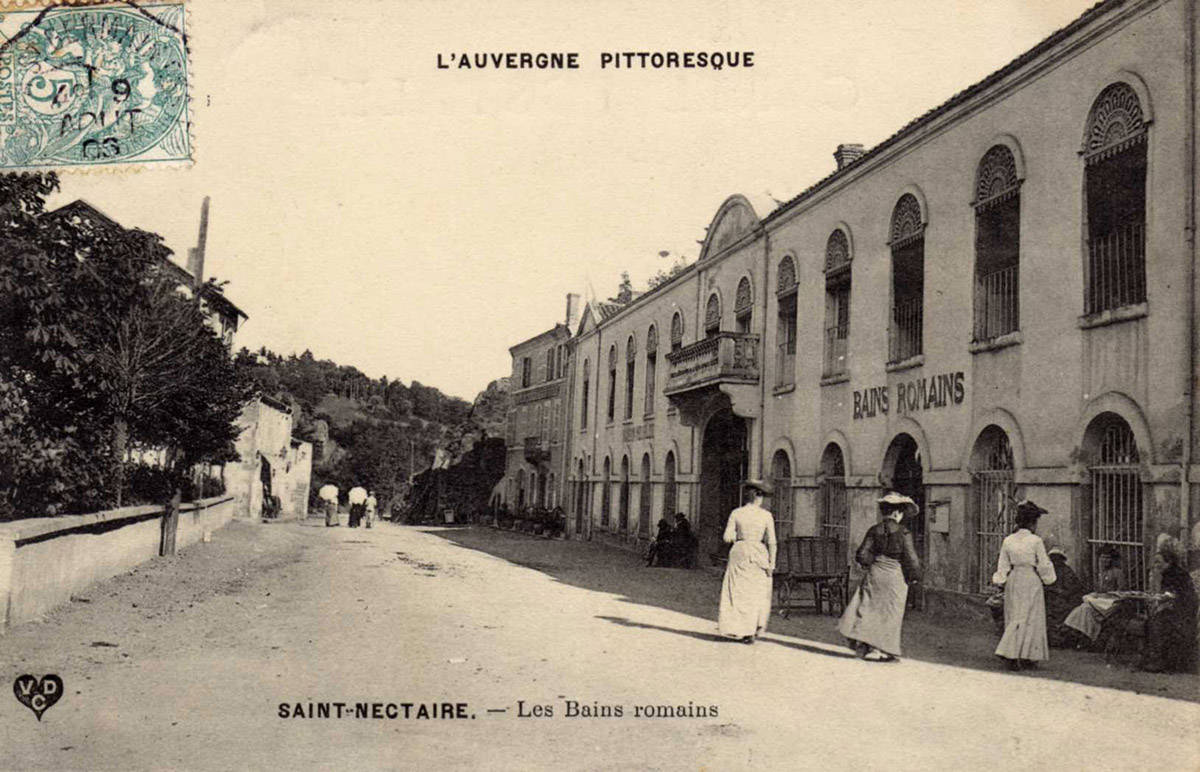
In the early 1900s, the Hôtel des Bains Romains was modified and enlarged. Its Belle Époque architecture is extremely interesting, with vast halls and lounges, a monumental staircase, stucco decorations, “Versailles-style” fern floors, a billiard room, a park planted with rare species and a small belvedere ideal for outdoor relaxation.
Jean Giraudon also undertook a number of construction projects :
– The Grands Thermes on the site of the former Bains Boëtte, a neo-Renaissance building in the shape of a hemicycle, now the Tourist Office.
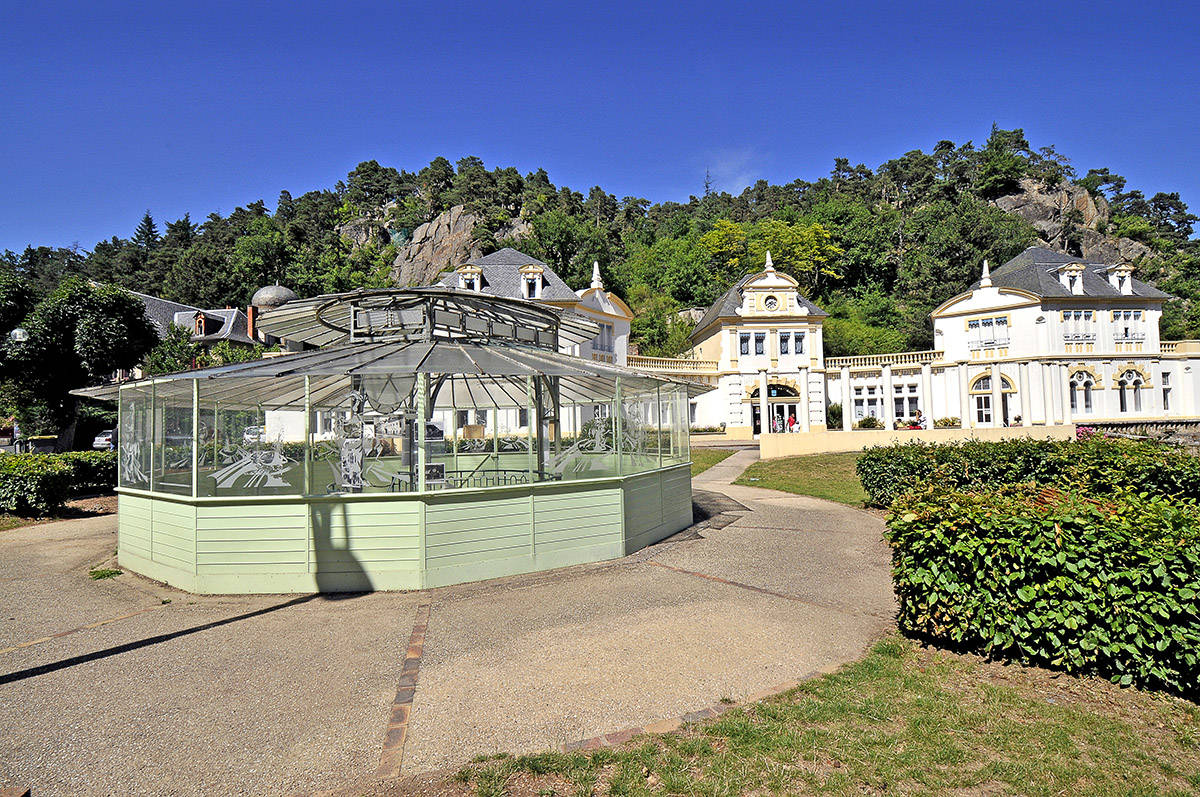
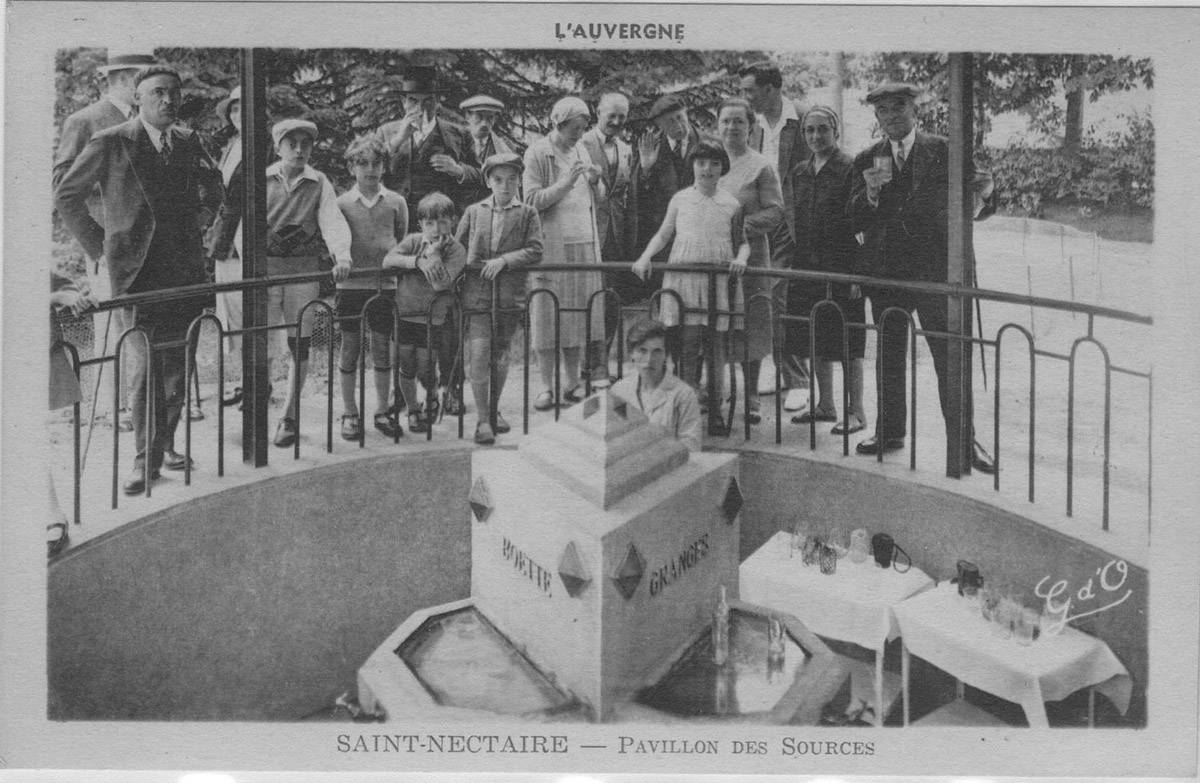
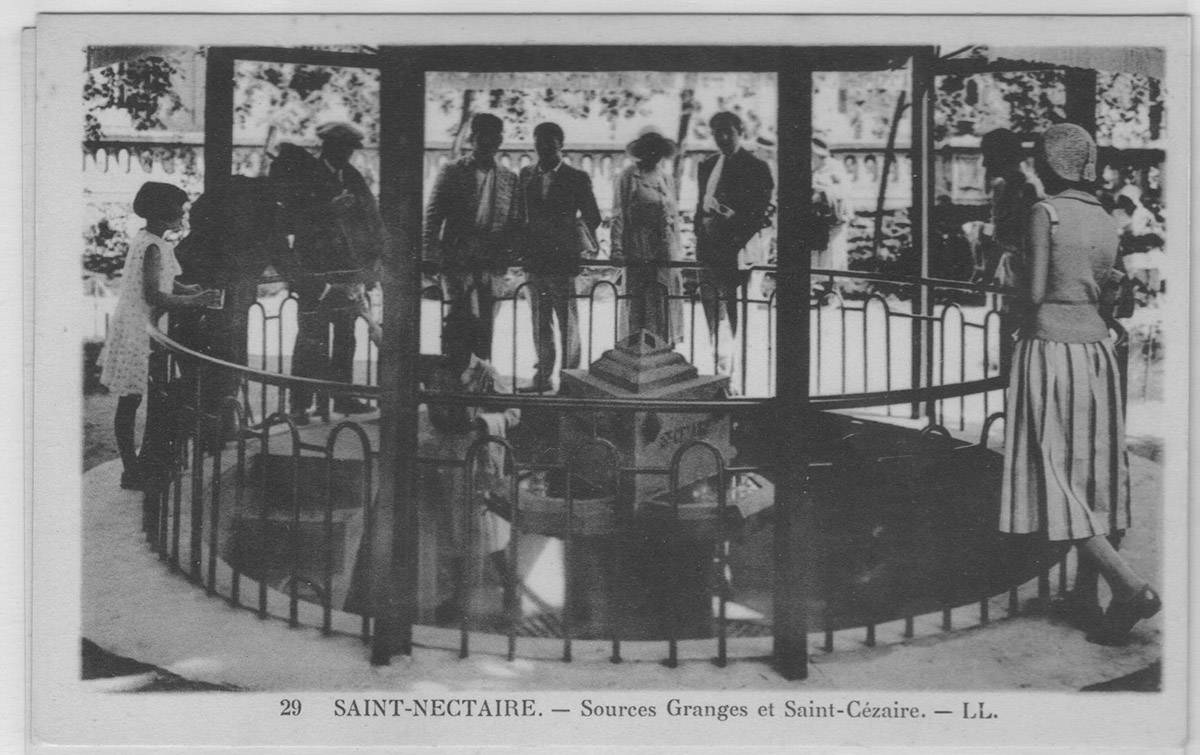
– The rotunda, or Pavillon des Sources, is a thermal refreshment bar with a light iron-and-glass structure.
– The bathers’ chapel features neo-Romanesque architecture.
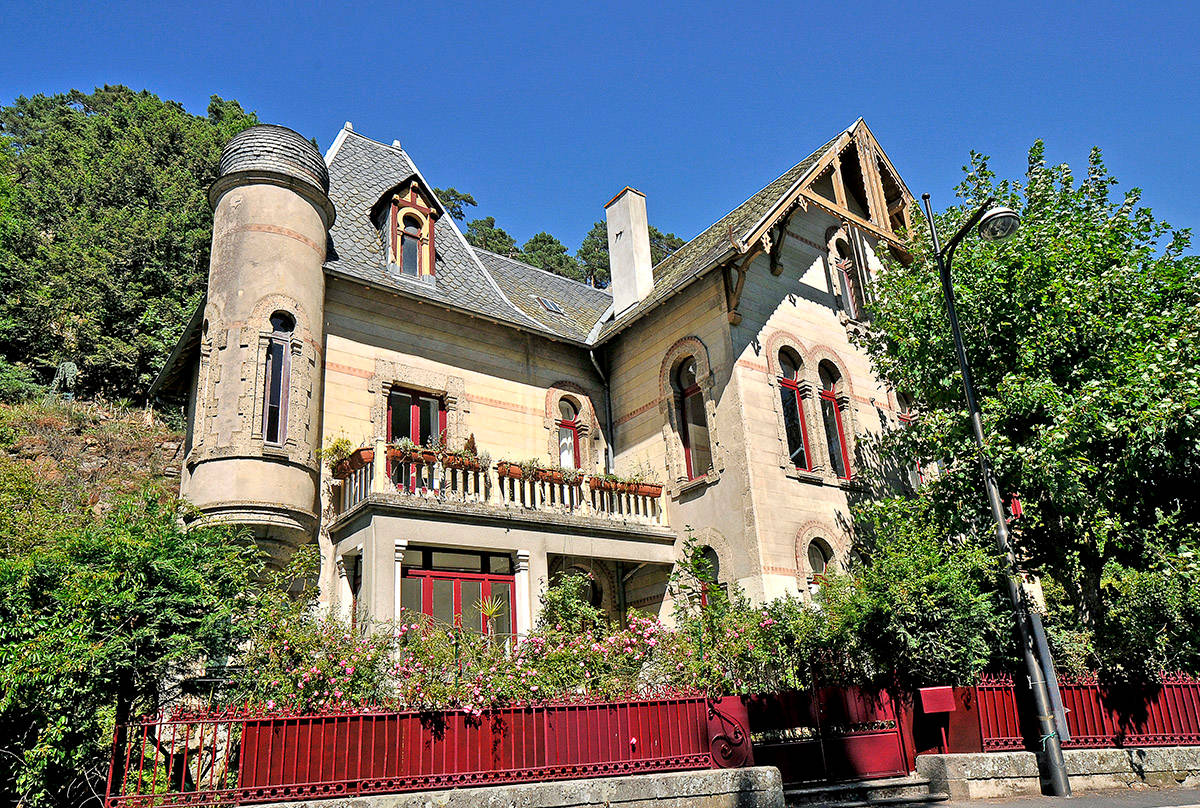
– Villas for doctors, including those of Doctors Porge, Siguret (Maïzou), Roux (du dolmen et de la tour), Versepuy (Saint Hubert) and Serrane.
– The remarkable “Villa Russe”, built for Prince Orloff’s family in an orientalist style and listed as a Historic Monument on December 29, 2004.
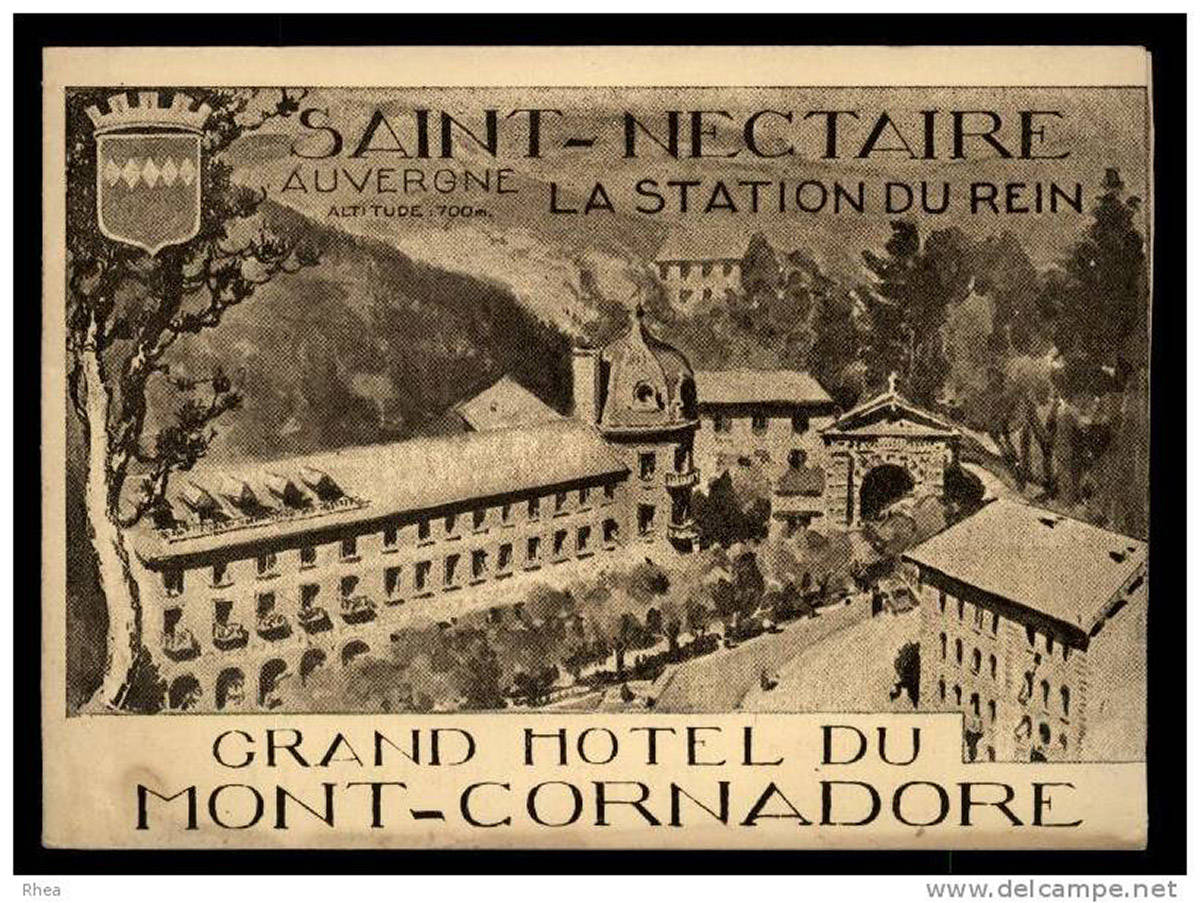
– The Hotel du Parc, with its monumental dimensions for a small resort, and luxurious comfort.
– The casino, which unfortunately burned down in 1936 and was rebuilt in the 1950s in a very different style.
– The bandstand, where concerts were held on summer evenings.
– The spa park, including that of the Dolmen and the casino, laid out along the Courançon river and spanned by two elegant rockwork footbridges, a style very much in evidence in spa resorts.
– The pedestrian viaduct linking the two parks is one of the first in France to feature reinforced concrete arches.
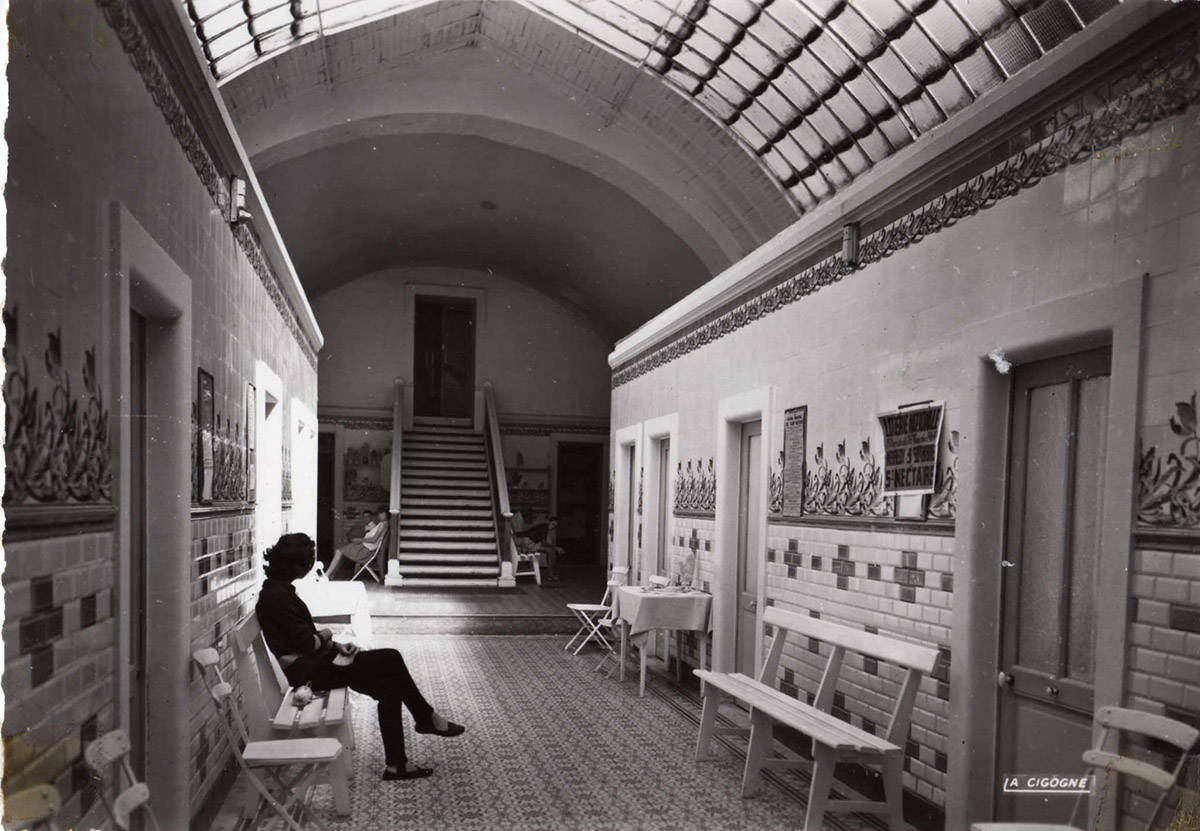
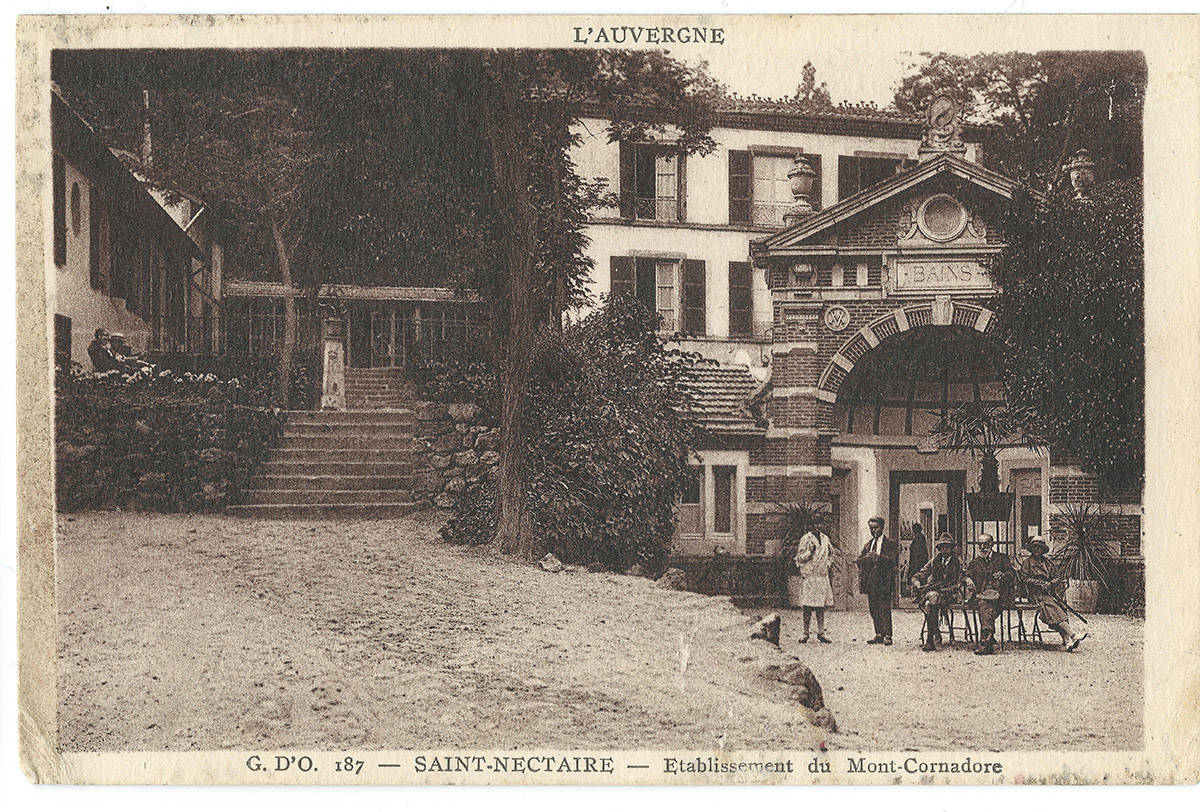
– The rather modest Bains Cornadore were acquired after 1907 by the Société Thermale, which carried out extensive restoration work. The walls and cabins are tiled with magnificent Art Deco ceramics, and the springs are housed in a glass vault.
These thermal baths, which are the smallest in the Massif Central, were added to the Supplementary List of Historic Monuments on February 3, 2011.
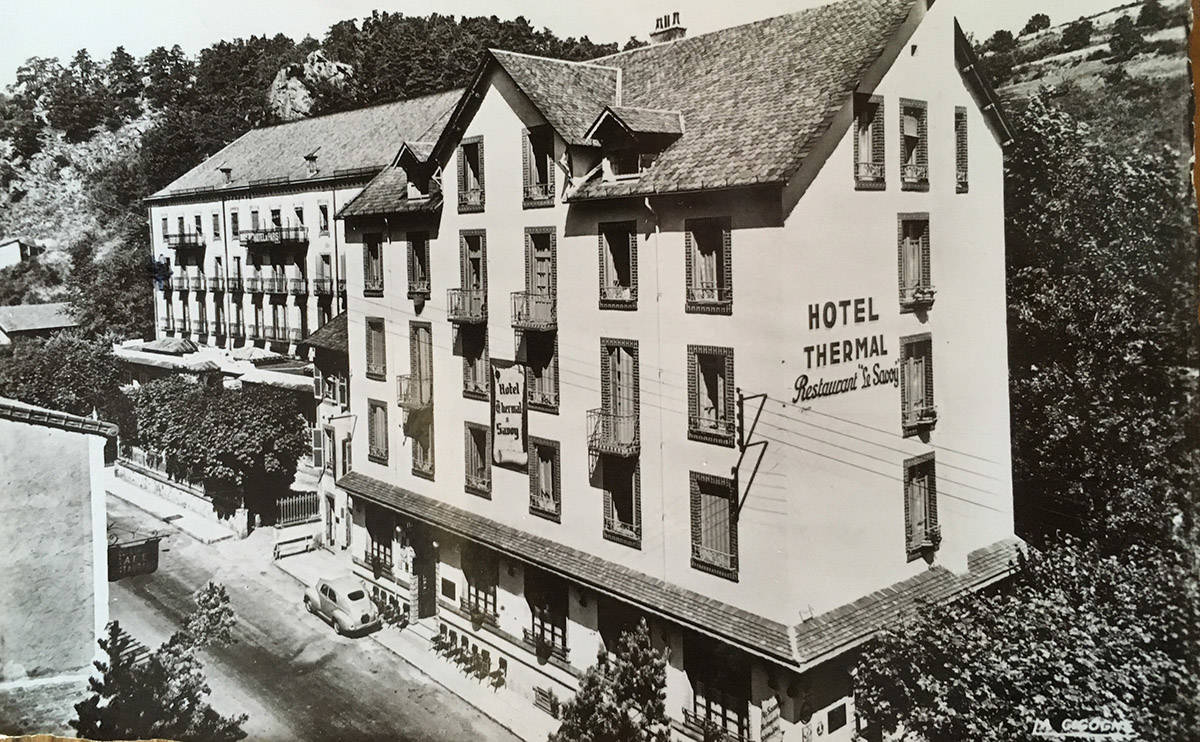
Jacques Mandon (another builder) also built two hotels, the large, four-storey Paris with its wooden veranda, and the Thermal as an annex to the Paris.
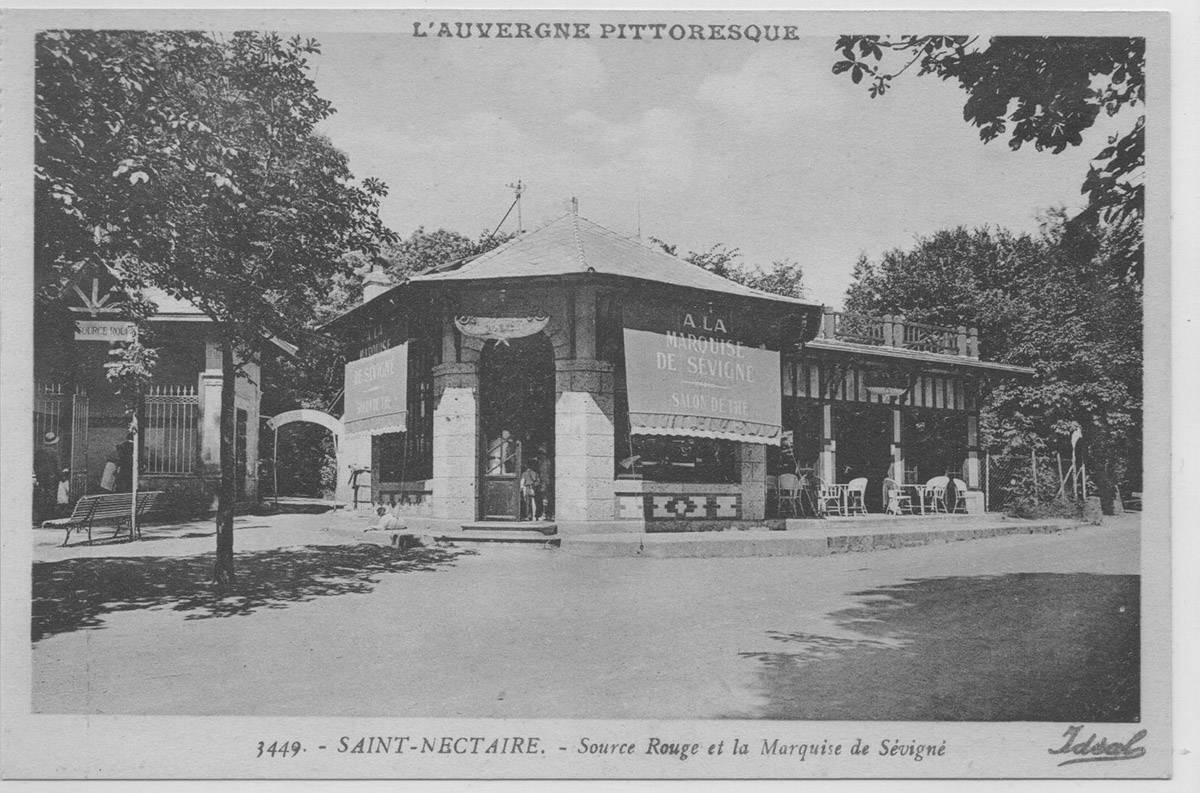
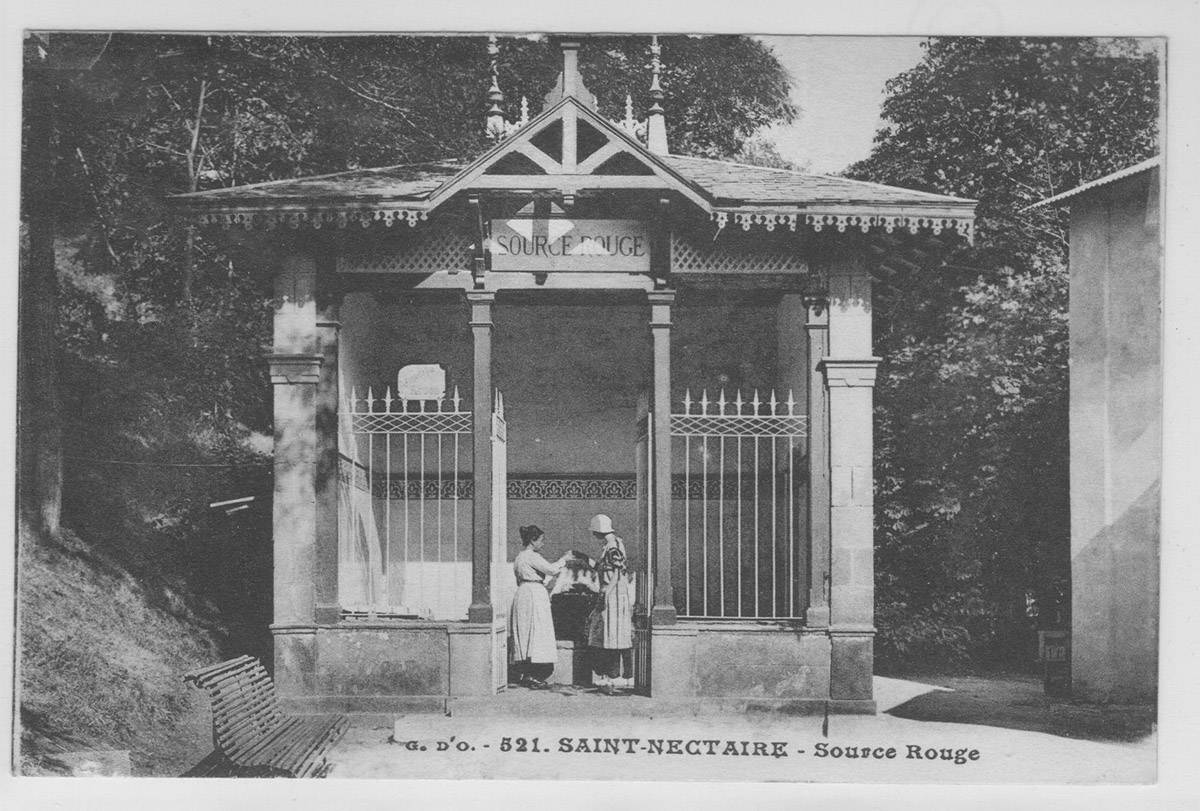
– La Marquise de Sévigné, a tea room and chocolate factory built of wood and Farges stone (volcanic tuff) with architecture in harmony with the resort. Today it’s called La Source Rouge, like the pavilion on the nearby spring.
– The wooden pavilion with zinc roof housing the Morange spring on the outskirts of Saint-Nectaire in the direction of Murol.
Source : Joëlle Crozet- Vaugelade – Association de Sauvegarde du Patrimoine Thermal de St Nectaire.

 Dogs allowed
 Updated on 28 September 2026 by Office de Tourisme du Massif du Sancy