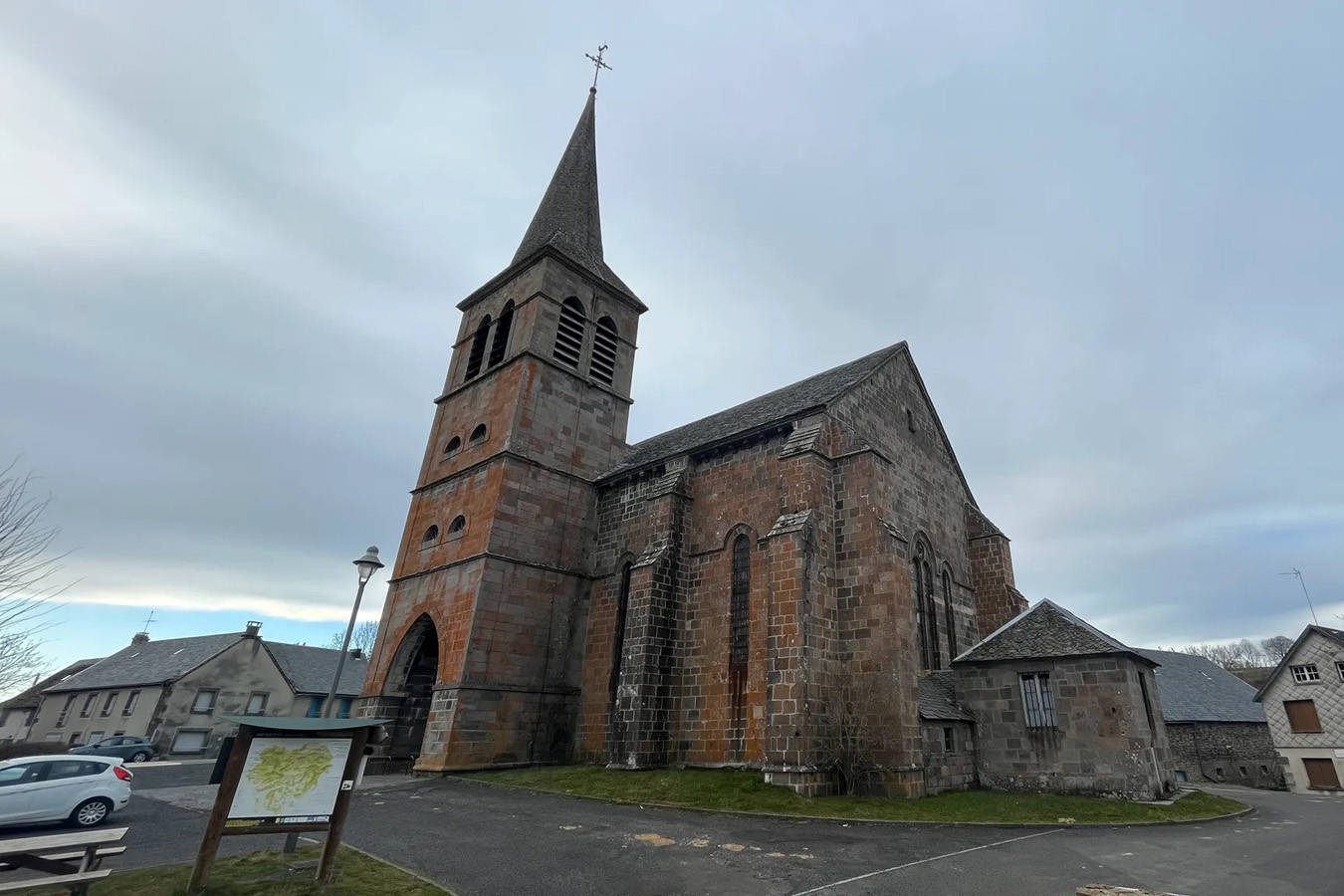
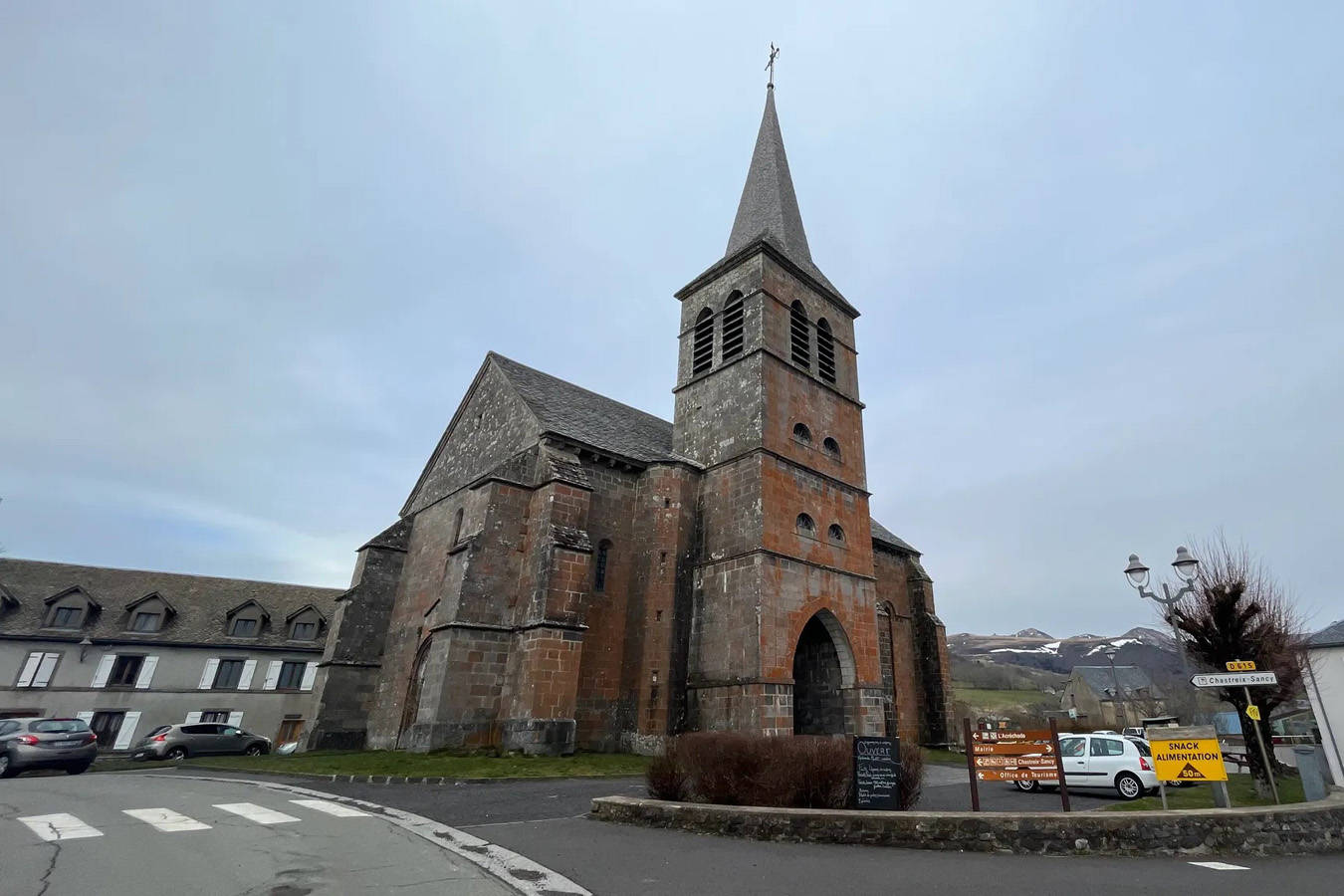
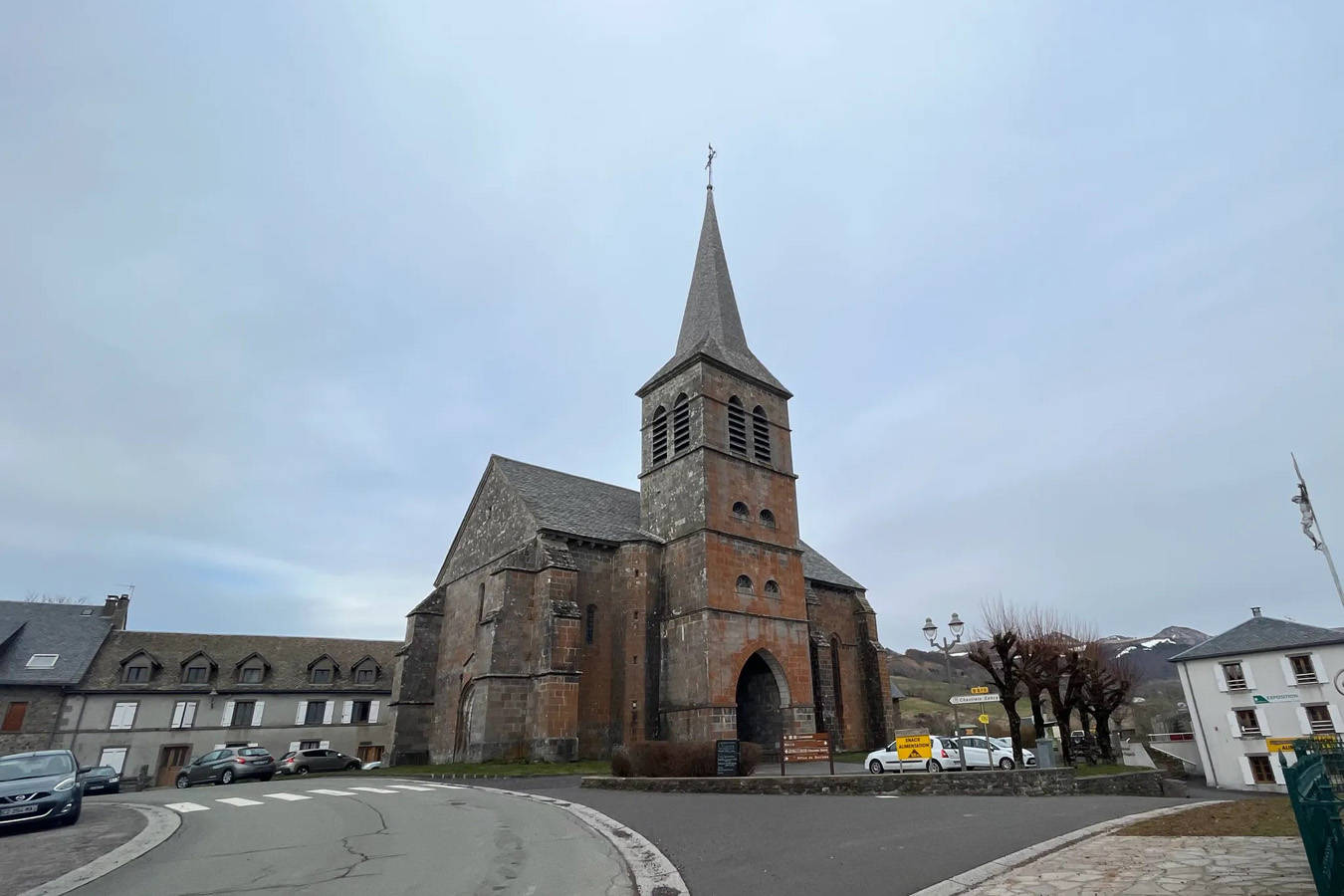
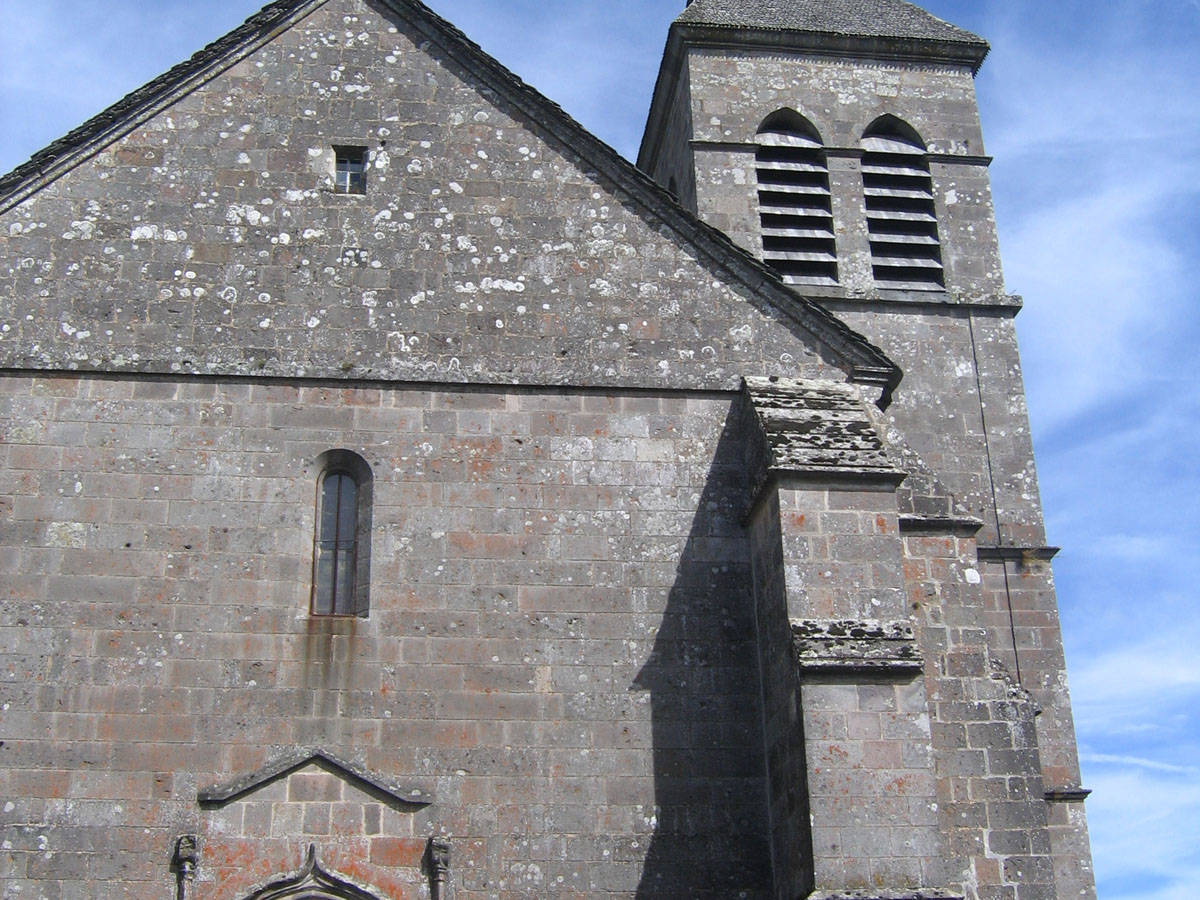
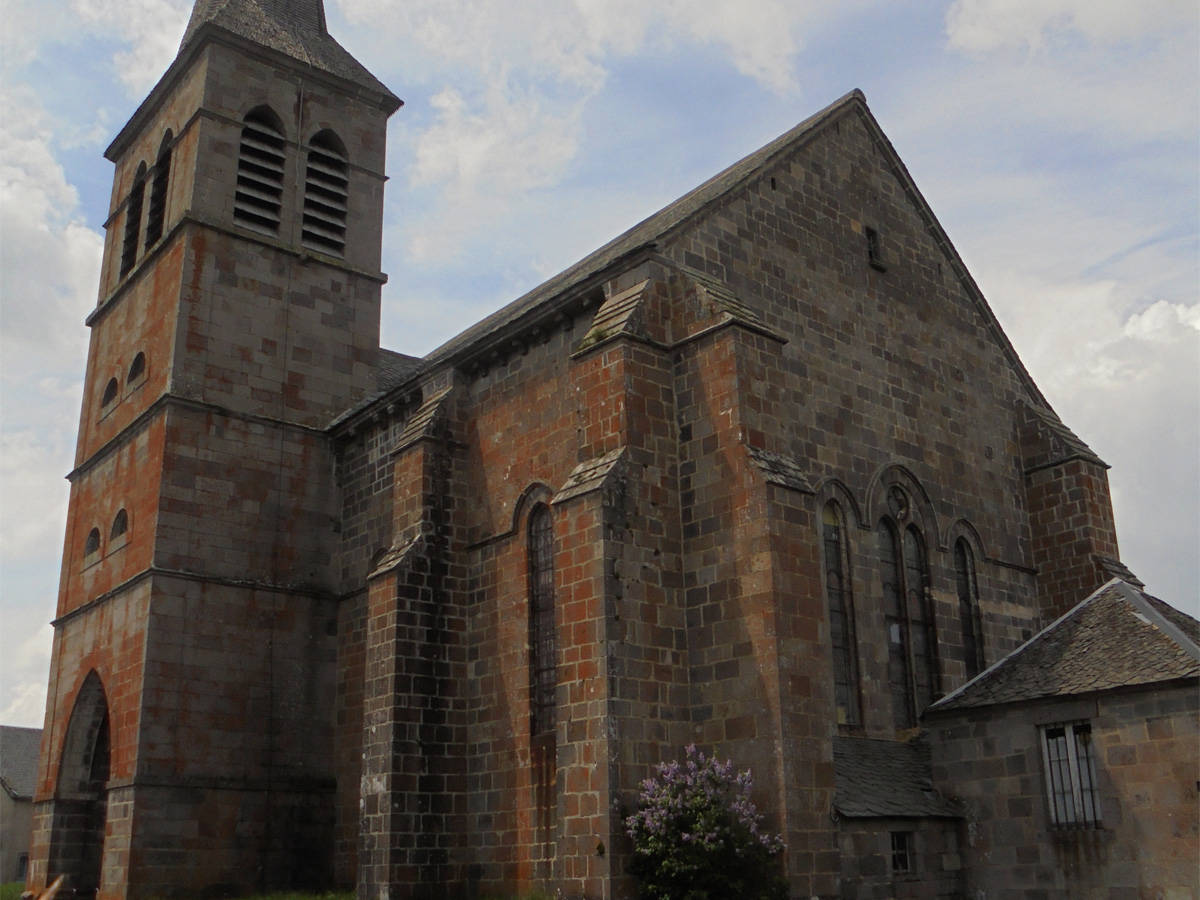
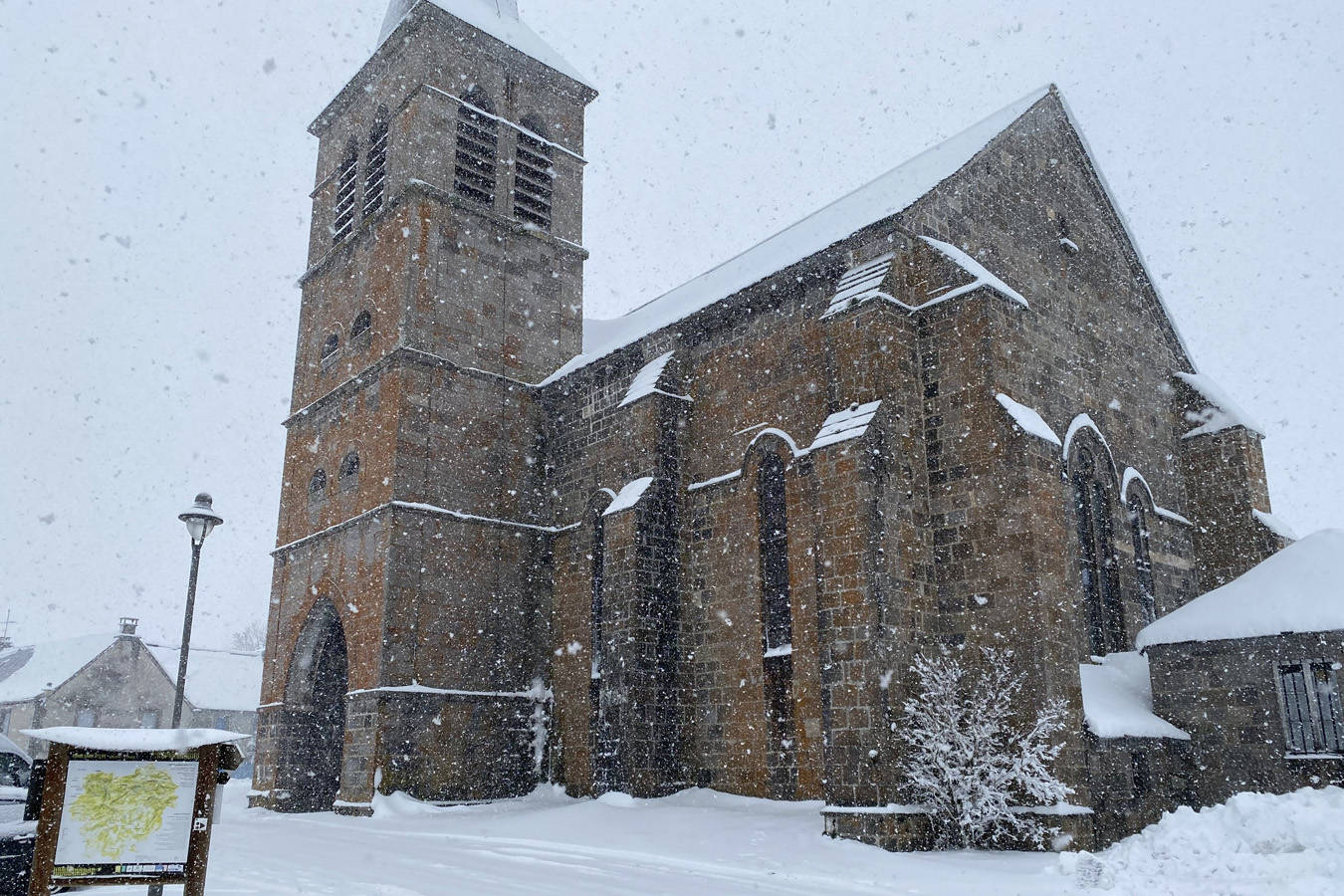
Church dedicated to Saint-Bonnet, built of red-speckled lava extracted from nearby quarries. Its heavy square bell tower, built in 1828, houses a listed bell dating from 1561. The roof was re-roofed in 1956 with chestnut shingles.
Huge buttresses support the exterior walls, which are enlivened by a few Romanesque(…)
Church dedicated to Saint-Bonnet, built of red-speckled lava extracted from nearby quarries. Its heavy square bell tower, built in 1828, houses a listed bell dating from 1561. The roof was re-roofed in 1956 with chestnut shingles.
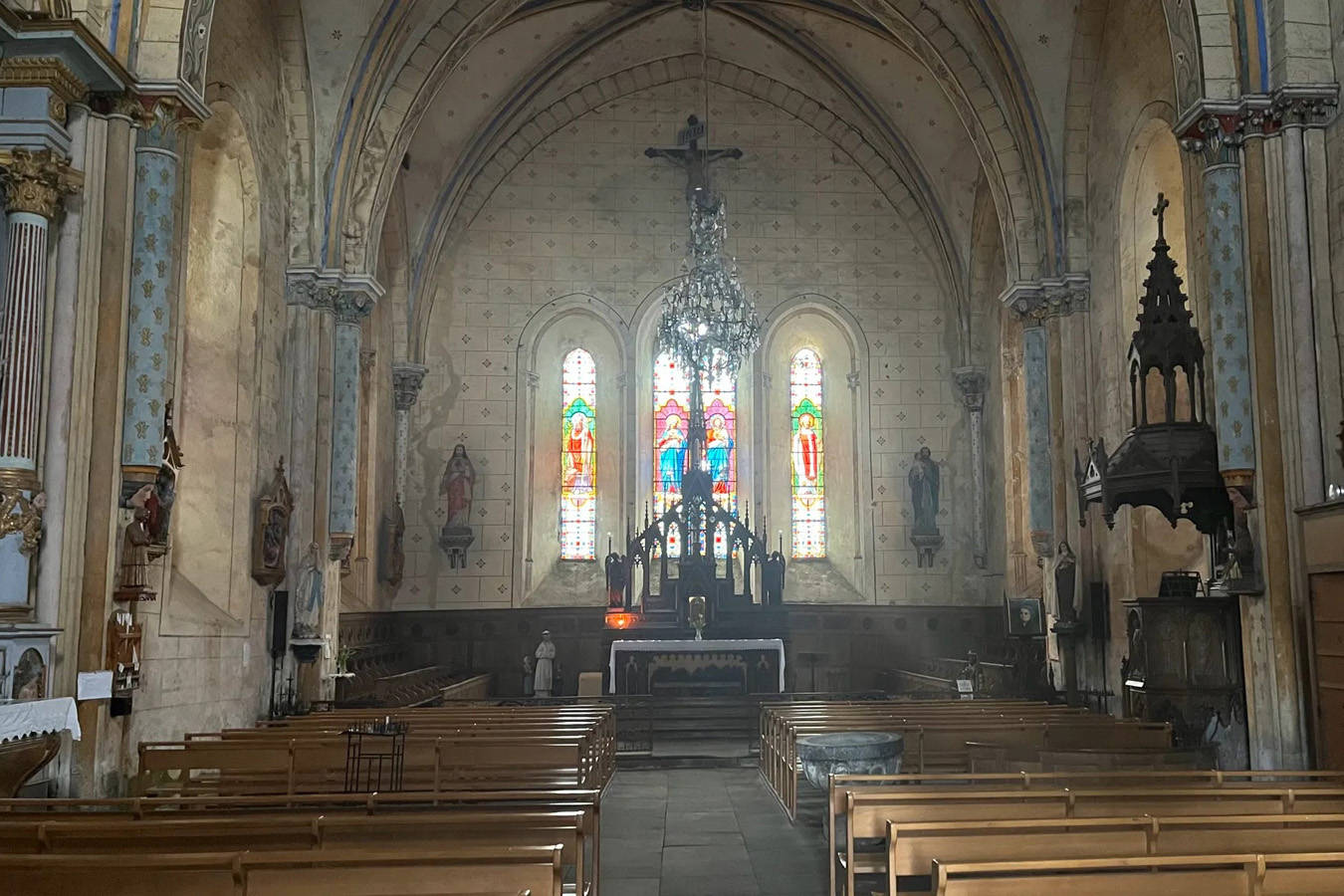
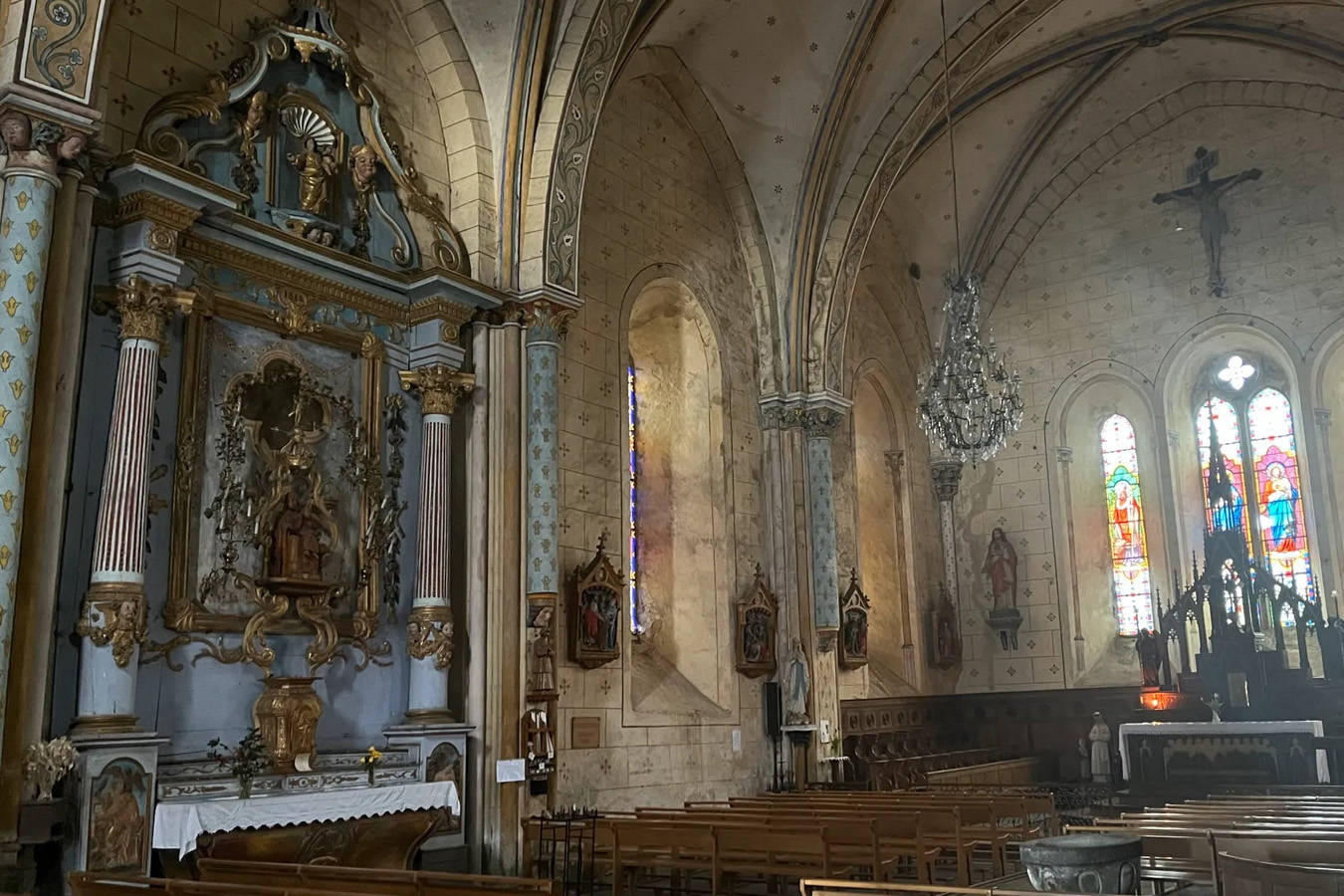
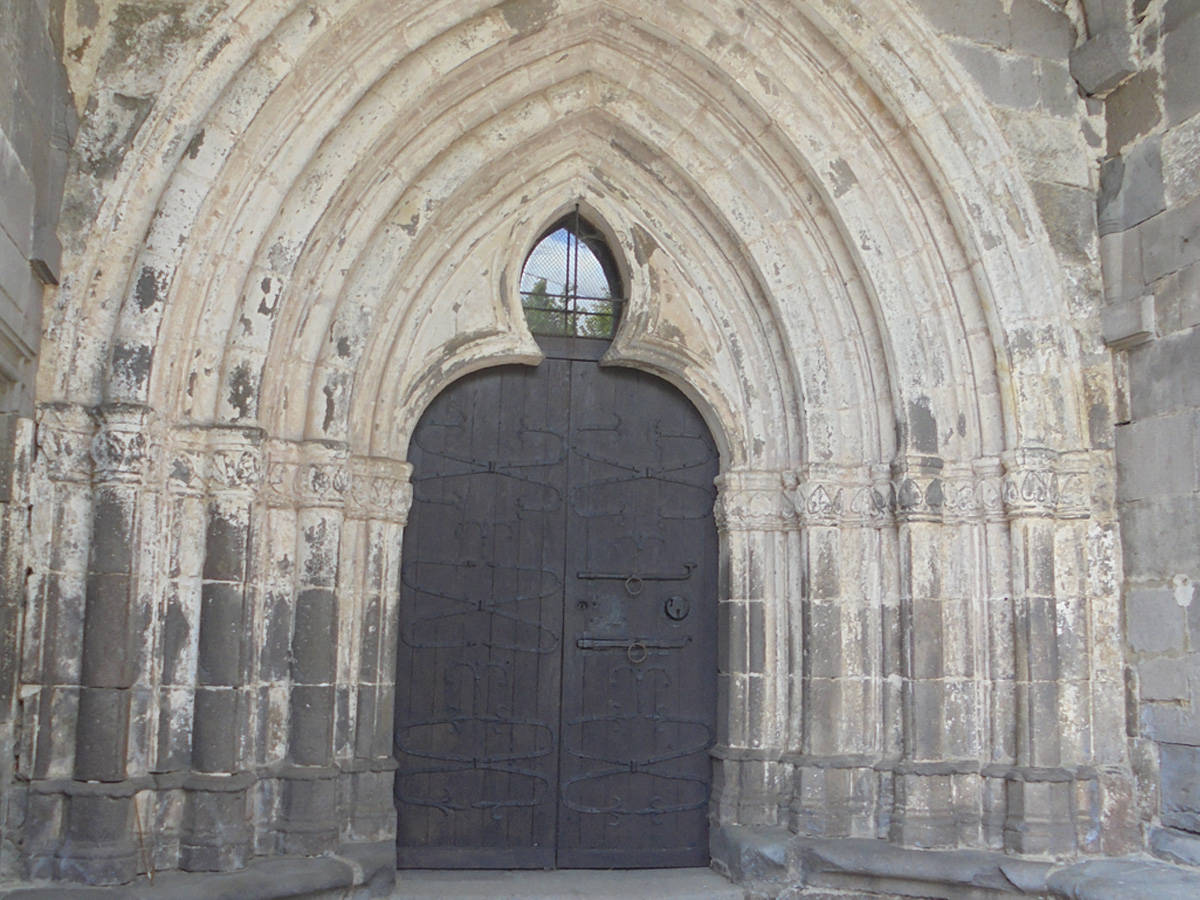
Huge buttresses support the exterior walls, which are enlivened by a few Romanesque modillions. The south door and several buttresses date back to the 14th century. The door hardware, bolt and lock are of the period. Inside, a single nave of four bays is surprisingly wide. Columns set into the nave wall date from the late 13th century. The bases have the same profile as those of Clermont-Ferrand Cathedral. The heart ends in a straight wall pierced by three high windows. The middle one is geminated. The other two are lancet windows like those in the nave.
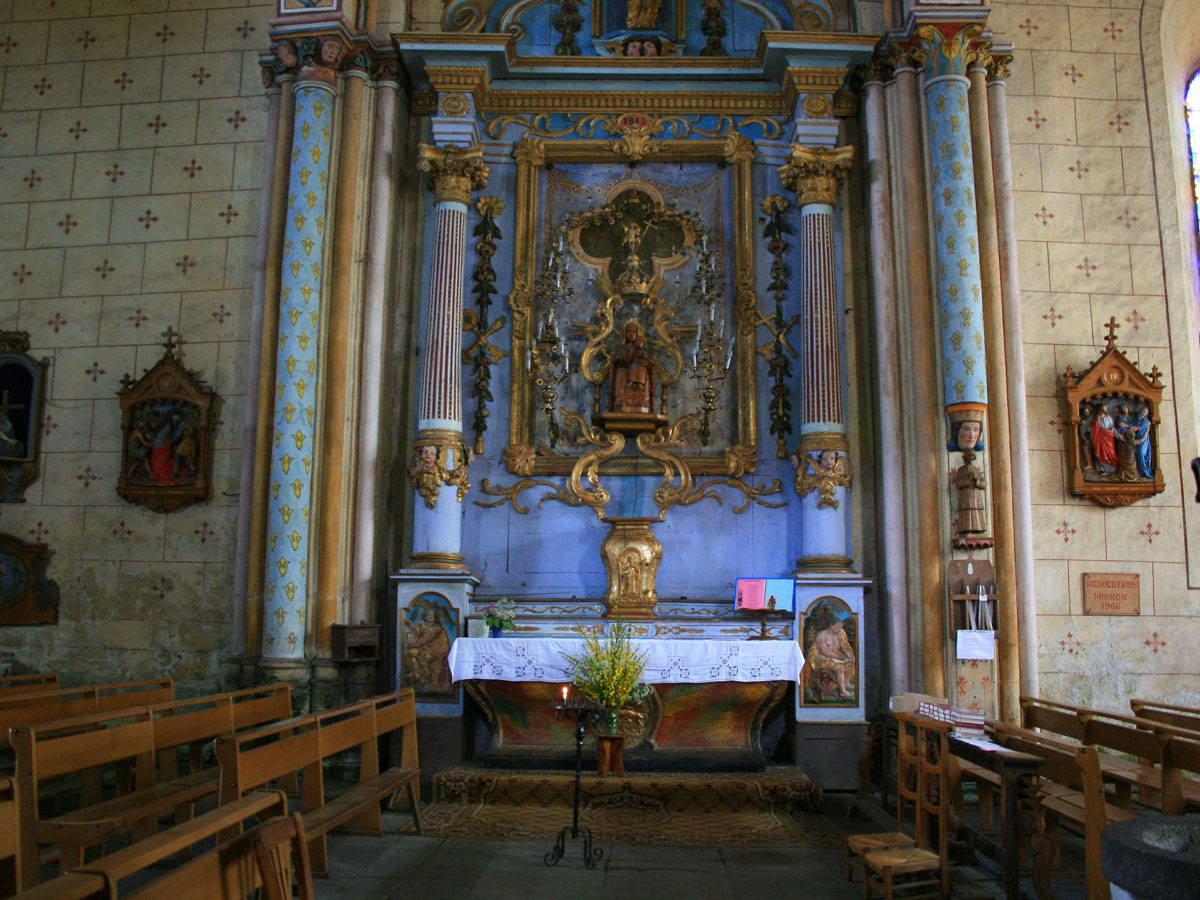
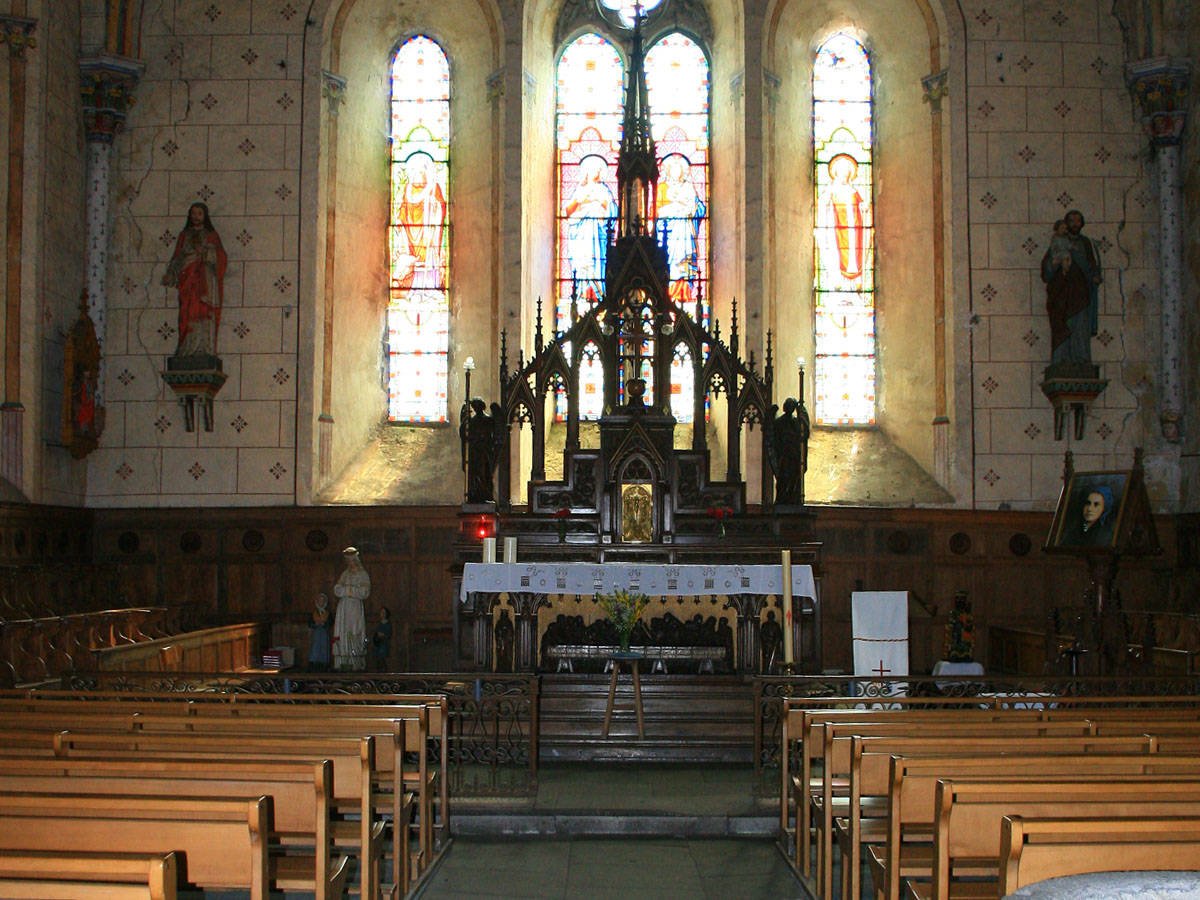
The vaulting is in the form of slightly accentuated ribbed vaults. The double arches end in truncated columns with human-shaped brackets. Still inside, the 14th-century holy-water stoup, set on a Romanesque capital, the baptistery with its indecipherable inscription, the pulpit, the work of a Besse craftsman, and the dominating wooden Virgin Mary.
Throughout the Middle Ages and right up to the French Revolution, the cult of Notre-Dame was very much in vogue, extending beyond the boundaries of the region. While until the 14th century the ruined buildings of Vassivière evoked only a vague memory, it was to Chastreix that Mary’s devotees flocked from far and wide.
During the French Revolution, her statue, a black Madonna, was hidden in a beehive. When it was reinstalled, having recovered from its wounds, it did not regain its former popularity. However, the parishioners remained attached to their Madonna. This was evident when, sent for restoration in the 19th century, her return was triumphant. The faithful, candles in hand, young men with rifles in their arms, awaited her return.
This church was home to one of the most beautiful Romanesque Virgins, unfortunately stolen in 1985. She bore a striking resemblance to the Virgin of Montserrat (Spain).

 Updated on 4 July 2026 by Office de Tourisme du Massif du Sancy