
Saint-Loup Church
Sermentizon
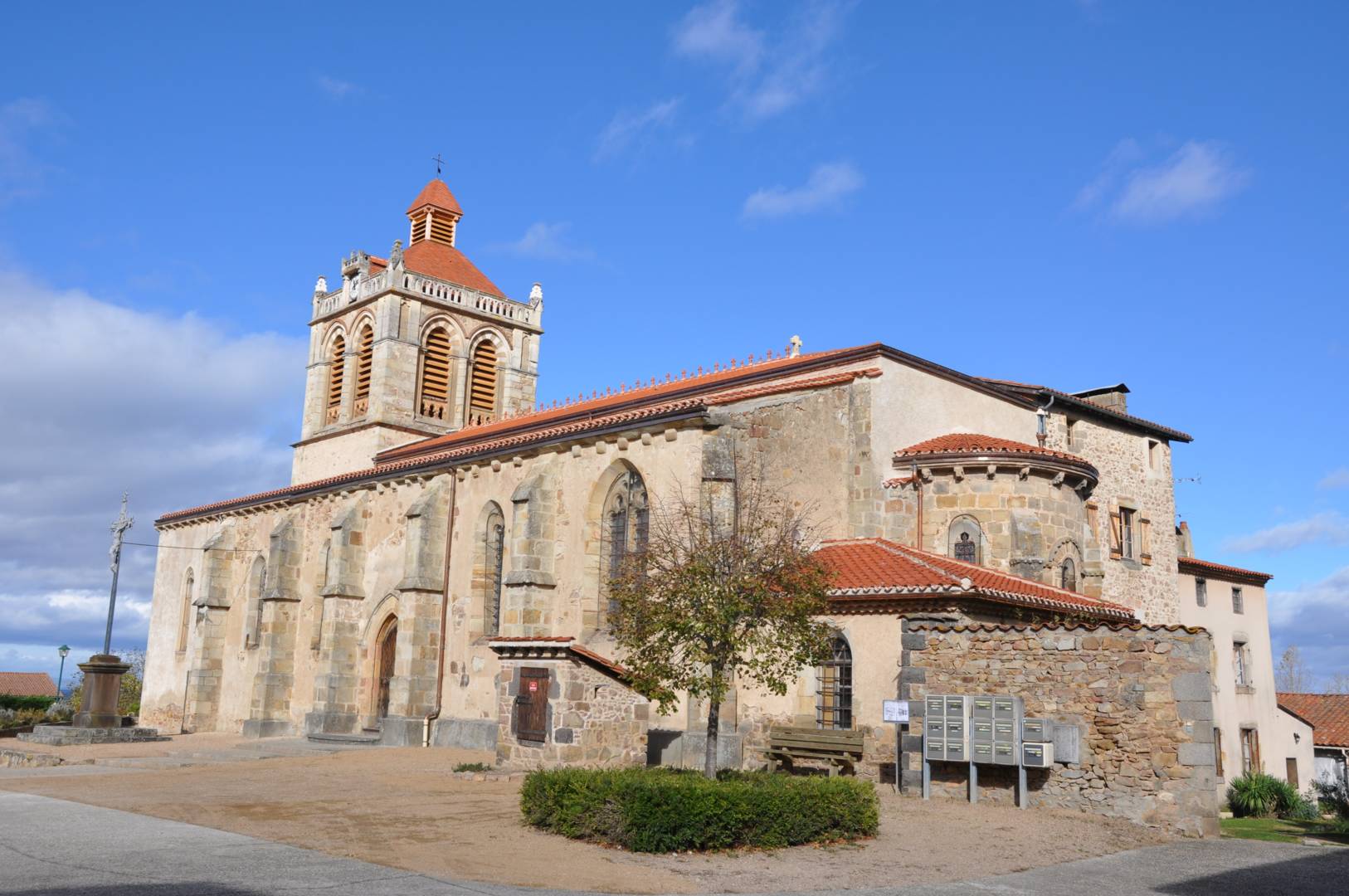
Built in Romanesque style, the church was remodeled in Gothic style in the 15th century. During the 19th century, 16 stained glass windows were installed, most of them by Clermont-Ferrand master glassmakers.
Built of local sandstone, also known as arkose, the church is representative of Romanesque art in the Livradois region. Its origins go back a long way, probably to the 12th and 13th centuries for certain parts, such as the apse. The choir, and in particular the apse with its figured(…)
Spoken languages
Opening hours
From 04/03 to 07/10 from Monday to Saturday between 10 am and 5 pm.
For group visits, book on 06 45 05 46 11.
Location
Photo credits : Christiane Champilou
 Updated on 31 January 2024 by Maison du Tourisme du Livradois-Forez