The edifice, dated for its older parts to the 12ᵉ century, undoubtedly succeeded an earlier sanctuary. The Plauzat church is in fact mentioned in the 11ᵉ century, in the 3ᵉ Vie de saint Austremoine. The text reports that it was built “at the expense of the inhabitants” and consecrated by(…)
The edifice, dated for its older parts to the 12ᵉ century, undoubtedly succeeded an earlier sanctuary. The Plauzat church is in fact mentioned in the 11ᵉ century, in the 3ᵉ Vie de saint Austremoine. The text reports that it was built “at the expense of the inhabitants” and consecrated by Austremoine, 1st bishop of Auvergne. While the text is more akin to a legendary tradition than a historical account, the fact that this anecdote could make sense in the 11ᵉ century indicates that a sanctuary, already ancient, existed then.
Before the end of the 11ᵉ century, rights to the church were ceded to the religious of Sauxillanges. A second settlement is attested in Plauzat from the 13ᵉ century, in the possession of the Canons Regular of the Chantoin Abbey in Clermont. Each of these communities founded a priory in Plauzat and shared rights over the church.
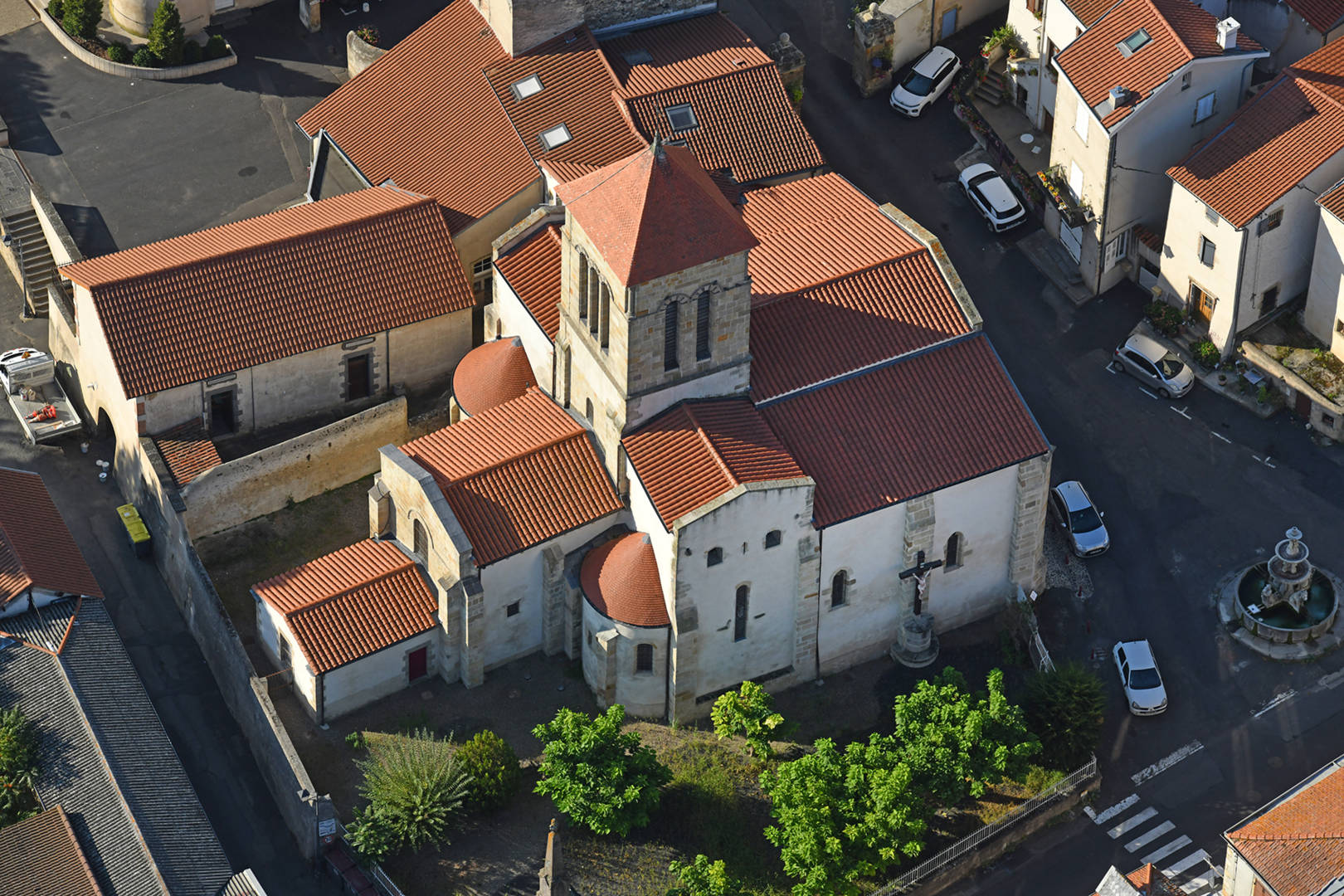
The Saint-Pierre church is located within a district that was defended in the late Middle Ages, itself associated with a fortified house that became a castle and then the town hall. The church features a number of defensive features. An upper chamber, accessible from inside the church, was built into the north transept.
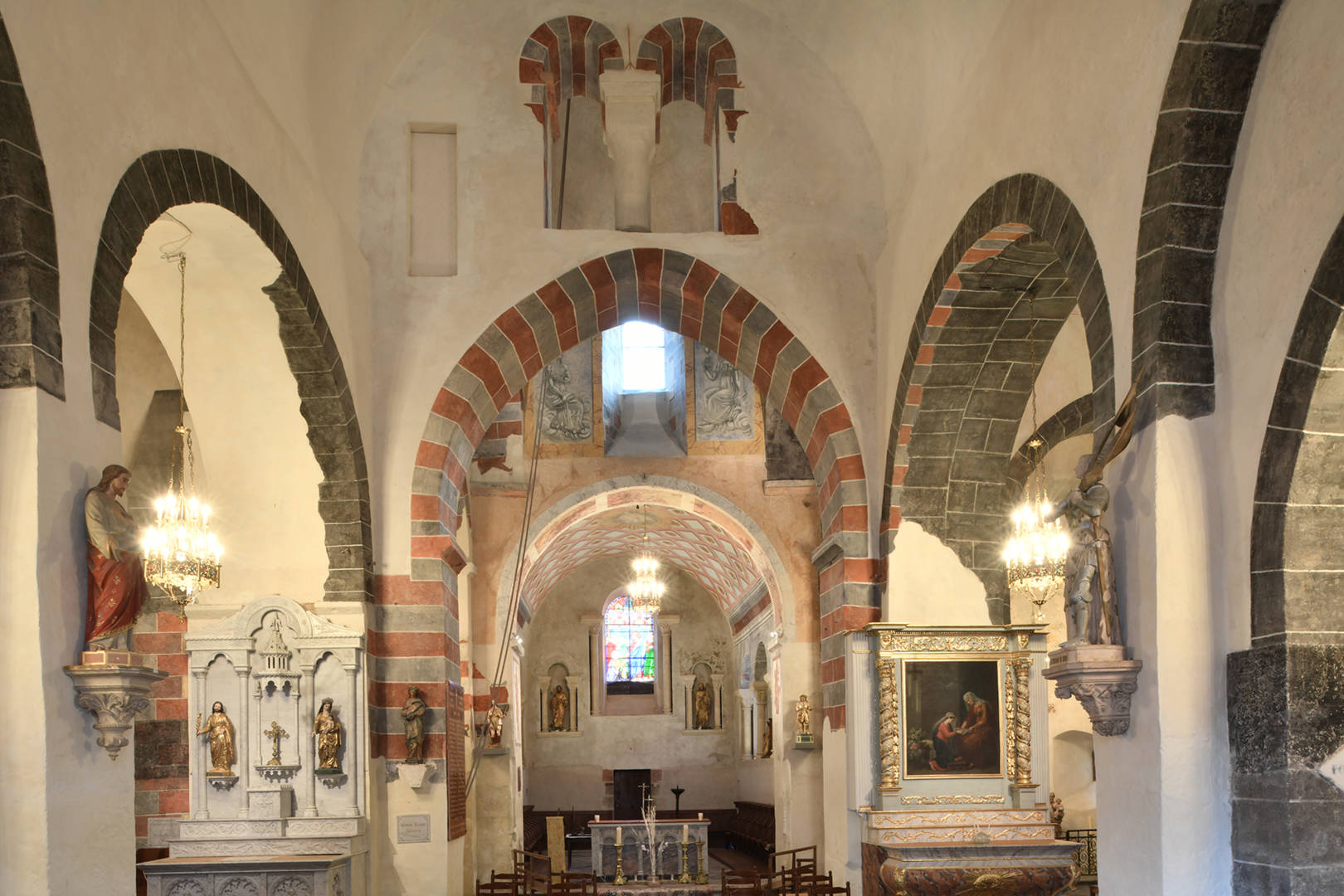
The Romanesque edifice comprises a nave, a transept crossing with oriented chapels and a choir with a flat chevet. Sculpted decoration is concentrated on the choir capitals, which are mostly decorated with foliage. Some of the baskets feature figurative sculpture : eagles with outstretched wings, griffins facing each other and drinking from a chalice, or compositions that may evoke biblical scenes. On the other hand, the diaphragm arch, opening onto the crossing from the nave, features twin bays. Finally, the small vaulted crypt with well (not accessible), located beneath the choir, is another of the building’s major attractions.
At the end of the Middle Ages, the church was enlarged by two side naves covered by cross-arches with sculpted keystones. Restoration work has revealed several campaigns of painted decoration, dating from the late Middle Ages to the 19ᵉ century. Two allegories of the Theological Virtues (Faith and Charity) painted in grisaille, frame the east bay of the crossing bay.

 Updated on 27 July 2026 by Auvergne Pays d’Issoire