The grain trade played a vital role in the pre-industrial economy. In the Middle Ages, the grain market was held within the city walls, on what is now Place Royale. In 1761, it was moved to a larger square outside the walls, close to the main routes towards Bordeaux and(…)
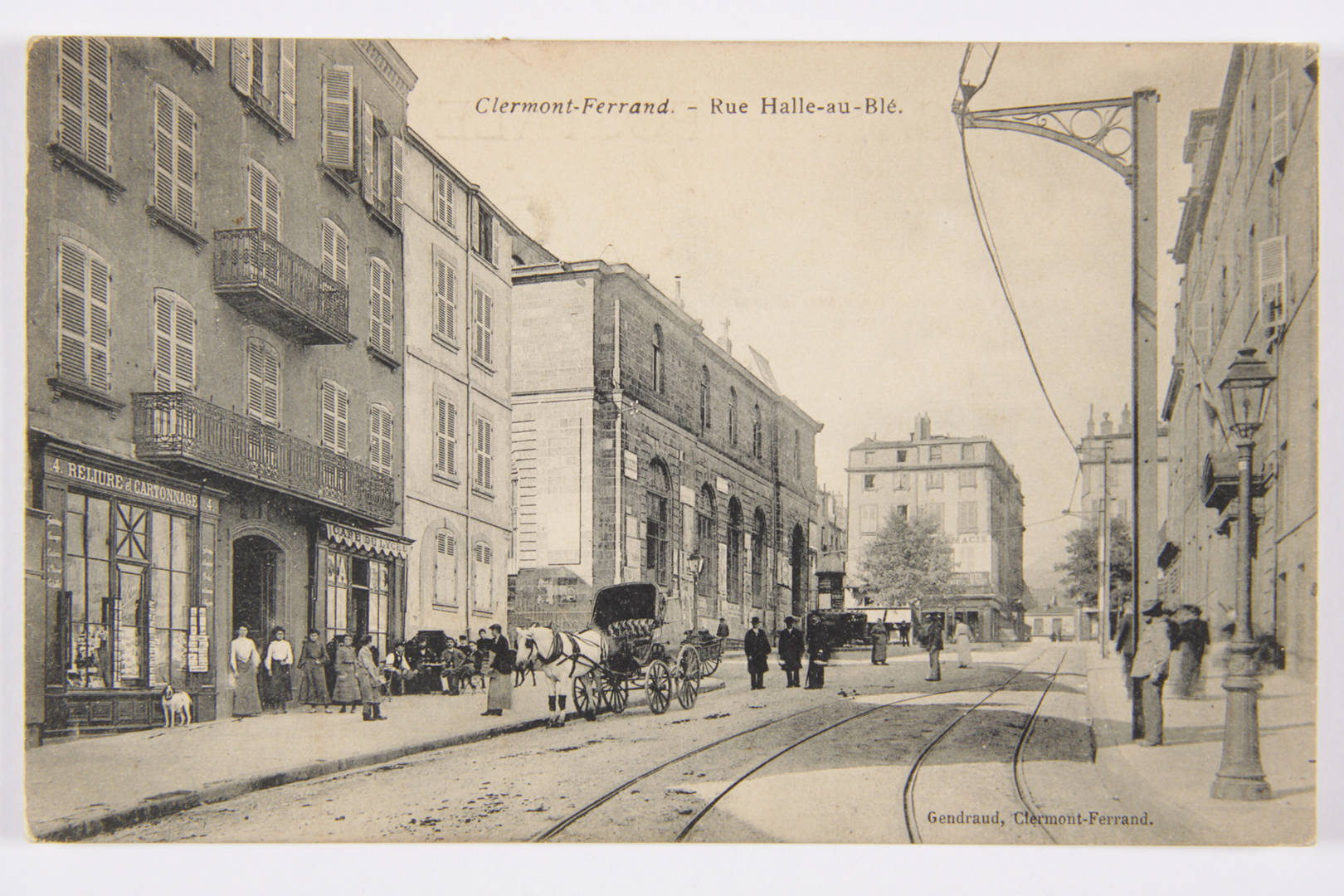
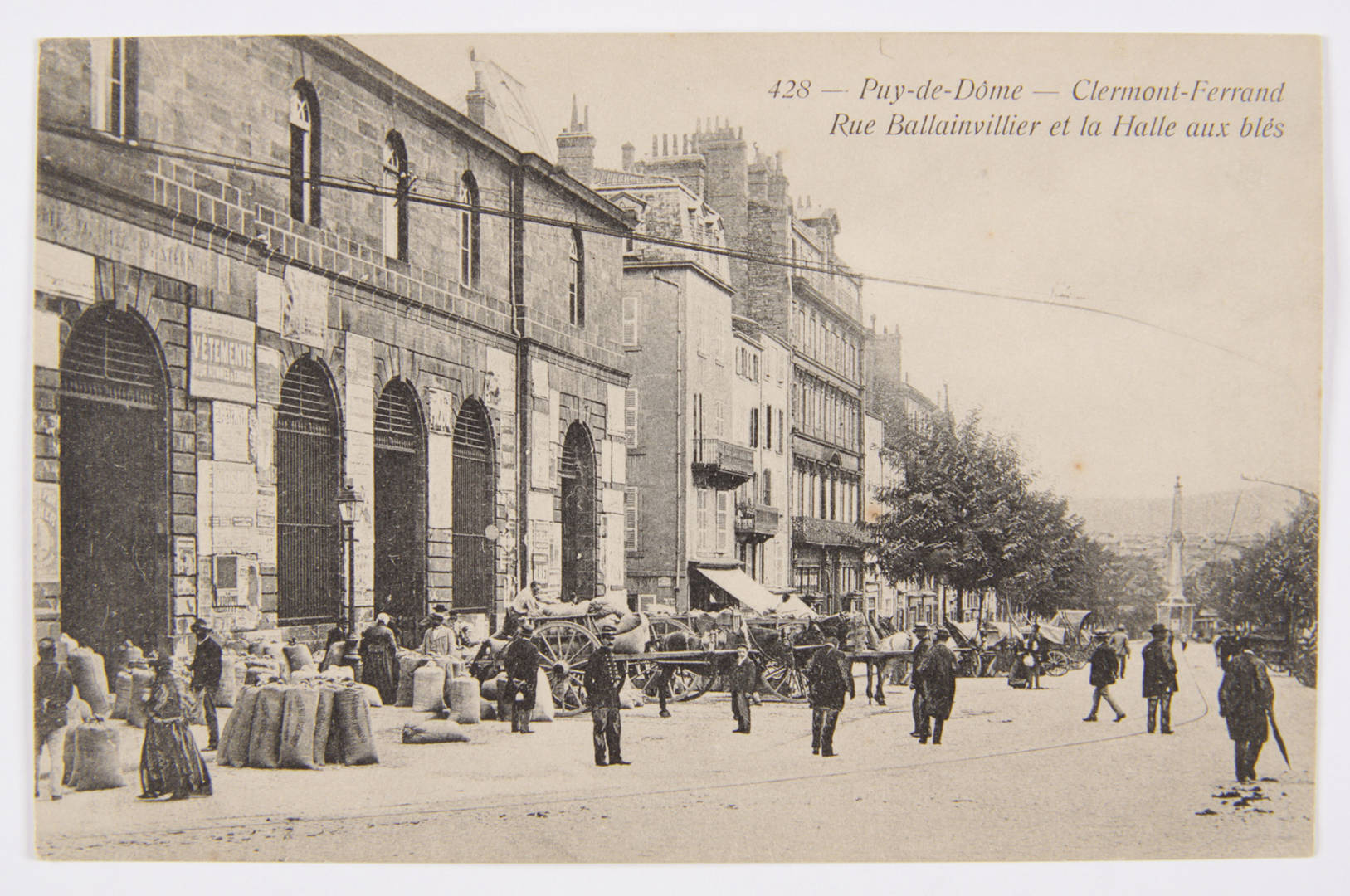
The grain trade played a vital role in the pre-industrial economy. In the Middle Ages, the grain market was held within the city walls, on what is now Place Royale. In 1761, it was moved to a larger square outside the walls, close to the main routes towards Bordeaux and Languedoc. In the same year, the provincial intendant Ballainvilliers had a broad boulevard with pavements on both sides laid out along the line of the former ramparts and ditches. Under the French Directory and the First Empire, this area became Clermont’s fashionable promenade.
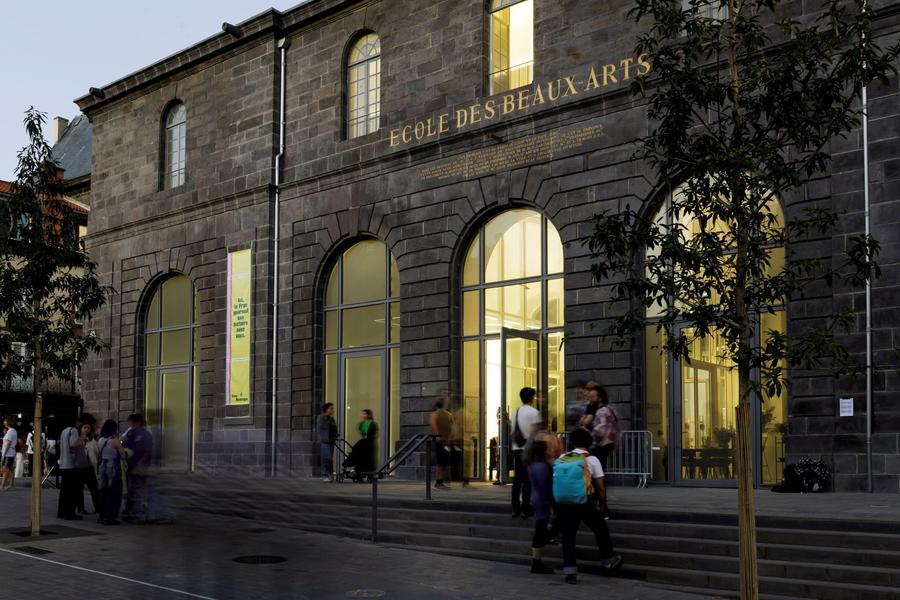
Between 1762 and 1771, a grain market hall was built to designs by the architect François-Charles Dijon. Its purpose was to ‘house the measuring equipment and shelter the grain from the rain, or to store it from one market day to the next’. However, its vaults were too low and collapsed on several occasions. The hall finally opened in 1769, a date that can still be seen in gilded lettering on its façade.
In 1822, the architect Louis-Charles Ledru strengthened the building and raised its height. Built of Volvic stone in the Neoclassical style, it was given a quadrangular plan : four groin-vaulted galleries surround a central courtyard, while the upper floor was reserved for grain storage.
In 1882, the Regional School of Fine Arts and Crafts moved into the upper floor of the hall. Fine arts teaching continued there until 1999.
In 2019, the Auvergne-Rhône-Alpes Regional Council undertook a further restoration of the building to house the Regional Contemporary Art Collection (FRAC).