This small square has existed since the Early Middle Ages. At that time, it served as a moat for the city’s first rampart, built in the 4th century. From the 12th century until the mid-18th century, it was home to the wheat market. Located near the episcopal palace and the(…)
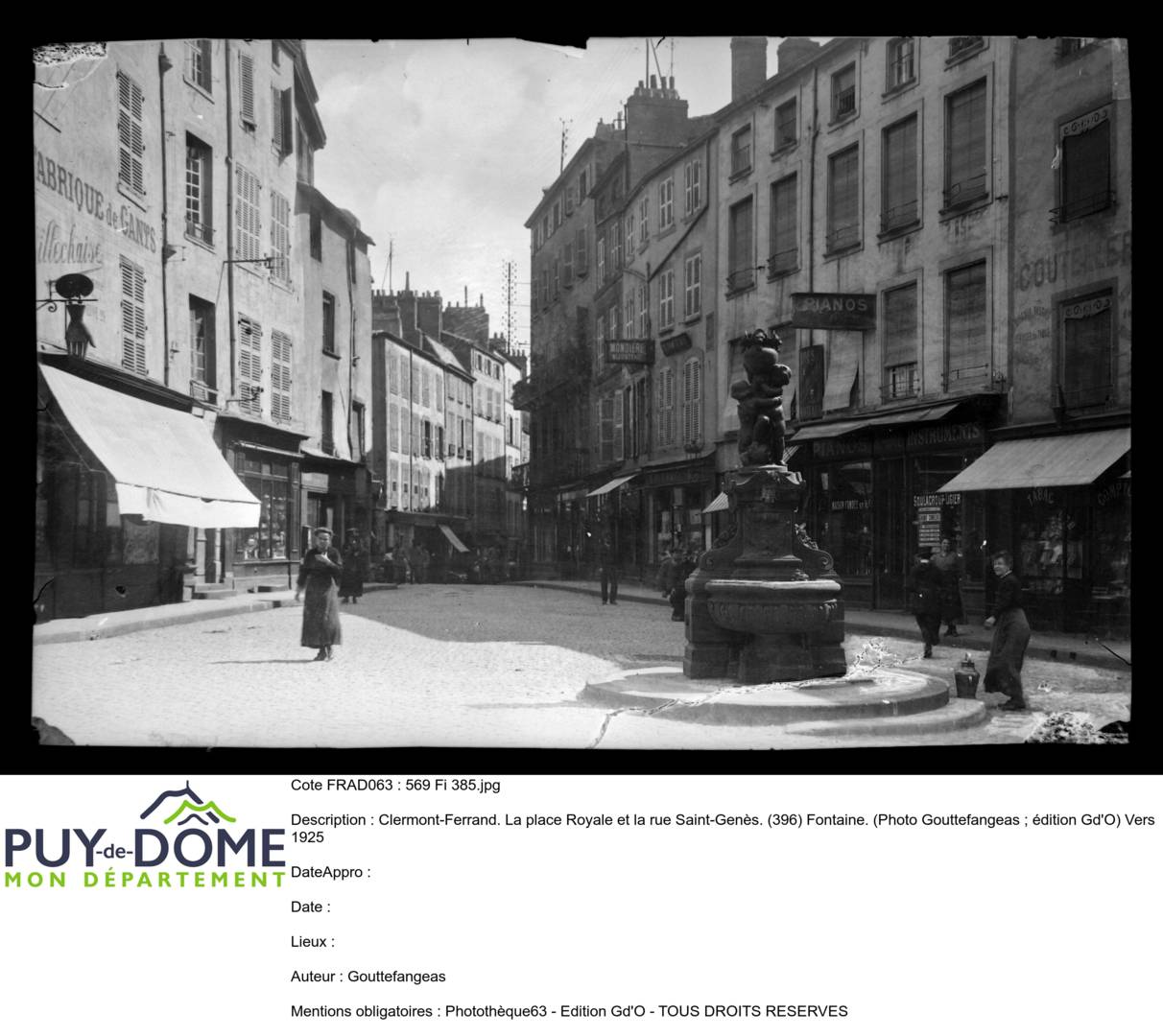
This small square has existed since the Early Middle Ages. At that time, it served as a moat for the city’s first rampart, built in the 4th century. From the 12th century until the mid-18th century, it was home to the wheat market. Located near the episcopal palace and the bishop’s court, it was also a site of public executions. In 1575, Fuzier depicted it in his view of Clermont, with a gallows at its centre.
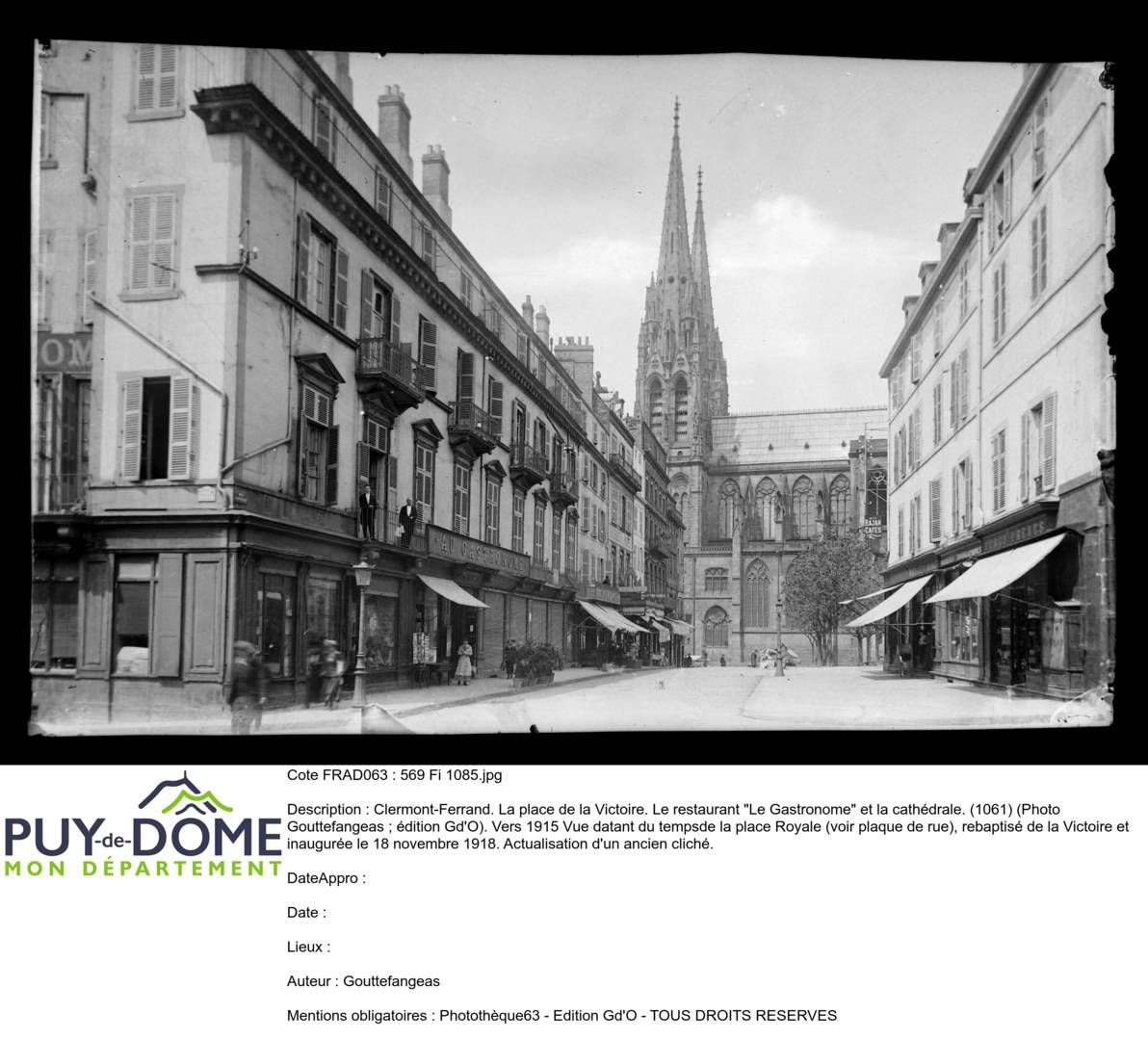
In 1761, the wheat market was relocated and plans were made to enlarge the square. From 1794 onwards, the demolition of the episcopal palace made it possible to open a road connecting Rue Saint-Genès to the cathedral. The space thus created was named Place Royale. In 1918, a large part of it was renamed Place de la Victoire, while Place Royale returned to its original dimensions.
In 1871, a fountain created by the Clermont-based sculptor Granjean and cast at the Durenne foundry was installed. In 1901, the architect Louis Jarrier designed the shopfront of the former pharmacy at No. 1 Place Royale : a subtle combination of carved wood and wrought iron framing a large glazed area. The ornamentation, freely inspired by the 18th century — masks, leaves and shells carved in oak — combines with the curves and counter-curves of the ironwork, which anticipates the Art Nouveau style.
Today, Place Royale offers one of the finest views in Clermont-Ferrand : the former Chapelle des Cordeliers in the foreground, followed by Place de Jaude and Rue Blatin stretching as far as Chamalières, with the Limagne fault and the Puy de Dôme on the horizon.

 Updated on 22 September 2026 by Clermont Auvergne Volcans