Place Saint-Pierre was once occupied by the Romanesque Church of Saint-Pierre, demolished during the French Revolution, and by a cemetery. It was in this church that Blaise Pascal was baptised in 1623. The only surviving element of the church, a lintel depicting Jesus washing Saint Peter’s feet, was reused on(…)
Place Saint-Pierre was once occupied by the Romanesque Church of Saint-Pierre, demolished during the French Revolution, and by a cemetery. It was in this church that Blaise Pascal was baptised in 1623. The only surviving element of the church, a lintel depicting Jesus washing Saint Peter’s feet, was reused on the façade of a building at the corner of Place des Gras and Rue des Gras.
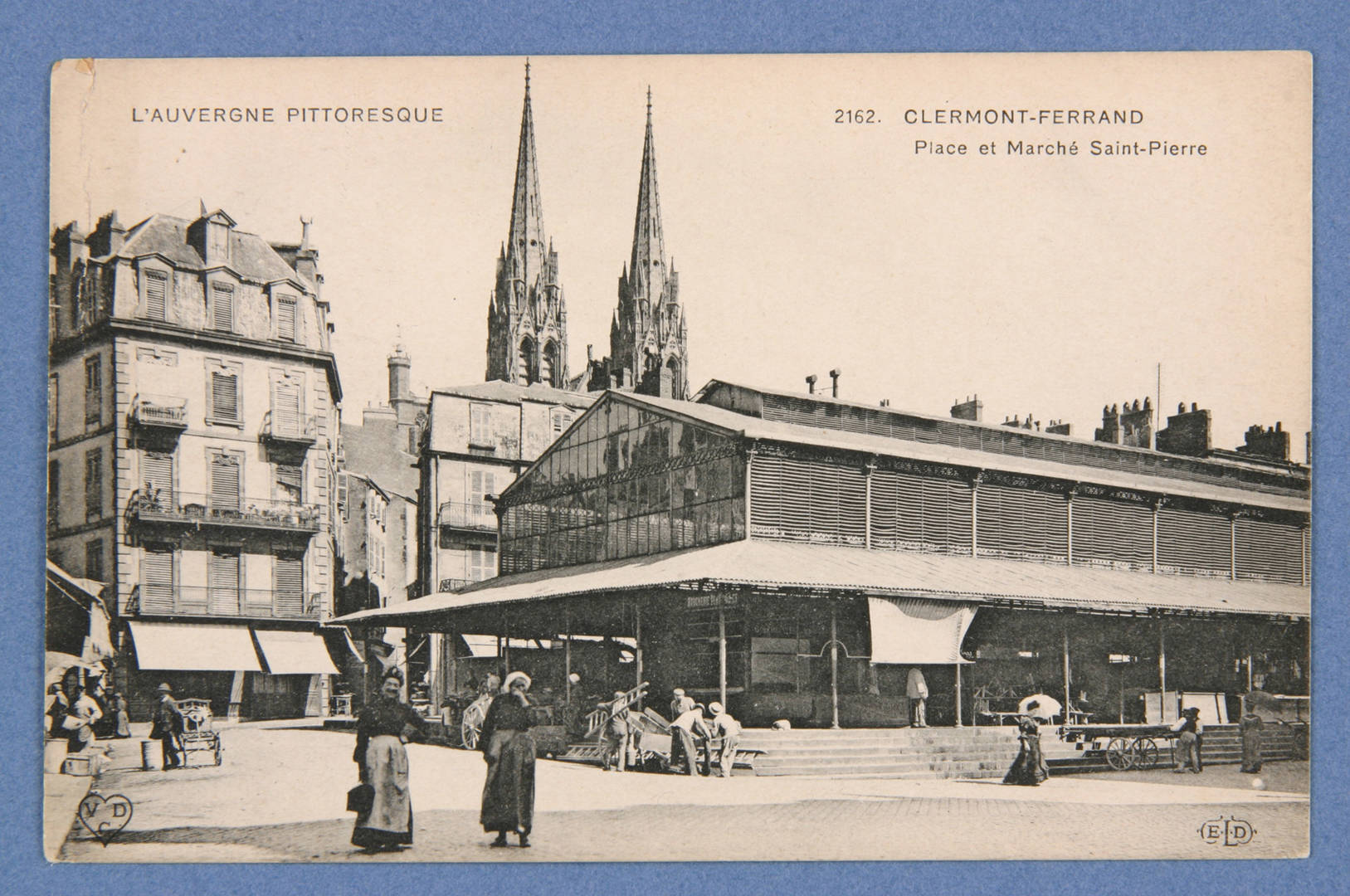
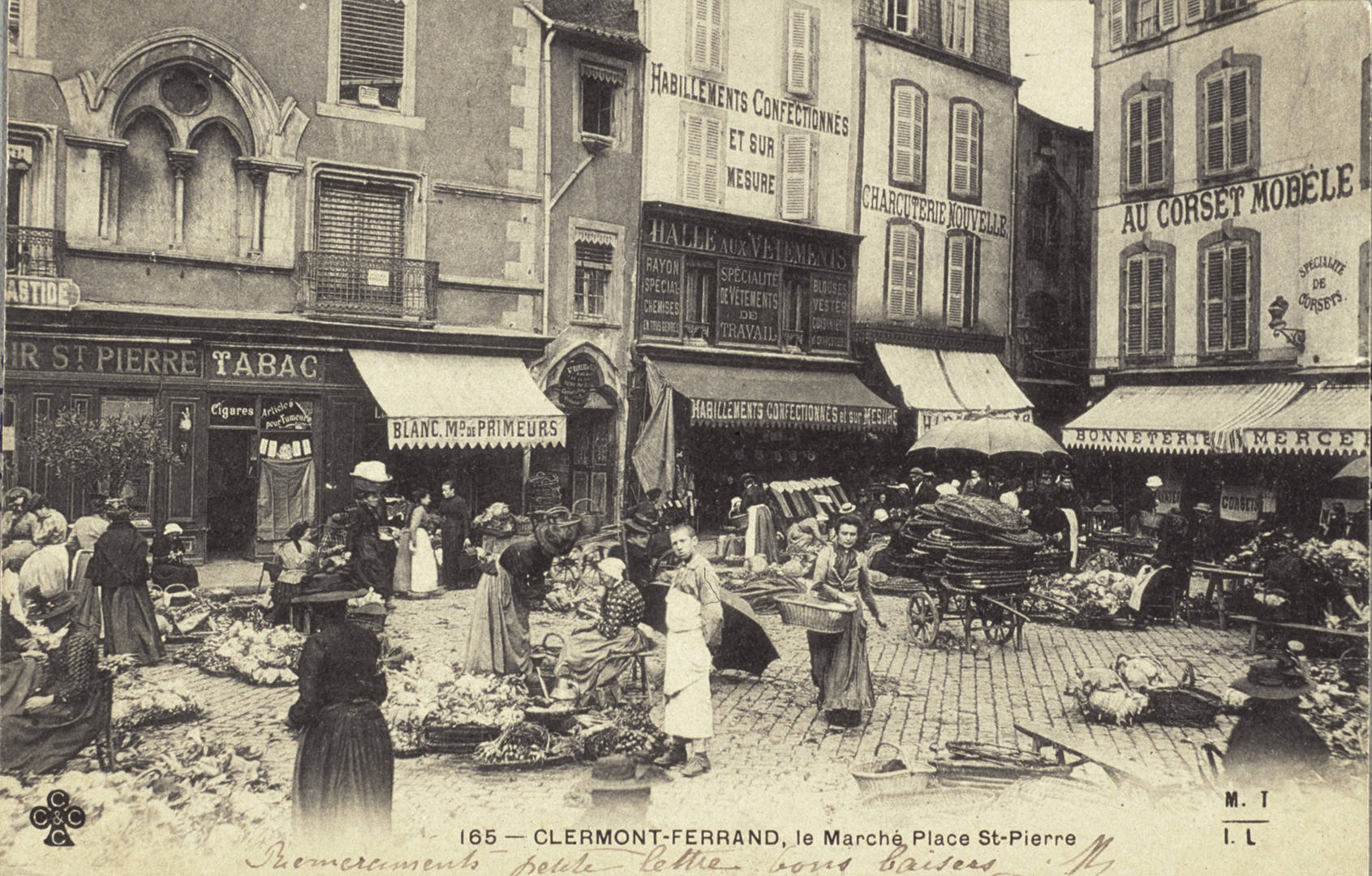
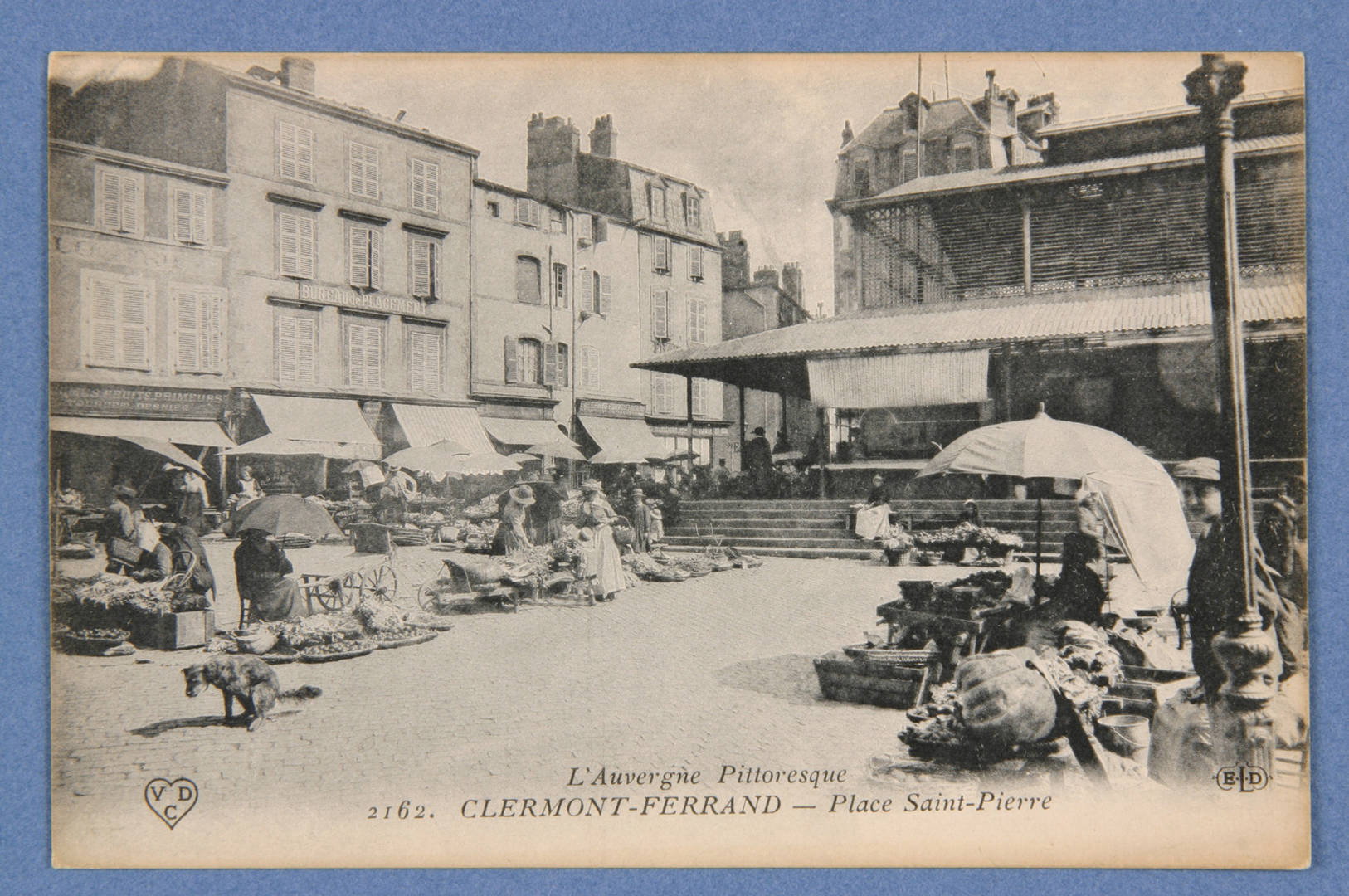
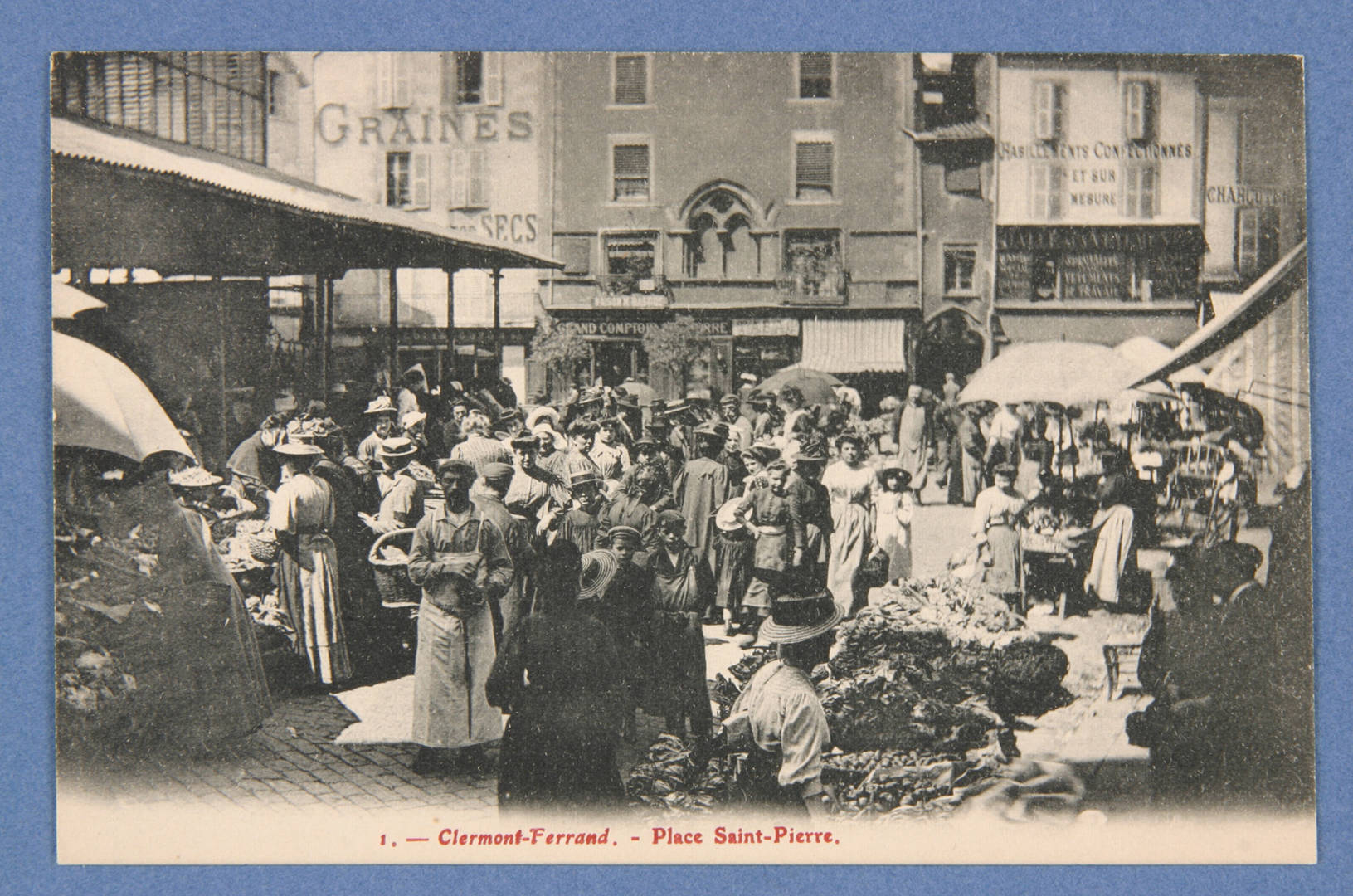
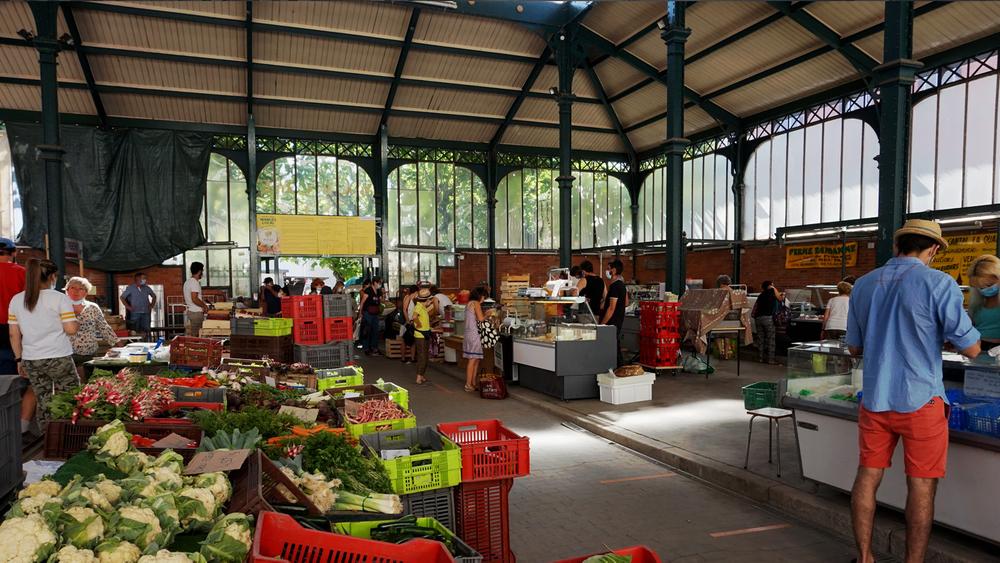
A fruit market is recorded on Place Saint-Pierre as early as 1666. Several covered market halls subsequently occupied the site, culminating in the present-day hall, built in 1985.
Located on the site of the city walls and the former Porte Saint-Pierre, the building now housing the Salle Gilbert-Gaillard was constructed in 1775 to accommodate the city weigh house, where goods were officially weighed. In 1894, the municipal council decided to change its use : the ground floor was converted into a large shop, while an assembly hall was created on the first floor.
The works were entrusted to the architect Jean-Joseph Teillard, who added an extra storey to the building, with five round-arched bays on the façade. He also topped it with a slate mansard roof, lit by dormer windows with stone pediments made from Volvic stone, as well as bull’s-eye windows, small circular windows made of zinc.
The hall is named after Gilbert Gaillard, a confectionery manufacturer and prominent figure in local political life, who was Mayor of Clermont-Ferrand from 1880 to 1884. Today, the hall is a multidisciplinary exhibition venue, hosting solo projects by artists from the local area, collective projects linked to the city’s cultural policy, and exhibitions organised by cultural organisations from Clermont.

 Updated on 22 September 2026 by Clermont Auvergne Volcans