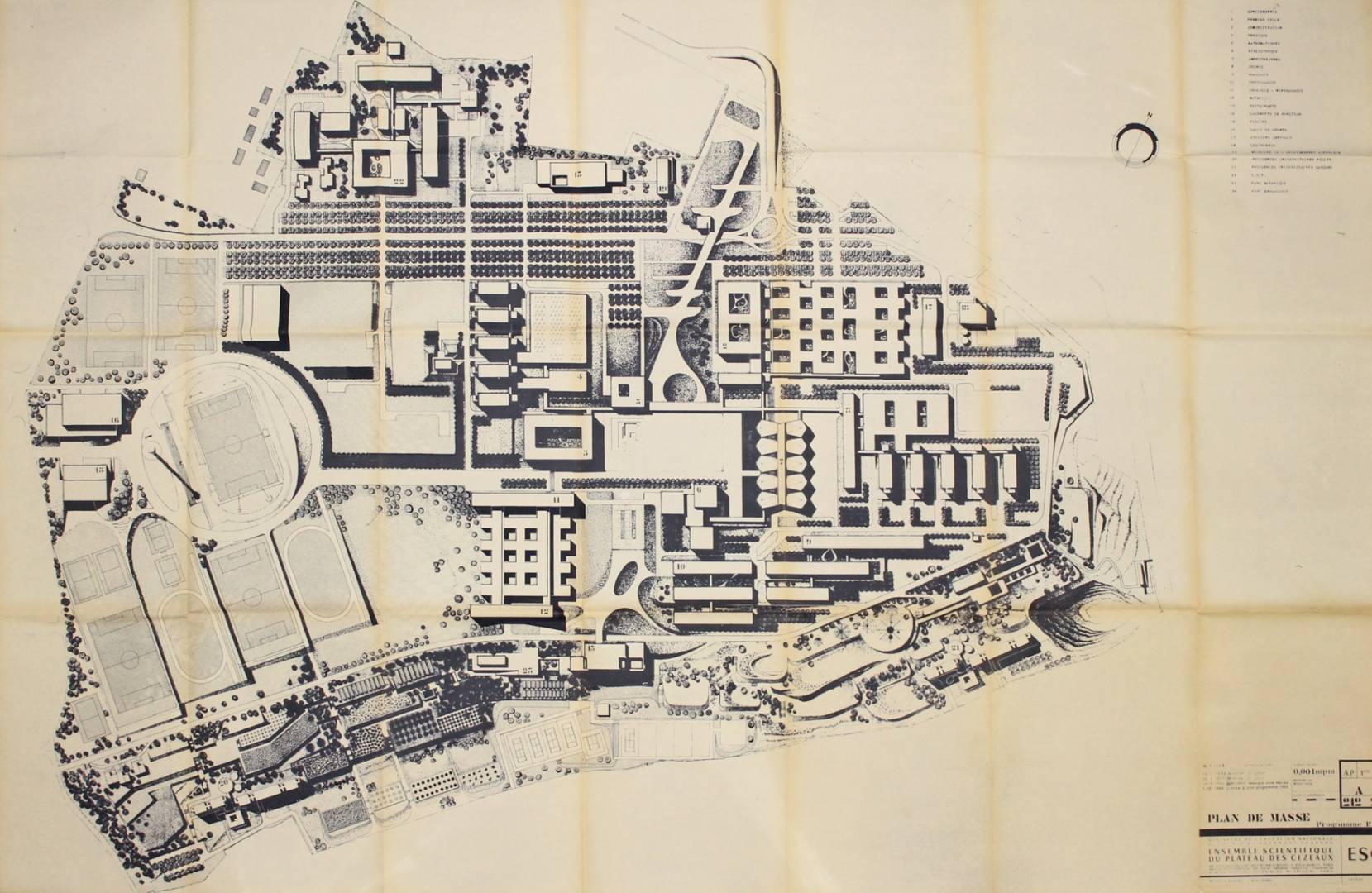
The Cézeaux campus is located on a basalt table that is now part of the city. Its design was conceived in 1963 by Parisian architects Daniel Badani (1914-2006) and Pierre Roux-Dorlut (1919-1995), in collaboration with Clermont-Ferrand architects Jean-Louis Douat, Antoine Espinasse and Paul Lanquette. The project includes buildings dedicated to(…)
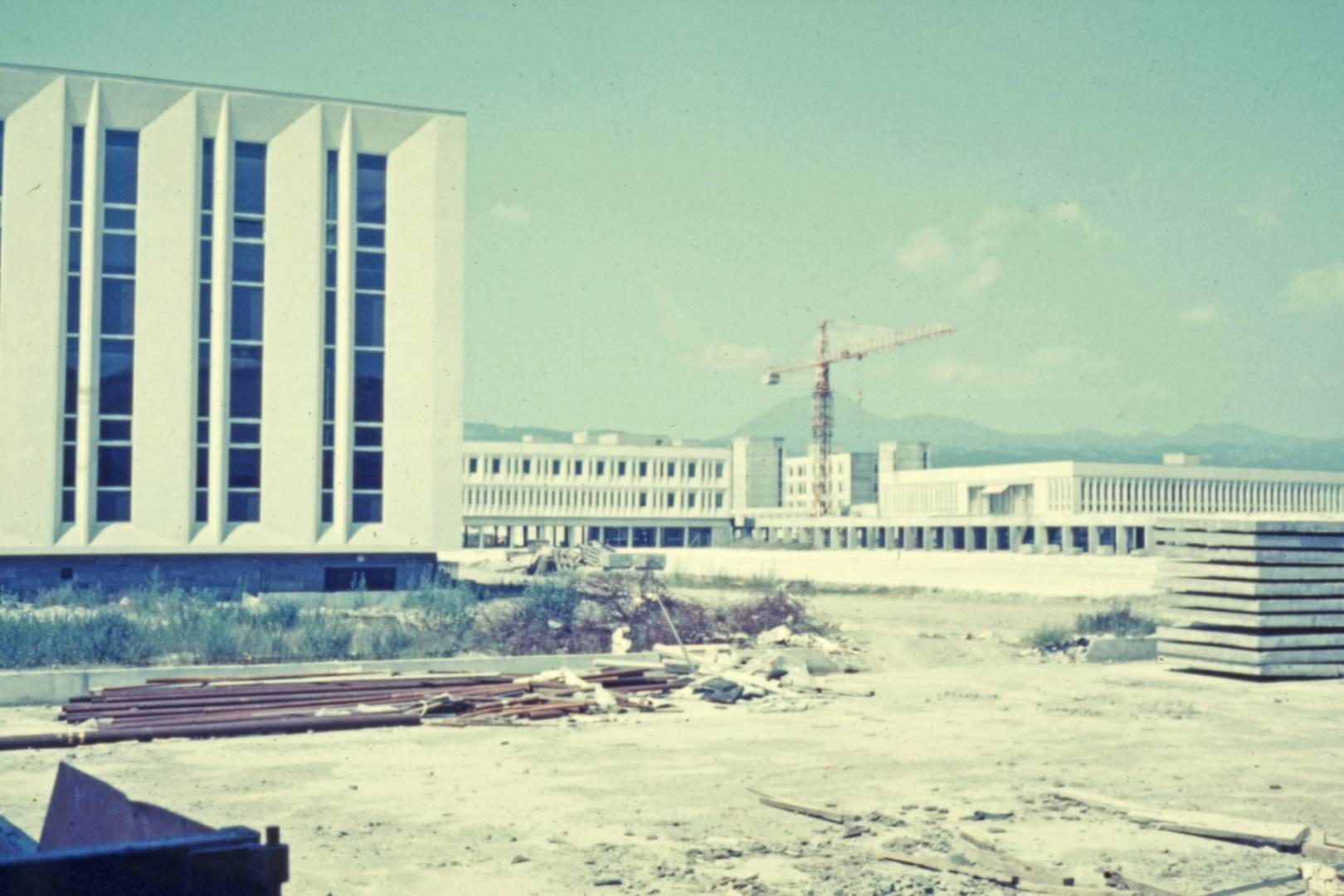
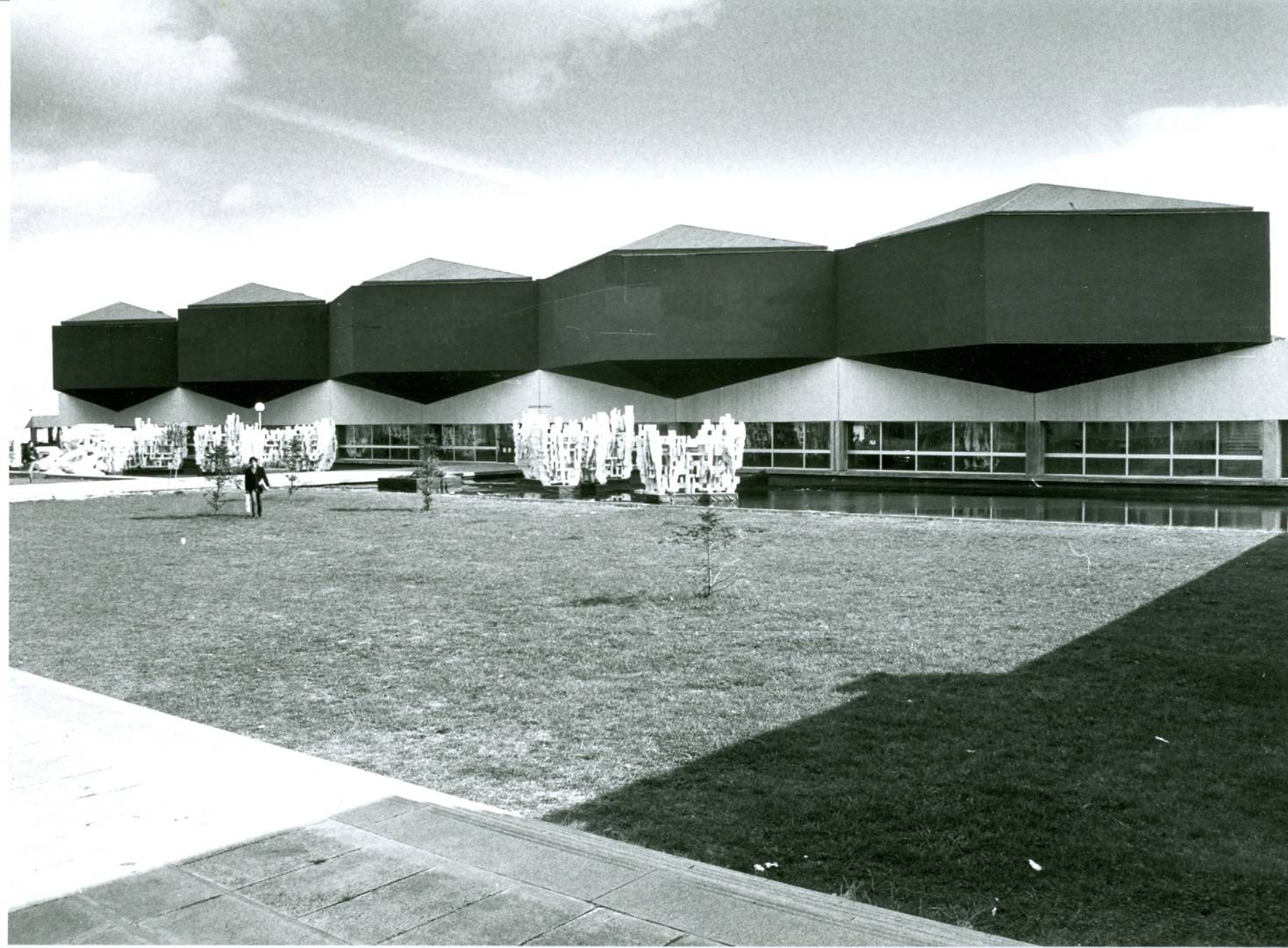
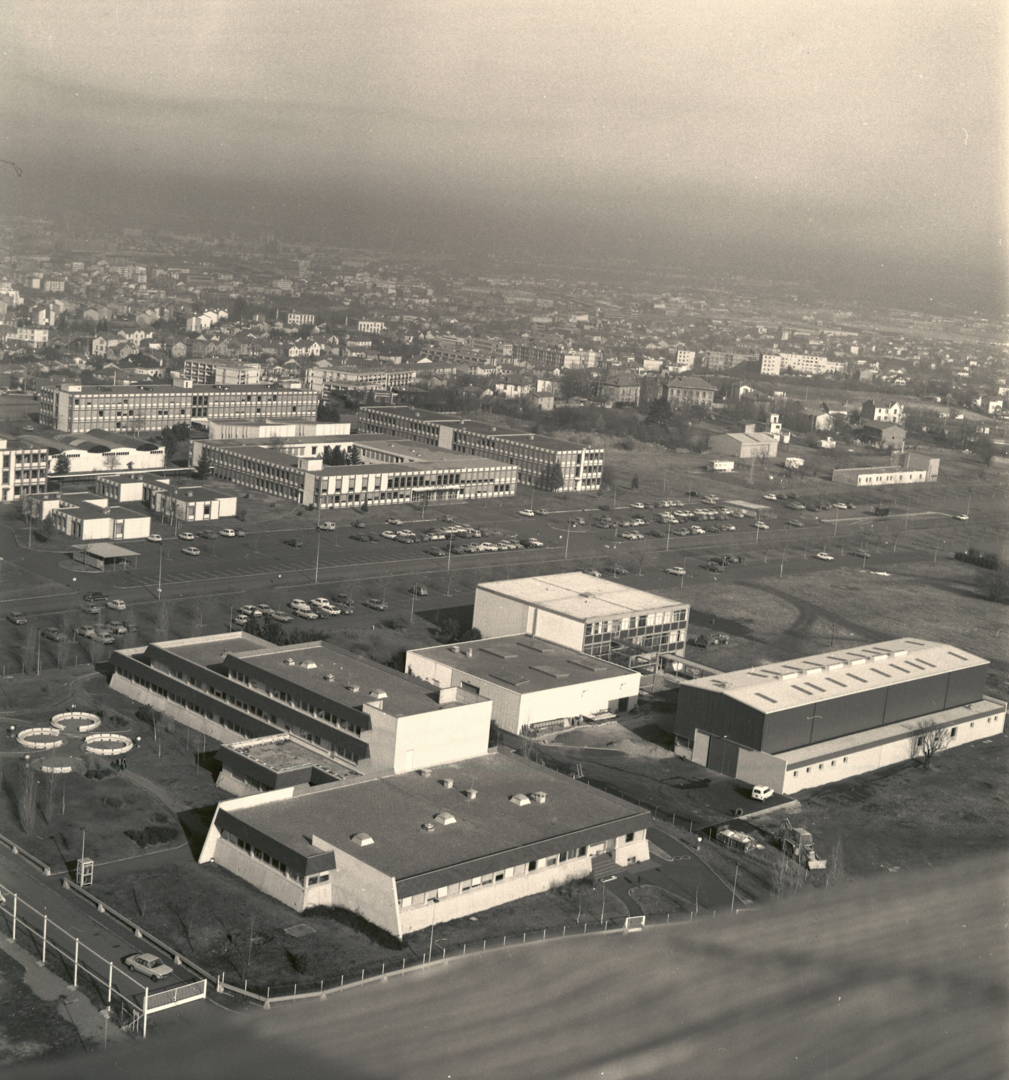
The Cézeaux campus is located on a basalt table that is now part of the city. Its design was conceived in 1963 by Parisian architects Daniel Badani (1914-2006) and Pierre Roux-Dorlut (1919-1995), in collaboration with Clermont-Ferrand architects Jean-Louis Douat, Antoine Espinasse and Paul Lanquette. The project includes buildings dedicated to teaching, a library, a university restaurant and student accommodation. The architecture is sober and functional, based on a rational plan and an industrialized construction system. A prefabrication plant has been set up on site. However, only the first phase of the initial project was built between 1968 and 1973.
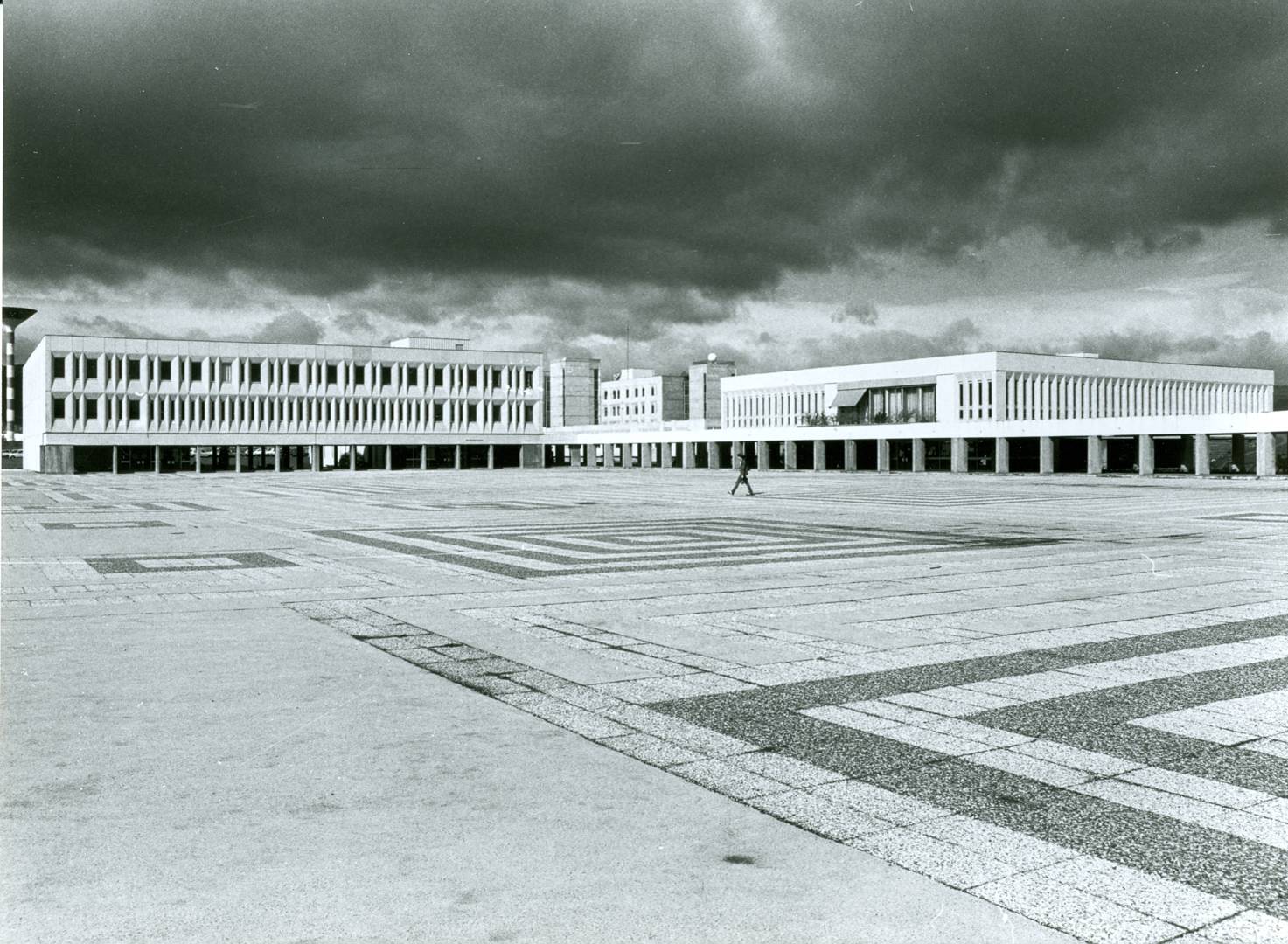
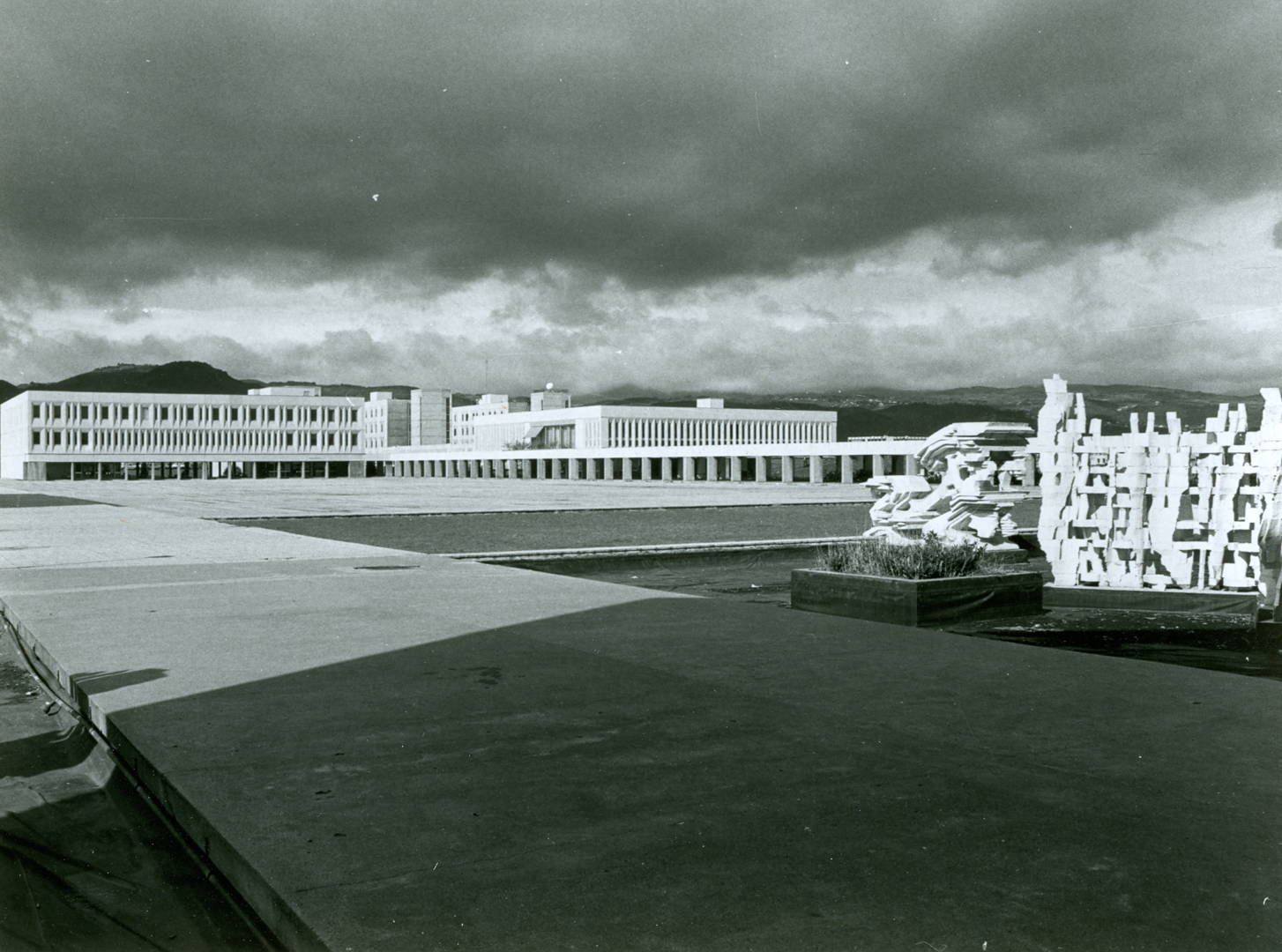
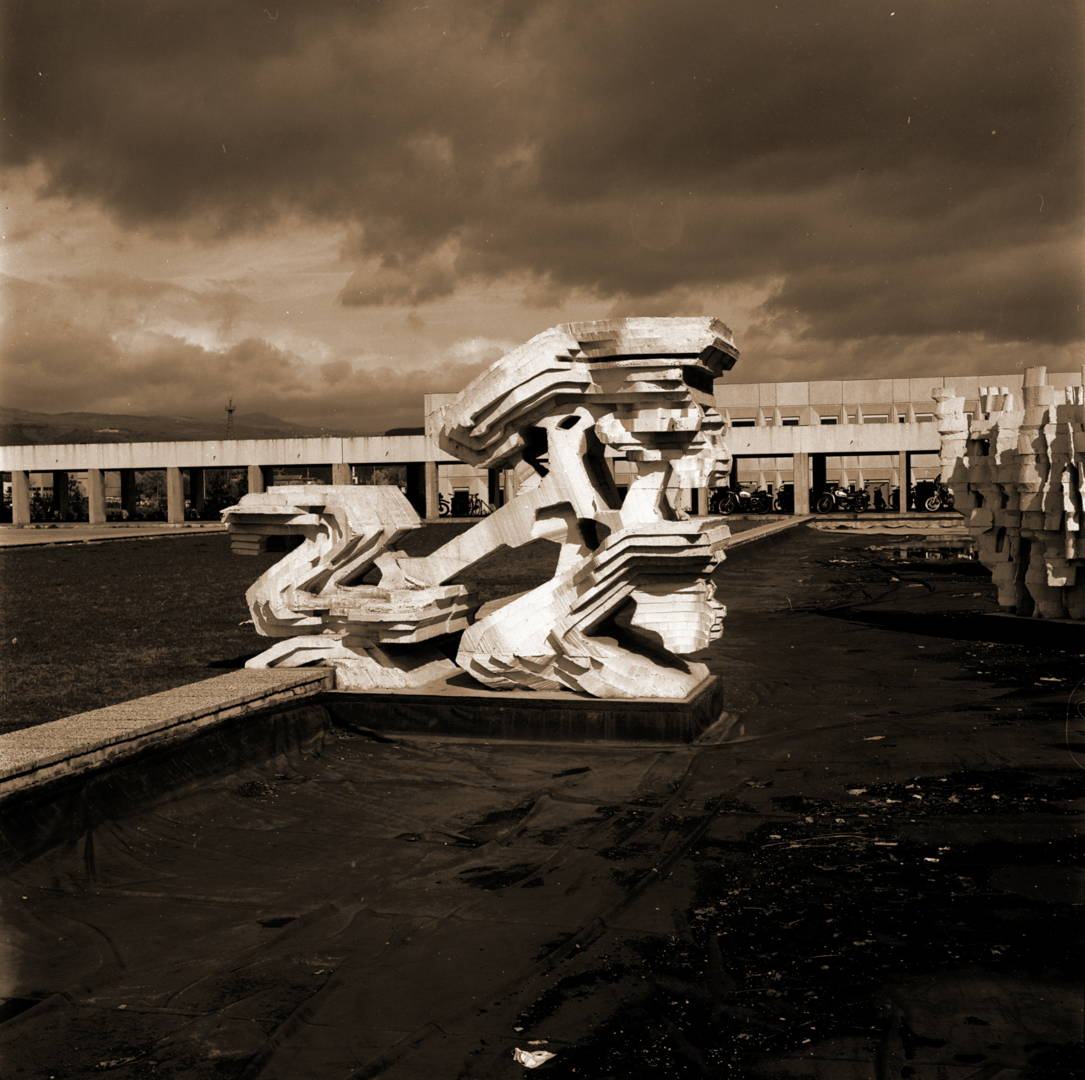
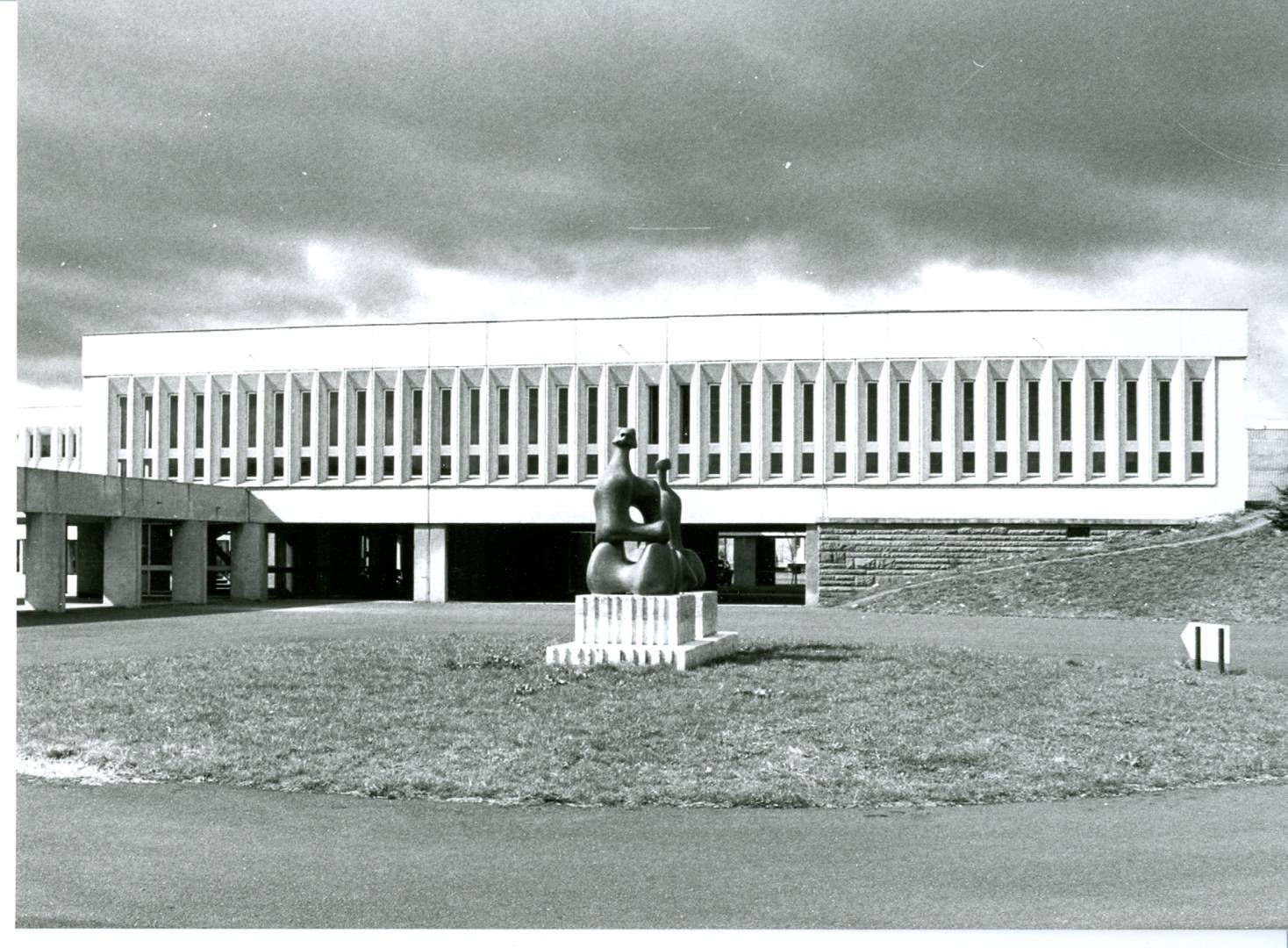
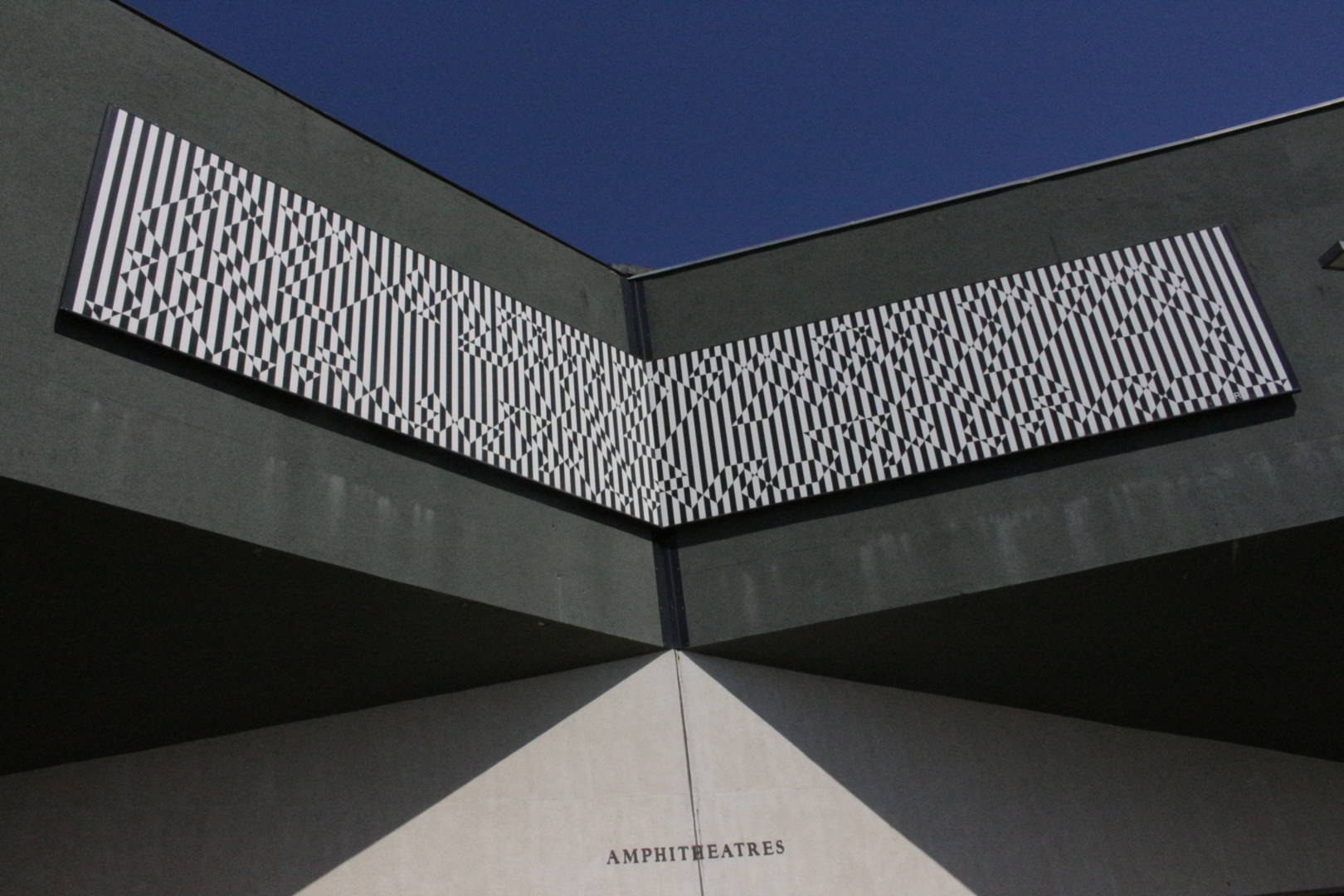
In the 1970s, the campus was enriched with works of art as part of the 1% artistic program. Victor Vasarely took over the central square with a paving designed according to the principles of Optical Art, an aesthetic based on visual illusions. Destroyed in 2007 due to its poor condition, the work was replaced by Riu-Kiu, a motif created by Vasarely in 1956 and realized by his pupil Bruno Allart. This enamelled sheet metal mural now adorns the amphitheatre building. Other notable works include La Dématérialisation (1972) by Francis Pellerin (1915-1988), Les Murs-Fontaines (1972) by Ervin Patkaï (1937-1985), part of which has been preserved, and Silhouettes formant un réceptacle à l’enseignement dispensé par la Connaissance (1978) by Michell (b. 1936).
Since the 1990s, the campus has been rewriting its history by showcasing contemporary architecture : Polytech (architects Bresson, Combe and Ondet, then Panthéon) ; the Laboratoire de Physique Corpusculaire (architects Brenac and Gonzalez) ; the Institut National de Recherche en Sciences et Technologies pour l’Environnement et l’Agriculture (IRSTEA, architects Hauvette and Atelier 4), with its maple sunshades ; the Institut Français de Mécanique Avancée (IFMA, architects Ameil and Jalicon), whose shape evokes the industrial world ; the Laboratoire Magmas et Volcans (Groupe 6 Architects), with its unstable volumes, like a magma in motion.
Captions for photographs and visuals :
1 – Ground plan of the Cézeaux campus, circa 1970
2 – Construction of the Cézeaux campus, circa 1970
3 – Place Vasarely, circa 1970
4 – Sculpture by Ervin Patkaï and Place Vasarely, circa 1970
5 – Sculpture by Ervin Patkaï, circa 1970
6 – Sculpture by Michelle Bargoin dit Michell, circa 1970
7 – Aerial view of the Cézeaux campus, circa 1970
8 – Riu-Kiu, wall decoration in enamelled sheet metal by Vasarely (motif) and Bruno Allart (realization)

 Updated on 12 May 2026 by Clermont Auvergne Volcans