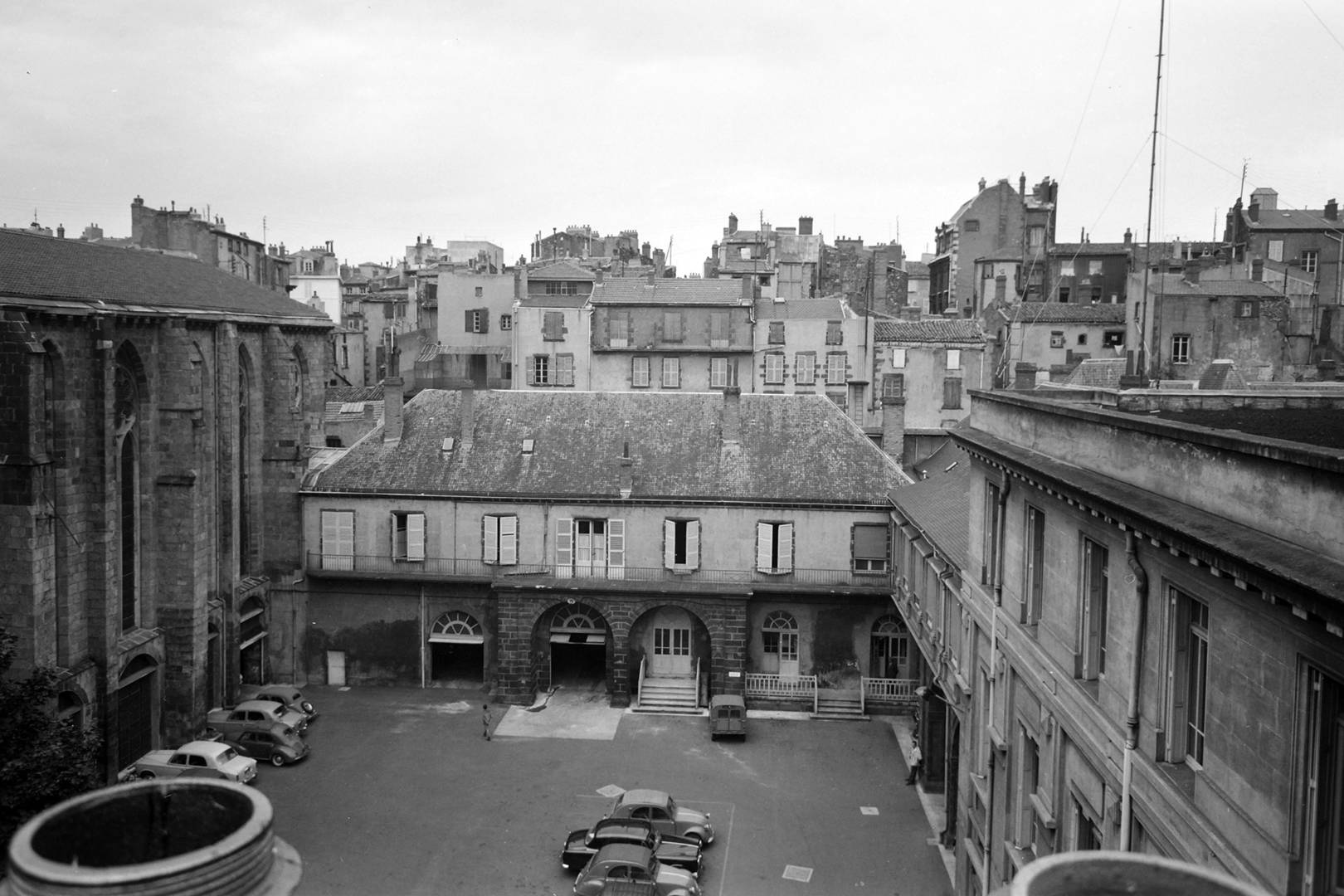
The Puy-de-Dôme Prefecture was established on the site of the former Cordeliers convent, founded in the 13th century, whose chapel is still visible today. In 1790, the buildings hosted the sessions of the newly established departmental council. In 1800, the first Prefect of Puy-de-Dôme, Ramey de Sugny, was appointed and(…)
The Puy-de-Dôme Prefecture was established on the site of the former Cordeliers convent, founded in the 13th century, whose chapel is still visible today. In 1790, the buildings hosted the sessions of the newly established departmental council. In 1800, the first Prefect of Puy-de-Dôme, Ramey de Sugny, was appointed and moved his services into the former departmental offices.
In 1848, major works were entrusted to the architect Mallay, including the repair of the roofs, the restoration of the cloister galleries and the chapel vaults, the creation of an avant-corps in the courtyard, and the refurbishment of the ceremonial apartments. He also designed the grand staircase and the colonnaded façade overlooking the garden.
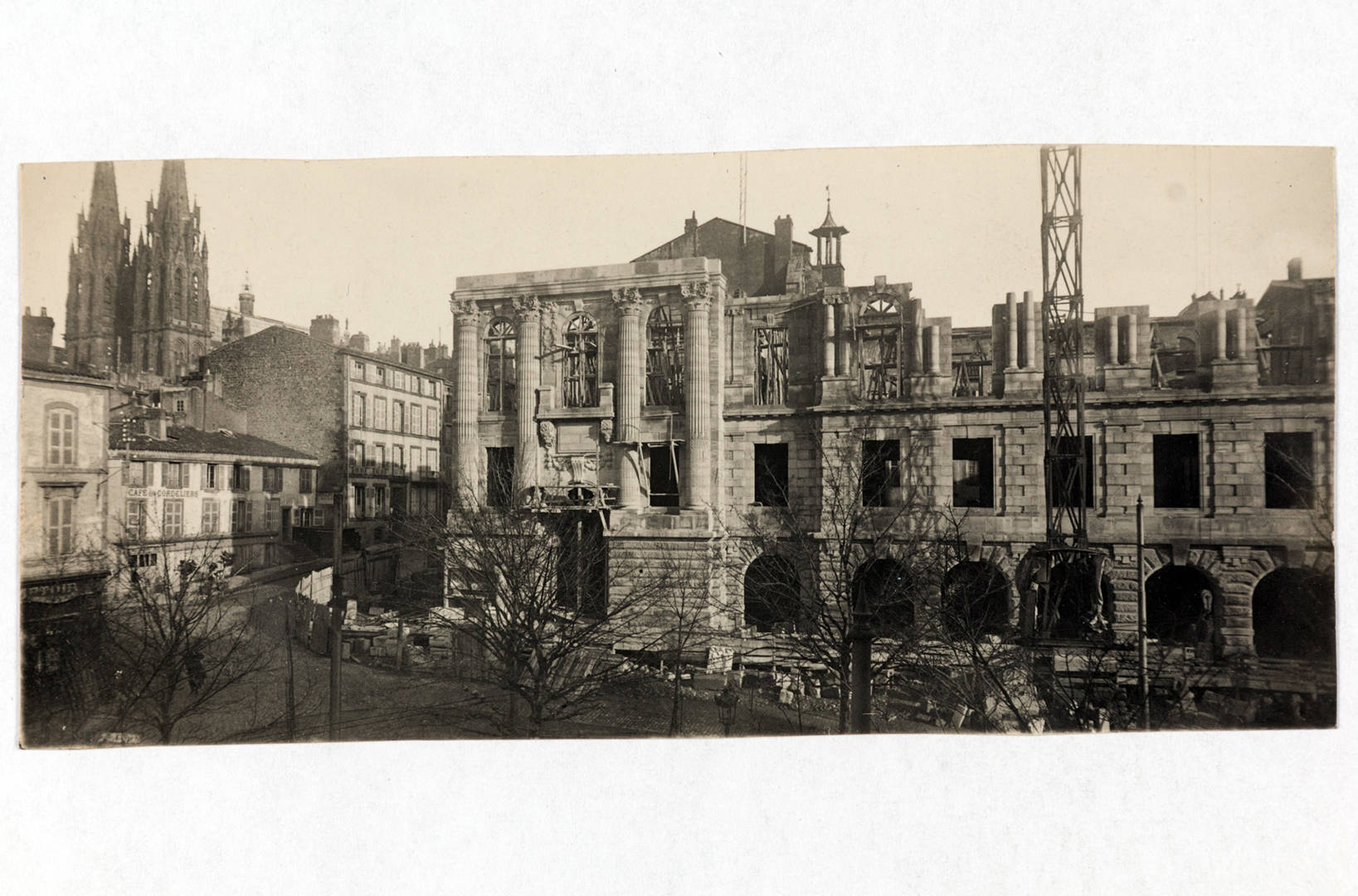
By 1910, the premises had become too cramped, and plans for a new building were drawn up. The project by the architect François Clermont was selected : a Neo-Classical building, inaugurated in 1923. Beneath the pediment of the main façade, four stone statues sculpted by Paul Graf represent Justice, Industry (depicted with a pneumatic tube), the thermal spa industry and Agriculture.
The monumental ironwork gate at the entrance on Boulevard Desaix was made by the workshops of Clermont-based ironworker Bernardin. Set amid a floral design are the region’s coat of arms, the gonfanon d’Auvergne, and, below, the coats of arms of the arrondissement capitals : Riom, Ambert, Clermont, Issoire and Thiers.
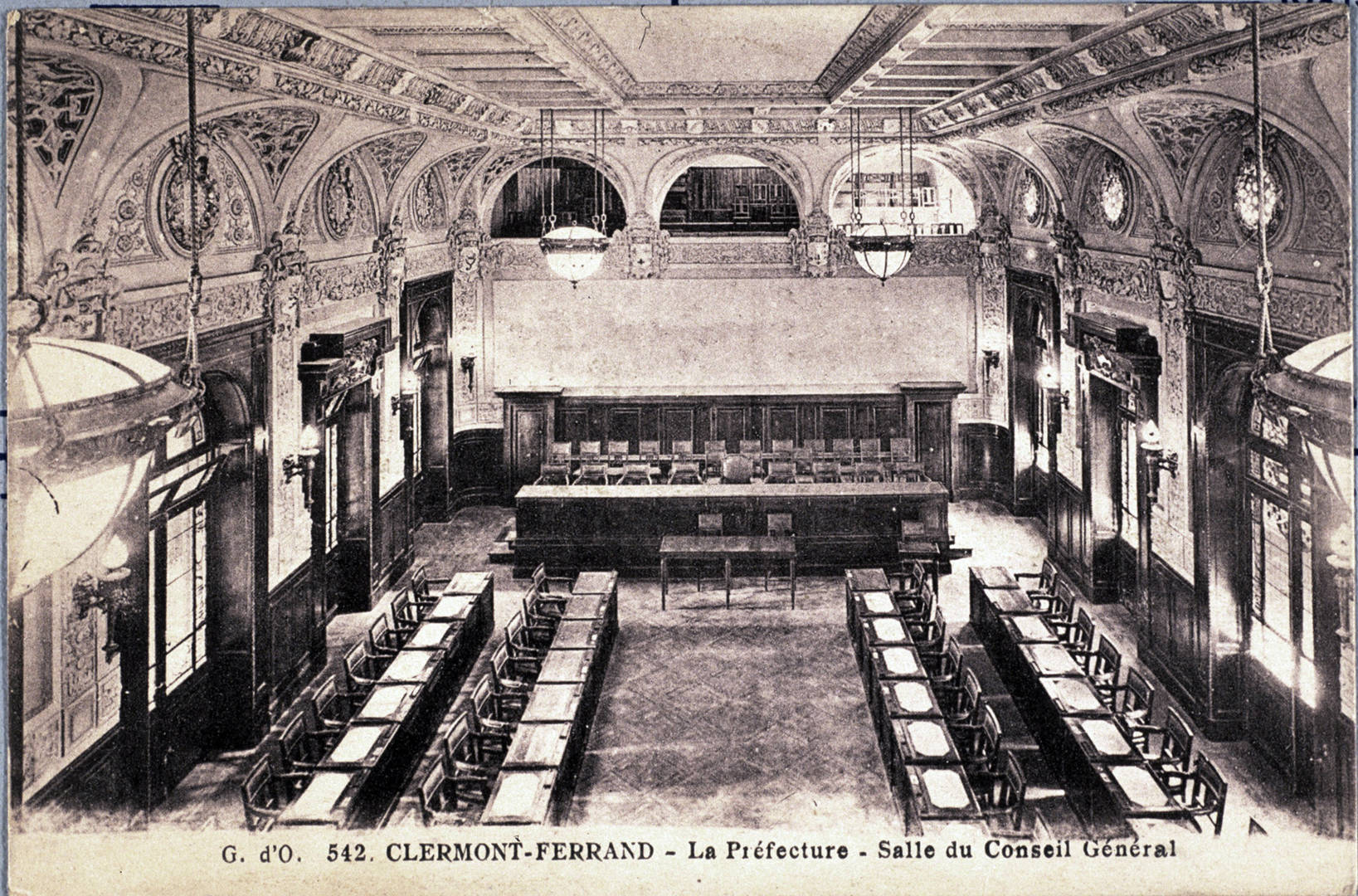
The former General Council chamber retains a complete decorative scheme, with stucco, stained-glass windows and light fittings in the Neo-Renaissance style. The chamber has also preserved all of its original furnishings.

 Updated on 23 September 2026 by Clermont Auvergne Volcans