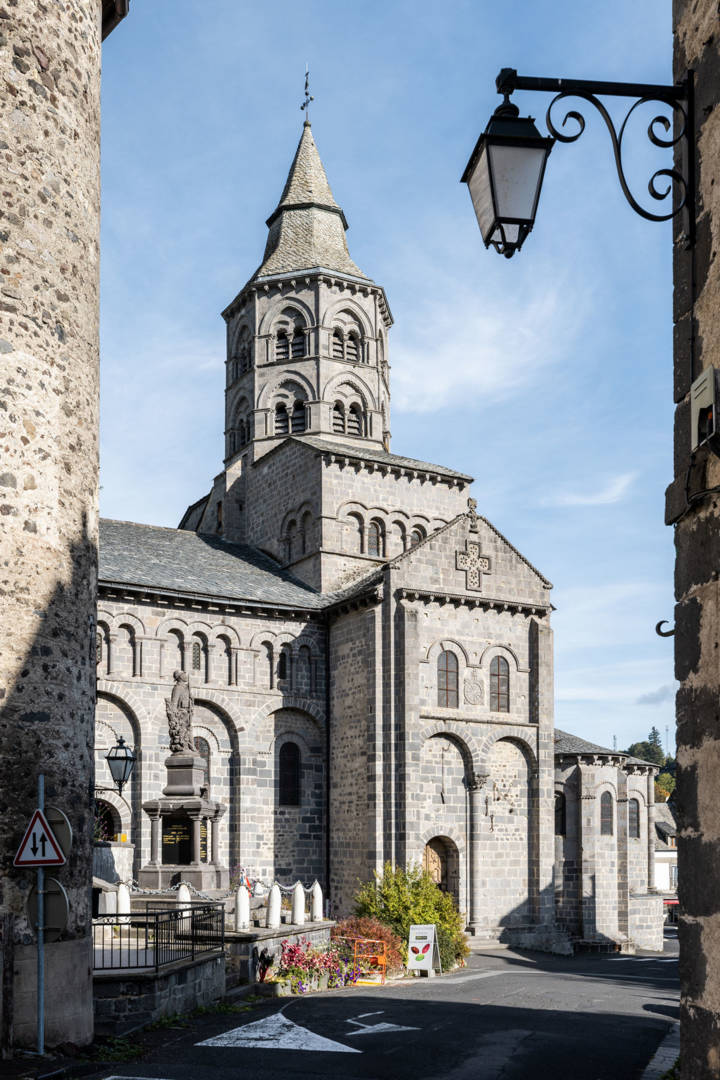
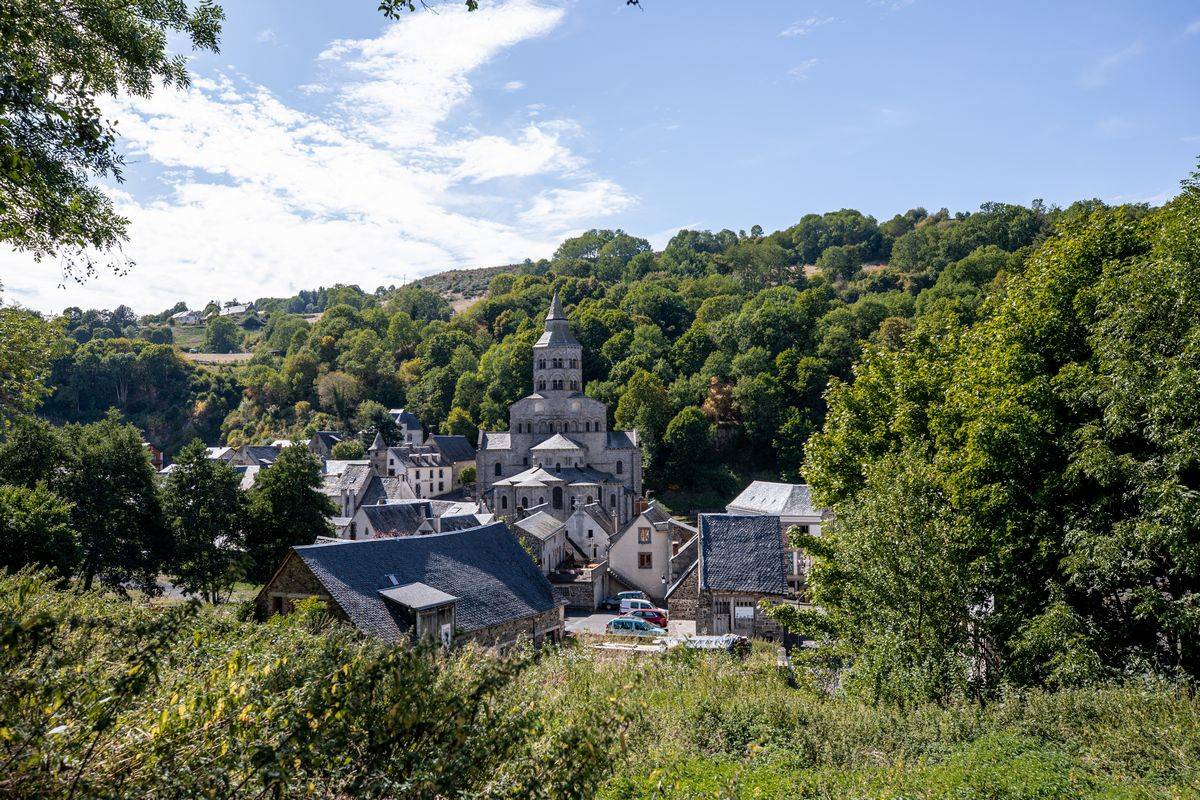
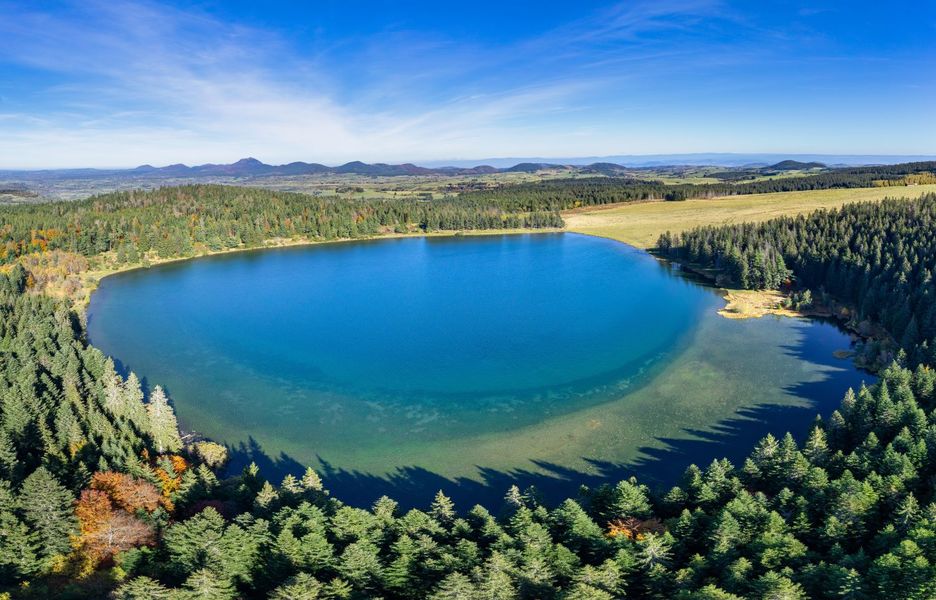
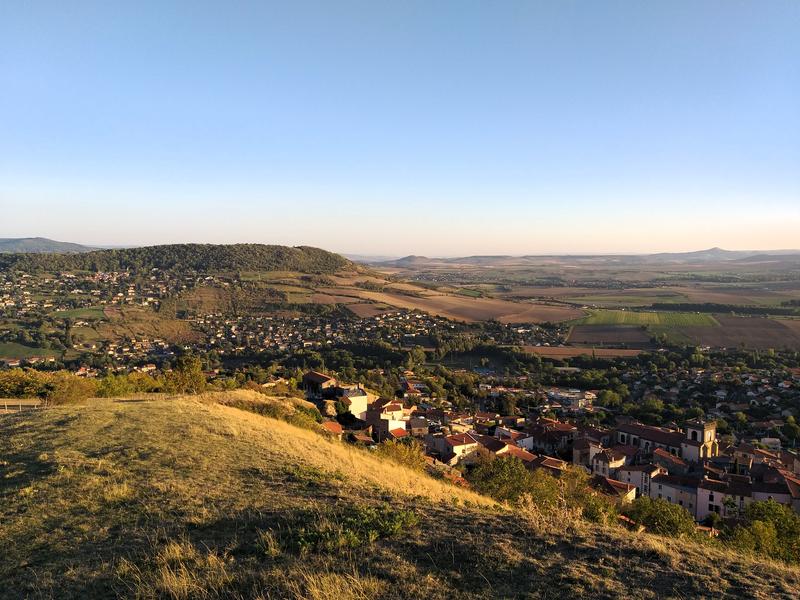
Nestled in a verdant setting in the heart of the Parc des Volcans d’Auvergne, Notre-Dame d’Orcival rises soberly and majestically above the lauze roofs of a village full of character. The remarkable homogeneity of its architecture ranks it among the finest examples of Romanesque art in the region.
Thousand-year-old origins :
The architecture of Notre Dame d’Orcival is highly homogeneous. It has undergone very few modifications over the years, as its size has spared it the need for enlargement. But the interior decoration has disappeared, as have the ornaments. Notre Dame d’Orcival has been a listed monument since 1840.
The Basilica of Orcival was built by the Counts of Auvergne and the powerful Bishop of Clermont. It is the successor to another church built at Tombeau de la Vierge (east of the village), destroyed by Norman invasions at the end of the 9th century.
Village life in Orcival in the Middle Ages was dynamic and rich. Orcival counted up to 25 canons in its chapter, attesting to the importance of pilgrimages and the income they generated. Pilgrims, the needy and the sick were welcomed, which enabled them to solicit substantial subsidies. At the end of the Middle Ages, Notre Dame d’Orcival enjoyed a certain influence and benefited from the generosity of the surrounding lords. In 1483, Gilbert de Chabanne, Lord of Orcival, had the privilege of having the family tomb built in the crypt.
The first references to the miraculous liberation of innocent prisoners or convicts through the intercession of the Virgin (hence the name Notre Dame des Fers) date from modern times. The chains and cannonballs hanging from the south façade of Notre Dame d’Orcival still bear witness to this.
Unspoiled treasures :
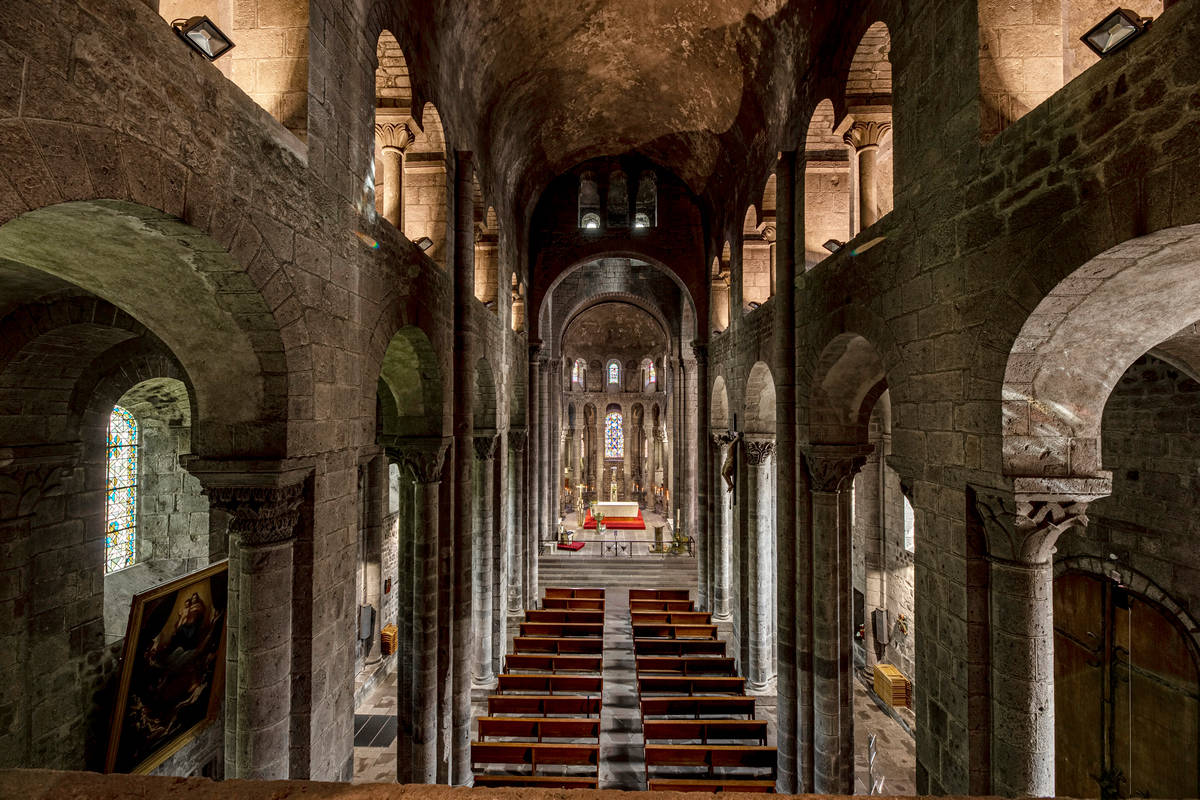
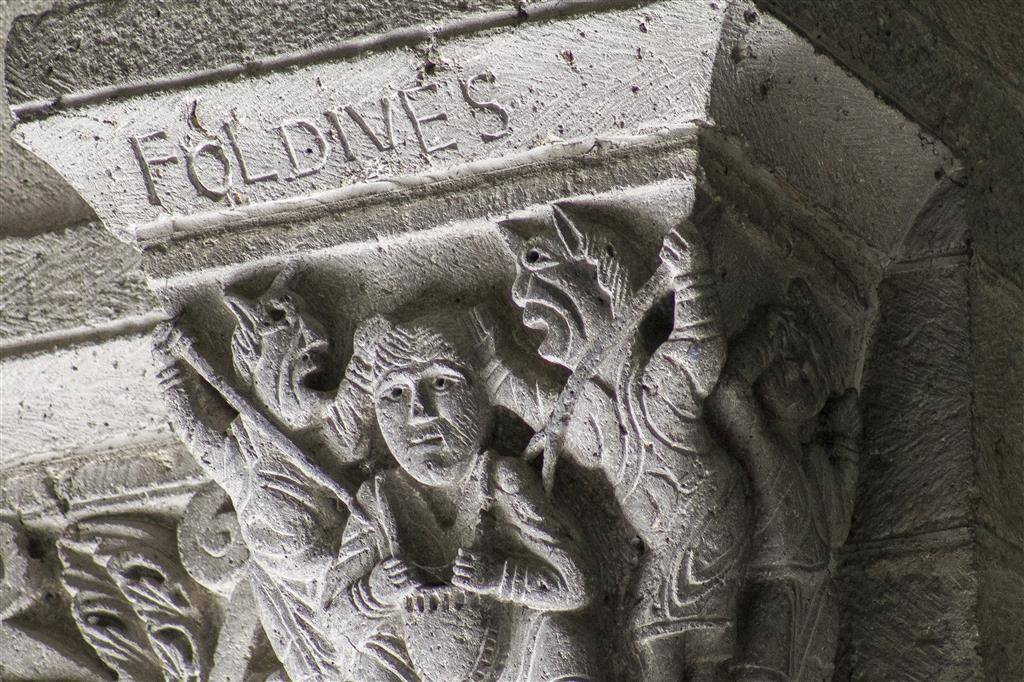
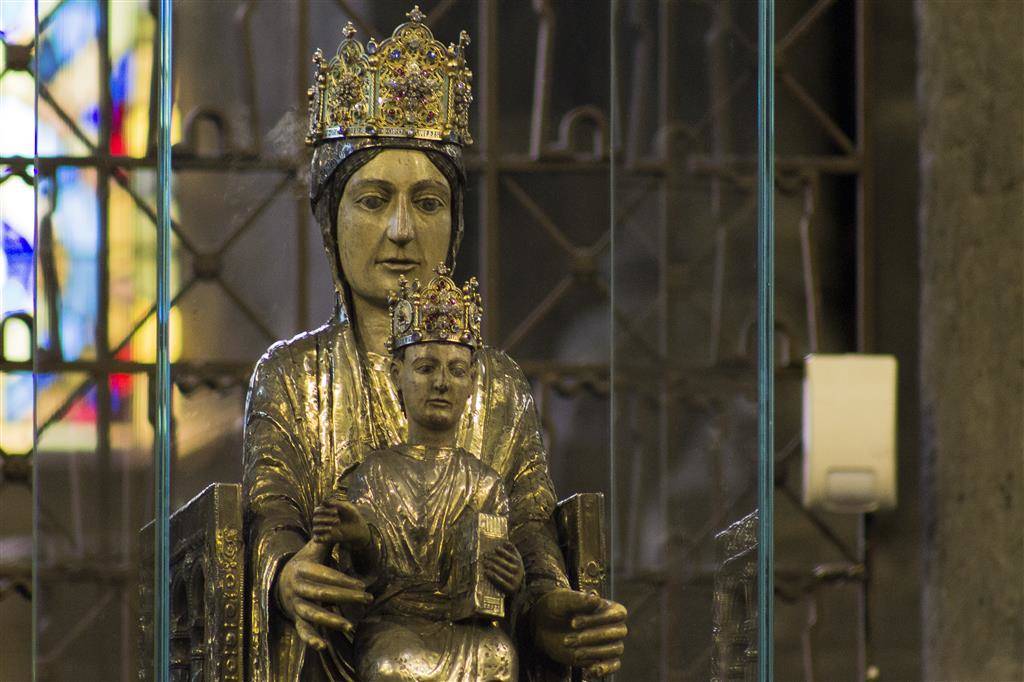
Notre Dame d’Orcival was certainly home to relics (circa 900) that were venerated alongside the statue of the Virgin Mary and Child during major pilgrimages dating back to the 6th century. The interior features capitals decorated with foliage, fabulous animals, demons and birds. Of particular note is the one depicting the punishment of the Miser, represented by a man with a purse hanging around his neck. The nave’s string of pillars draws the eye to the light-flooded choir, where a majestic Virgin sits enthroned. Covered in silver leaf and vermeil, this walnut-wood statue dates back to 1170, and is striking for the delicacy of its expression. Smiling, she presents her child to the world, framing it with her hands.
The Ascension pilgrimage :
Today, the Ascension pilgrimage is still one of the most important. The statue of the Virgin is covered with a gilded cloak, and gilded copper crowns set with precious stones are placed on the heads of the Virgin and the Infant Jesus. It is carried in procession by barefoot men along the Way of the Cross to the “Tomb of the Virgin”. At the top is a large white cross erected in 1945 by thousands of prisoners who came to Orcival to thank Notre Dame des Fers for their liberation.
Orcival’s church was adapted to the terrain, as evidenced by the blind gable wall that was reclaimed from the hillside.
The south elevation is remarkable for its St. John door, with its original hinges featuring the heads of men and animals, as well as for the cannonballs on the façade and the compass rose surmounted by a bas-relief Virgin and Child with a chained man at her feet, symbolizing the Pilgrim.
The north elevation of the Notre Dame d’Orcival basilica is much simpler (it overlooked the former cemetery).
Visiting the basilica :
Open year-round during the basilica’s opening hours
– Easter to All Saints’ Day : 8 a.m. to 7 :30 p.m.
– All Saints’ Day to Easter : 8 a.m. to 6 p.m.
Free virtual tours :
– 2 tours on tablet and smartphone (children’s version from age 8 and adult version)
– 8 clues to find in order to free the prisoner of Orcival
– duration approx. 30 minutes
– free loan (on presentation of ID) of tablets from the Tourist Office in Orcival or by downloading the Prisoner of Orcival app on Android
Free guided tours in summer with parish volunteers.
Guided tours with a tour guide in summer
– registration required on 04 73 65 89 77 or online
– 2026 rates : Adults (aged 14 and over) : €5 – Children (aged 6 to 14) : €2 – Family package (2 adults + 2 paying children) : €13
– and all year round on reservation for groups
Church services : Sunday mornings and feast days at 11 a.m., and daily from June to September in the crypt at 11 :30 a.m.
A 89/N 89 : Bordeaux, Brive, Ussel, Clermont-Ferrand.
From Lyon : 2 h.
A 75 : Montpellier, Saint-Flour, Issoire, Clermont-Ferrand.
From Montpellier : 3 h 30.
A 72 : Lyon, Saint-Etienne, Clermont-Ferrand.
From Bordeaux : 3 h 30.
A 71 : Paris, Orléans, Bourges, Clermont-Ferrand.
From Paris : 3 h 30.


 Updated on 19 October 2026 by Office de Tourisme Auvergne VolcanSancy